


As an Amazon Associate I earn from qualifying purchases at no extra cost to you.
Neem oil works on houseplants, but the gap between “I sprayed it” and “it actually worked” is where most plant parents run into trouble. Wrong dilution, wrong timing, wrong product type. That’s usually the reason it fails — not the oil itself.
Cold-pressed neem oil from the Azadirachta indica tree contains azadirachtin, a compound that disrupts how insects feed, grow, and reproduce. It’s not an instant kill. Used correctly, it breaks pest cycles across over 200 species — spider mites, aphids, fungus gnats, whiteflies, and more — making it one of the most practical organic pest control tools for indoor plants.
This guide covers the right dilution ratio, a DIY spray recipe that actually emulsifies properly, the mistakes that cause leaf burn, and which pests neem handles well indoors versus which ones need a different approach. If you’d rather skip the mixing and buy a ready-made spray, the best neem oil for houseplants page has five tested options.
Why So Many Plant Lovers Use Neem Oil Indoors
I didn’t always trust sprays. But using cold-pressed neem oil for houseplants changed that. It’s plant-based, doesn’t stink like chemicals, and you can use it on most houseplants without drama. It works on leaves, soil, and even stems. Plus, it fits with how a lot of us want to care for plants—organically and gently.
Organic neem oil also feels empowering. You’re not just blasting pests—you’re breaking their cycle with something natural. And when it works, it really works. No harsh residues, no worry about spraying it in your living room. For folks juggling kids, pets, and plants, that matters.
But I get why people hesitate. It’s slow. It smells earthy, sometimes weird. And results take time. Still, if you’re patient and learn how to use it, neem’s a reliable tool in your plant care lineup.
Regular neem treatments help prevent future outbreaks of soft-bodied insects like aphids. For a complete prevention plan, see our aphid control and recovery guide
The Science Behind Neem Oil on Houseplant Pests
Using neem oil for houseplants fights bugs in sneaky ways. The magic’s in a compound called azadirachtin, found mostly in cold-pressed neem seeds. It tells insects to stop eating, stop growing, and stop laying eggs. Basically, it shuts down their whole vibe without hurting your plant.
That’s why organic neem oil works on so many bugs—over 200 species, actually. Aphids, mites, whiteflies, fungus gnats? All vulnerable. But it’s not a quick kill. The oil messes with development over time, especially in pests that live short, fast-paced lives.

One scientific study called it a triple-threat: antifeedant, repellent, and hormone disruptor. That makes it versatile, but also… misunderstood. If you expect bugs to drop dead instantly, neem might let you down.
Neem oil works wonders for pest prevention, but it’s also good to know which bugs are harmless. Read Are Tiny Black Bugs Dangerous to Pets or Humans? to understand what’s safe—and what’s not.
Why Neem Oil Doesn’t Always Work (And What To Do About It)
So you sprayed neem—and nothing happened. Or worse, your leaves curled. I’ve been there. Most problems come down to two things: bad product or bad method. If you bought a clarified spray with barely any azadirachtin, it might smell nice but won’t stop bugs.
One plant lover on Reddit shared, “I used one of those store sprays and it smelled great but did absolutely nothing. Switched to cold-pressed neem with soap, and boom—no more mites.”
Even with a good product, neem’s fussy. You’ve gotta shake it constantly or it separates. Use too much? Burned leaves. Spray midday in the sun? Fried foliage. Forget to coat the leaf undersides? Missed the pests entirely.
And one spray isn’t enough. Neem works best in cycles—think weekly, not once-and-done. If you’re serious about results, technique matters more than you’d expect.
Still not sure what’s bugging your plant? Before you spray anything else, check out my complete pest ID guide. I break down the signs, symptoms, and sneaky clues that help you figure out exactly what you’re dealing with—because neem oil only works if you’re targeting the right pest.
Neem oil works wonders on pests that warp new growth. But curling isn’t always about bugs. Discover other causes of curling leaves and when neem oil is part of the fix.
The Right Way to Use Neem Oil Indoors
Neem works—if you use it right. Shake the bottle like crazy before spraying. This stuff separates fast, and uneven oil can mean burned leaves.
I spray both leaf sides, especially under where pests hide. Just mist—don’t soak. Morning or dusk is best. Never in bright sun. Trust me on that one. One plant expert shared on a plant forum, “I fried two leaves before I realized I was spraying at noon with no curtain. Lesson learned—never again without shade.”
If fungus gnats are the problem, a soil drench helps. Pour it right into the pot, then let things dry out. Don’t overdo it—too much and roots get cranky.
And always test first. I’ve learned the hard way that some ferns just can’t handle neem. One patch test can save you heartbreak.
When pests trigger sagging or curling leaves, my full guide on why your snake plant is drooping shows how to pair neem oil with other fixes. “Wondering if your snake plant’s yellow leaves are caused by pests? Our yellowing guide breaks down how to tell stress from infestations—and when neem oil helps.
Seeing fuzzy white clusters even after spraying? Neem oil works best when you know what you’re up against. Learn how to identify and remove the most common culprit in White Bugs on Houseplants: Spot, Treat, and Stop the Infestation.
DIY Neem Oil Spray Recipe
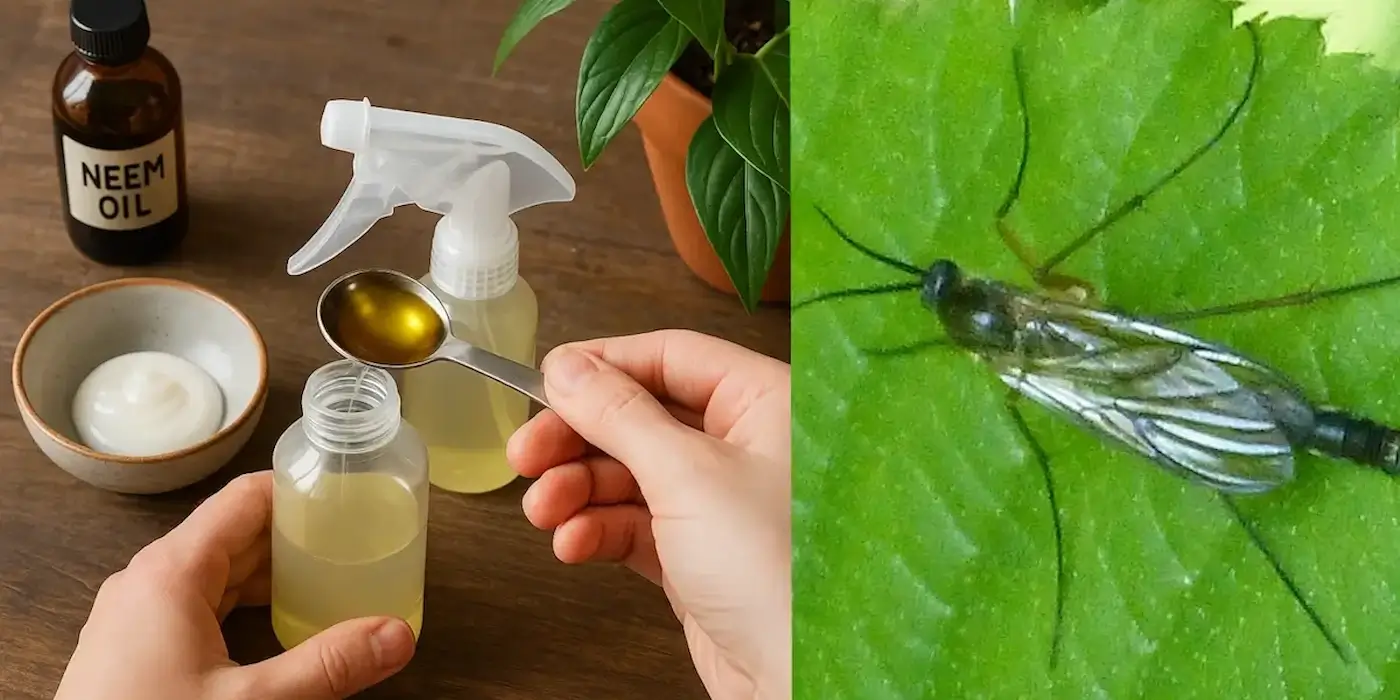
Making a neem spray that actually works comes down to three things: strong oil, gentle soap, and fresh mixing. Unrefined cold-pressed neem plus warm water and a dash of mild soap is all you need. Just mix it fresh and shake like wild before every use.
Here’s my go-to recipe:
- 1 tsp cold-pressed neem oil (5 ml)
- ½ tsp mild liquid soap (2.5 ml)
- 32 fl. oz. (1 L) warm water
How to make the neem oil spray:
- Combine in a spray bottle: Shake thoroughly. Use immediately—mixture separates fast. Shelf life is 24 hours. Store in a dark glass bottle if needed.
- Use soap as an emulsifier: Liquid soap helps the oil mix with water. Unscented Castile or insecticidal soap works well. Avoid detergents with fragrance or added chemicals.
- Add essential oils: For a gentler option, add a drop of peppermint or eucalyptus essential oil. Use only oils known to be pet-safe. Label bottles with date and dilution ratio.

Instructions: Spray once a week if bugs are active—especially under leaves. For prevention, I go every two or three weeks. Gnats? Use it as a soil soak, but only twice a month max. Always shake before spraying. And skip sunny afternoons unless you want crispy leaves.
Don’t want the bother of making your own neem oil bug spray at home? I’ve picked out the five best ready-made neem oil products you can buy online and start using immediately. All of them are great at getting rid of tiny black bugs from your home.
Does Neem Oil Work for Spider Mites on Houseplants?
Neem oil works well for spider mites when it coats the undersides of leaves every 5–7 days. The mites and eggs sit where most quick sprays miss, so coverage matters more than strength.
On indoor plants, I see the best results on bird of paradise, pothos, ivy, and calathea where foliage is dense and mites spread fast.
The failure point is usually missed repeat treatments, not the neem itself.
Can Neem Oil Kill Fungus Gnats in Houseplant Soil?
Neem oil helps with fungus gnats only when the soil is treated, because the larvae stay below the surface.
A foliar spray may catch the adults resting on lower leaves, but it won’t touch the real source. A light soil drench works better when paired with drier watering cycles, sticky traps, and better airflow around the root zone.
This is usually a moisture problem first, pest problem second.
Does Neem Oil Help Powdery Mildew and Black Spot Indoors?
Neem oil can slow powdery mildew and black spot and other fungal diseases in the early stages, especially on tropical foliage that stays damp overnight.
Clarified hydrophobic neem oil tends to work better on plant diseases here than heavier cold-pressed concentrates because it spreads more evenly as a foliar spray.
The bigger fix is usually environmental:
- better air movement
- less evening misting
- faster leaf drying
- fewer crowded leaves
Neem supports the reset. It rarely replaces it.
How to Use Neem Oil With Other Pest Control Techniques
Neem oil works best as part of a wider pest control routine, especially with recurring bug infestations indoors.
I treat neem seed oil as the disruption layer. It slows feeding, breeding, and egg development, but it works better when the environment also stops pests from bouncing back.
For leaf pests, pair neem with:
- leaf rinsing
- sticky traps
- pruning damaged growth
- isolating infected plants
- better air movement
For soil pests, the bigger win is protecting soil health. Let the top layer dry slightly between waterings, improve drainage, and support the root zone with a healthier soil structure.
This also helps protect beneficial organisms in the potting mix and keeps the root environment from staying constantly damp.
As an organic insecticide, neem performs best when it supports a cleaner plant-care system rather than doing all the work alone.
That’s usually the difference between short-term relief and actually ending repeat infestations.
Can Neem Oil Be Used as a Leaf Cleanser?
Yes, certain neem-based leaf mists work well for dusty leaves, light residue, and water spots.
This matters more than people think because dusty leaves make pest checks harder and reduce how evenly future sprays spread.
I use this most on monstera, philodendron, rubber plants, and bird of paradise where broad leaves collect visible dust on indoor window ledges.
Clean leaves make every pest treatment more reliable later.
Why Does Neem Oil Fail on Indoor Plants?
Neem oil usually fails because the plant issue wasn’t primarily a pest issue.
The most common misses are:
- spraying under strong grow lights
- using it on dehydrated plants
- treating root stress like spider mites
- skipping repeat applications
- spraying dusty leaves
- using it once for active infestations
Indoor plant problems overlap. Neem works best when the diagnosis is right first.
How Often Should You Use Neem Oil on Houseplants?
For active pest infestations, neem oil works best every 5–7 days for at least 3 rounds.
That timing matters because spider mites, soft-bodied pests, and fungal spores often survive the first pass.
For prevention, once every 3–4 weeks is usually enough on plants with a known history of mites or mildew.
More frequent use often causes leaf stress without improving pest control.
What Indoor Plants Respond Best to Neem Oil?
Neem tends to perform best on thick-leaf tropical houseplants that can handle repeated foliar sprays.
Best responders:
- bird of paradise
- Monstera
- Pothos
- Philodendron
- rubber plants
- ivy
- hoya
- zz plants
Thin-leaf plants can mark more easily, especially if lighting is too strong after spraying.
That’s usually where plant parents mistake light burn for neem damage.
What Problems Neem Oil Does Not Fix
Neem oil does not solve:
- root rot
- overwatering
- underwatering
- poor lighting
- mineral water spots
- fertilizer burn
- transplant shock
Common Mistakes That Sabotage Neem Oil Spray
Most neem oil fails come down to a few easy-to-miss mistakes—like spraying in the sun, skipping the shake, or going too strong. It’s not a quick fix, and using it wrong can stress or burn your plant. Here’s what to avoid if you want real results.
Spraying in direct sunlight: Neem oil and sun don’t mix. If you spray midday, you’re basically slow-roasting your leaves in a layer of oil. Always spray in the early morning or late evening. If your plant lives in a sunny window, move it or shade it during treatment.
Not shaking = separation: Neem oil and water separate fast—even with soap. If you don’t shake your bottle constantly while spraying, you’ll end up misting mostly water then suddenly dousing your plant in a patch of concentrated oil. That’s a quick way to get greasy leaves or burns.
Too frequent spraying stresses plants: Using neem oil every few days sounds like you’re being thorough—but plants need time to recover. Weekly sprays are usually enough during an outbreak. Any more than that can lead to leaf curl, yellowing, or dull foliage. Think of neem as a treatment, not a daily habit.
If you’re concerned about yellow leaves on your plants, this guide to why houseplant leaves turn yellow can help you diagnose the common causes.
Too strong neem oil spray concentrate: Using too much neem won’t scare the pests off faster—it just stresses your plant. Over-concentrated mixes can block pores, dull leaves, or cause spotting. I stick to 1 teaspoon per quart of water with a dash of mild soap. If I’m unsure, I always test one leaf first.
Thinking it’s an instant fix: Neem oil doesn’t knock bugs out cold. It messes with their life cycle, which takes time. You won’t see dead pests overnight—but after a week or two, new growth comes in clean. If you give up after one spray, you probably didn’t give it a fair shot.
Here’s a helpful comment from a Reddit plant clinic forum, “Honestly, I gave up after one spray. Then someone told me neem is more of a slow-burn. I tried again for three weeks and it finally worked.”
Mixing with the wrong stuff: Neem doesn’t mix well with everything. I’ve seen people blend it with baking soda or sulfur sprays—and end up with fried leaves. Just… don’t. If you’ve used something harsh recently, wait a couple weeks before using neem. Mild soap and water is really all it needs.
Got a problem with spider mites on indoor plants? Learn how to eliminate pesky mites from your houseplants for good. If you’ve noticed red bugs, you may want to find out if you’ve got a problem with clover mites on plants.
When Neem Oil Doesn’t Work (And What to Try Instead)
Some plants just don’t vibe with neem. Calatheas, ferns, and baby plants can get patchy or crispy, even if you dilute it. If your leaves look worse after spraying, back off. You’re not doing it wrong, your plant might just be saying no thanks.
For stubborn bugs like scale, neem needs backup. I’ll use a cotton swab soaked in alcohol to knock them off, then follow up with neem or insecticidal soap. Sticky traps help catch the flyers, but it’s a mix-and-match process.

One plant parent on Reddit shared, “Sticky traps plus a neem soil soak finally beat the gnats. Took a few weeks, but worth it. Now I do both every few months.”
If you’ve been spraying neem for weeks and still see bugs, switch it up. Insecticidal soap or even just wiping leaves clean can help. And if you’re fighting gnats with natural pets control methods? Dry soil and a sprinkle of sand or diatomaceous earth works way better than more spraying.
Also—worth saying—neem won’t fix root rot, fungus, or soggy soil. If your plant’s health keeps crashing, the problem might be under the surface. Time to check the pot and maybe hit reset.
Is Neem Oil Safe for Pets and Kids?
I’ve used neem oil in a house with two cats and a toddler. It’s safe—as long as you spray smart. Accordig to PetMD, the ASPCA doesn’t list it as toxic, but if your pet eats sprayed leaves before they dry, it can upset their stomach.
According to NCBI studies, the real danger is drinking or licking large amounts of undiluted oil—not your regular plant mist. But still—air it out. I always spray in another room, let plants dry, then bring them back.
Skip spraying where pets hang out, and don’t use neem near fish tanks. It’s natural, but still potent. Just treat it like any other garden product: smart storage, safe habits, and never leave your spray bottle within paw or toddler reach.
Bonus Tip: Neem Oil Beyond Plants
This oil for skin isn’t just for bugs. Cold-pressed neem is used in beauty products, skin creams, and lotions that soothe dry skin. It moisturizes skin, calms irritation, and leaves skin smooth—just don’t confuse your plant spray with your face serum. Always label bottles clearly.
Neem Oil For Indoor Plants: FAQs
Can neem oil damage houseplants?
Yes, neem oil can damage houseplants if the mix is too strong, the plant is stressed, or you spray under full sun or strong grow lights. The damage usually looks like patchy spotting, dull scorch marks, or tired-looking leaves. Test one leaf first, especially on ferns, Caladiums, and other fussier plants.
Should I rinse neem oil spray off plant leaves?
No, you usually do not need to rinse neem oil spray off plant leaves. Leave it on so it can keep working. Only rinse or gently wipe the leaves if they feel heavy, sticky, or start to look dull or marked.
How often can I spray neem oil?
Spray neem oil once a week when pests are active. For prevention, every few weeks is usually enough. More is not better because leaves still need time to breathe. Think steady treatment, not bug-blitz panic.
Can I use neem oil on houseplants year-round?
Yes, you can use neem oil on houseplants year-round, but reduce the frequency in winter when growth slows. Use it only on healthy plants, and spray in the morning or evening to reduce the risk of leaf damage.
Is neem oil safe for edible herbs grown indoors?
Yes, neem oil can be used on edible herbs grown indoors, including basil and mint. Rinse the leaves well before eating them, and avoid spraying right before harvest. Neem tea is not on the menu.
Should I use cold-pressed neem oil or clarified hydrophobic neem oil?
Cold-pressed neem oil works best for concentrates and soil drenches. Clarified hydrophobic neem oil is usually better for foliar sprays because it spreads more evenly across leaves. Use the format that matches the plant problem you’re treating.
How long does neem oil take to work indoors?
Neem oil usually starts disrupting pests within a few days, but visible improvement often takes 7–14 days. Spider mites and fungus gnats need repeat treatments because eggs and larvae often survive the first application.
Can I use neem oil under grow lights?
It’s better to wait until the grow lights are off. Neem can increase the risk of leaf spotting if it stays wet under intense light. I usually spray in the evening and let the leaves dry overnight.
Does neem oil help root rot?
No, neem oil does not fix root rot. Root rot is usually caused by wet soil, poor drainage, or low oxygen around the roots. Neem may help with fungus gnats in the same pot, but it won’t repair damaged roots.
Why does neem oil leave white residue on leaves?
White residue usually comes from hard water, poor dilution, or spraying too heavily. Dusty leaves can make this worse. Wiping leaves first with a microfiber cloth helps future sprays spread more evenly.
