


As an Amazon Associate I earn from qualifying purchases at no extra cost to you.
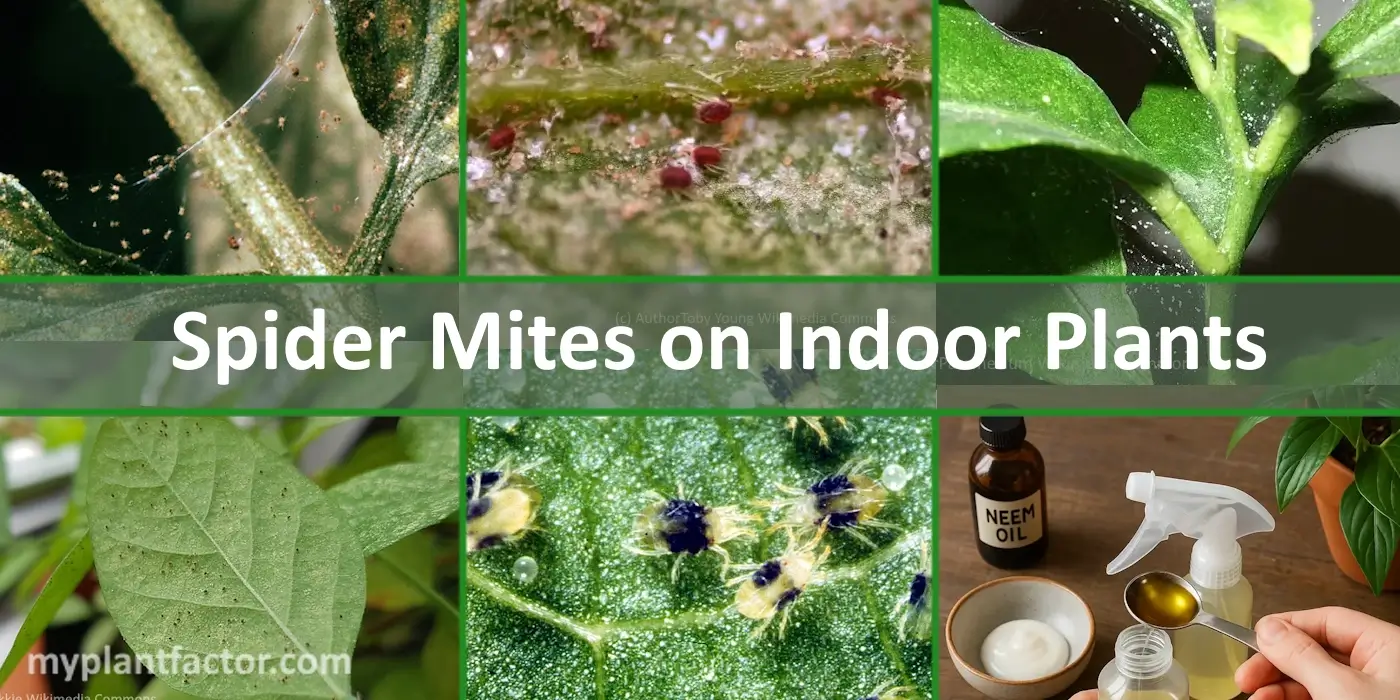
Spider mites are one of the more difficult houseplant pests to catch early. They’re smaller than a pinhead, they live on the underside of leaves, and by the time you see webbing, the infestation has usually been running for weeks.
They feed by piercing individual leaf cells and extracting the contents. The damage — stippling, fading, eventually leaf drop — builds gradually, which is why infested plants often just look “off” before any obvious cause appears.
This guide covers identification, treatment by infestation stage, neem oil specifics, what to expect during recovery, and how to stop them coming back.
Table of contents
Spider Mite ID at a Glance
Spider mites on indoor plants usually show up as pale speckling, faded leaves, rough leaf undersides, or fine webbing. Webbing means the infestation is already established. To confirm spider mites, tap a leaf over white paper and watch for tiny moving dots.
| What You Notice | What It Usually Means | How to Check | What to Do First |
|---|---|---|---|
| Tiny pale or white dots on leaves | Early stippling from mites feeding on leaf cells | Check the underside of the leaf with a phone macro lens or 10x loupe | Isolate the plant and rinse the leaves thoroughly |
| Leaves look dull, faded, or lightly bronzed | Ongoing cell damage, often before webbing appears | Compare old leaves with newer growth and inspect leaf undersides | Start treatment before the population spreads |
| Fine webbing near stems or leaf joints | Established infestation, not an early warning sign | Look for tiny moving dots on or near the webbing | Rinse, prune badly damaged leaves, then treat every 3–4 days |
| Specks fall onto white paper and move | Likely spider mites | Tap the leaf firmly over white paper and watch closely | Treat the plant and inspect nearby plants within a metre |
| Yellowing, curling, or leaf drop | Moderate to severe damage, especially if webbing is present | Check multiple leaves, especially the undersides and inner stems | Remove heavily damaged foliage and treat by infestation stage |
What Are Spider Mites?
Spider mites (Tetranychidae) are arachnids, not insects. They have eight legs, not six — which matters more than it sounds, because treatments targeting insects often have no effect on them.
The most common species on houseplants is the two-spotted spider mite (Tetranychus urticae). It’s named for the two dark spots on its back, one on each side, that look like small saddlebags. Adults are about 0.5mm — visible only if you’re specifically looking for them against a contrasting background.
Lifecycle — why they’re hard to eliminate

At room temperature, spider mite eggs hatch in 3–5 days. Nymphs reach adulthood in another 5 days. A single adult female can lay up to 20 eggs per day and will continue laying for 2–4 weeks.
At temperatures above 80°F — common near heat vents or south-facing windows in winter — the cycle accelerates. A new generation can complete in under a week. That’s why populations seem to appear from nowhere: they were building quietly for weeks before the damage became visible.
One important clarification: spider mites do not live in soil. They infest leaf surfaces, particularly undersides, and they don’t breed in potting mix. Treating the soil won’t help and isn’t necessary.
It’s easy to mistake red spider mites for clover mites. Learn how to spot the differences in my article about identifying clover mites on plants. The good new is that treatment methods are just the same.
How to Identify Spider Mites on Indoor Plants
The first signs usually appear on leaves, not from seeing the mites themselves.
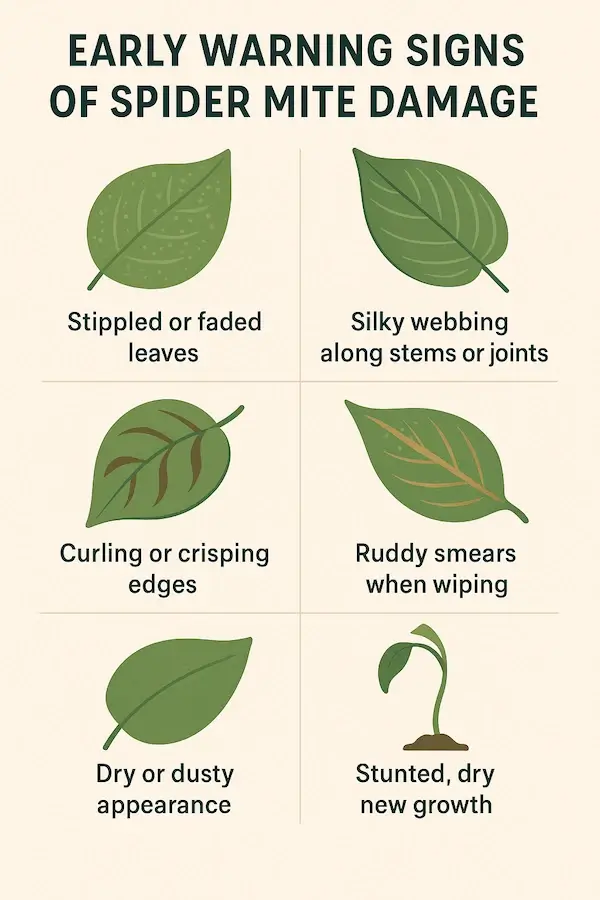
Early signs (before webbing):
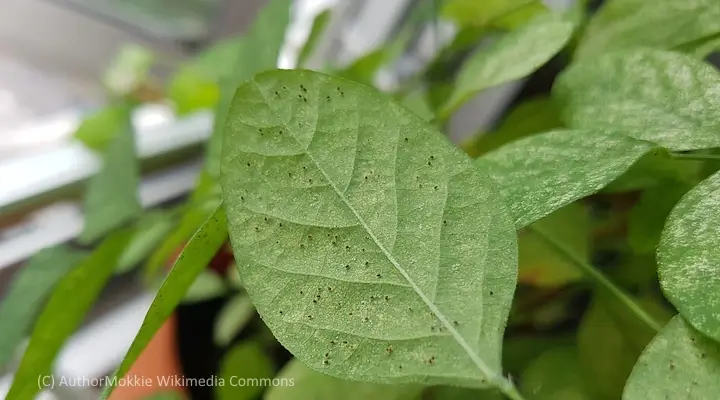
- Stippling — small pale or white dots on leaf surfaces where cells have been emptied
- Leaves look faded, dull, or slightly bronzed despite normal watering
- Undersides of leaves feel slightly rough or show faint specks when examined closely
Later signs (established infestation):
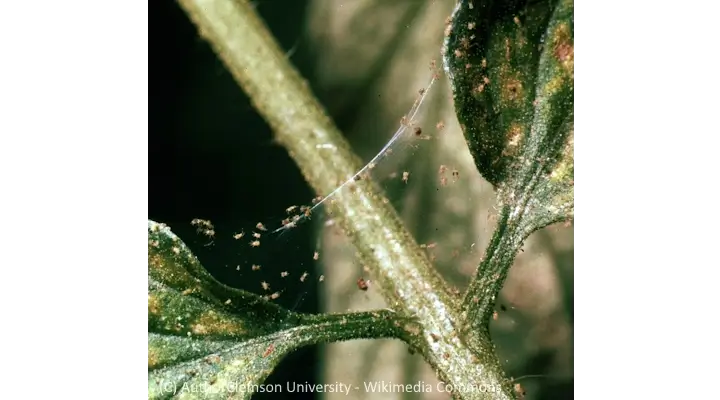
- Fine, silky webbing at leaf joints, between stems, or along the underside of leaves
- Tiny moving dots visible on the webbing under a phone macro lens or magnifying glass
- Leaves yellowing, curling at the edges, or dropping
Webbing appears late, not early. If you’re waiting for webs before acting, you’re already dealing with a significant population.
The paper test
Hold a piece of white paper under a suspicious leaf and tap it firmly. If spider mites are present, you’ll see tiny specks fall onto the paper and move slowly. If the specks don’t move, it’s more likely dust or debris.
For confirmation, look at the specks with a 10x loupe or phone macro attachment. Eight legs = arachnid (spider mite or soil mite). Six legs = insect. If you can see two dark spots on the body, it’s almost certainly T. urticae.
Which Houseplants Are Most at Risk?
Spider mites target thin-leaved, humidity-sensitive plants first. These leaves dry out faster, and stressed plants produce less of the chemical compounds that naturally deter feeding.
Most vulnerable:
- Calathea, Maranta, Ctenanthe — thin textured leaves, high humidity requirement
- Alocasia — large thin leaves that show damage quickly
- Palms, especially parlor palms and areca palms
- Ferns and English ivy
- Roses near windows
Less vulnerable but not immune: pothos, snake plants, ZZ plants, hoyas. Thick, waxy leaves are harder to pierce, but a population under stress will take what it can get.
Spider mites are just one type of pest that can affect houseplants. Our Houseplant Pest Identification guide helps you determine if other bugs are affecting plant foliage or leaves and which tiny black bugs live in potting soil.
Plants near heat vents, radiators, or in south-facing windows during winter are at the highest risk regardless of species. Dry air combined with warmth creates near-ideal conditions.
How to Get Rid of Spider Mites on Indoor Plants
Treatment effectiveness depends almost entirely on being systematic. Single applications rarely work because most treatments don’t kill eggs. The goal is to break the lifecycle across multiple generations.
Step 1: Isolate the plant. Move it to a separate room immediately. Spider mites walk from plant to plant along shared surfaces.
Step 2: Inspect nearby plants. Check undersides of leaves on everything within a metre. Isolate anything showing early signs.
Step 3: Rinse the plant. Take it to the sink or shower. Cover the soil with a bag to prevent waterlogging. Rinse thoroughly with lukewarm water, focusing on undersides. This removes adults, nymphs, and loose eggs before treatment.
Step 4: Treat based on severity.
Mild infestation — caught early
Caught early means stippling but no webbing, and limited to a few leaves.
Apply a neem oil spray or castile soap spray (recipes in the sections below). Spray every 4–5 days for a minimum of three rounds. This interval matches the egg-to-adult cycle — you’re targeting the hatchlings from any eggs that survived the first application.
Boost humidity around the plant during treatment. Spider mites slow their reproduction above 60% relative humidity.
Moderate infestation — webbing visible
If webbing is present, the population is established. Treatment needs to be more aggressive and consistent.
Rotate treatments. Spider mites develop resistance to repeated application of the same product within a few generations. Alternating between neem oil and castile soap every application is more effective than applying the same thing repeatedly.
Treat every 3–4 days. Inspect neighbouring plants even if they look healthy. Spray in early evening to reduce the risk of leaf burn from oils in direct light.
Severe infestation — extensive webbing, leaf drop
At this stage, some physical intervention is needed before chemical treatment can be effective.
Prune leaves with more than 50% damage and seal them in a bag before disposing. Heavy webbing physically repels sprays, so reducing population density first makes treatments more effective.
Consider releasing predatory mites (Phytoseiulus persimilis) — they eat both eggs and adults and can consume spider mite populations faster than any spray in a warm, humid room. Pause all sprays at least 5 days before releasing. Sprinkle them from their carrier directly onto affected leaves. They die out naturally once the spider mite population collapses — they don’t establish permanently.

Best Contact Spray for Spider Mites
This plant-based spray is useful when you need a quick treatment for spider mites around windowsills, entry points, patios, or outdoor plant areas. It’s non-staining, scent-free, and made for use around family and pet areas when applied as directed.
Use it after vacuuming visible mites indoors, or as part of an outdoor control plan around foundations, lawns, and garden edges. Just don’t crush clover mites first. That red smear is the real villain here.
Using Neem Oil for Spider Mites
Neem oil is often recommended for spider mites, but it is frequently used incorrectly, which is why some people report it doesn’t work.
The active compound is azadirachtin. It works by disrupting the mite’s hormonal system — interfering with reproduction and development across generations. It does not kill on contact. If you spray once and stop, you’re unlikely to see results.
Cold-pressed vs clarified neem oil
This distinction matters. Cold-pressed neem oil retains azadirachtin. Clarified hydrophobic neem oil — sold widely at hardware stores — has the azadirachtin removed for shelf stability. It has some smothering effect on soft-bodied insects but lacks the hormonal disruption that makes neem effective against spider mites specifically.
Read the label. If it doesn’t list azadirachtin as an active ingredient, it won’t work the same way.

Cold-Pressed Neem Oil for Spider Mites
Best for mild spider mite outbreaks where you need repeated treatment across several rounds. Use it after rinsing the plant first, then spray leaf undersides carefully at dusk. Not glamorous. Usually necessary.
Recipe
- 1 tsp cold-pressed neem oil
- ½ tsp unscented castile soap (emulsifier — neem doesn’t mix with water alone)
- 1 quart (1 litre) warm water
Shake before each spray. The mixture separates quickly. Spray the entire plant, paying close attention to leaf undersides, stems, and leaf joints.
Application rules
- Spray at dusk or on an overcast day. Neem oil on leaves in direct sun causes burn.
- Do not spray drought-stressed plants — water them first, then treat the following day.
- Reapply every 4–5 days for at least 3 rounds, then weekly for 2 more weeks.
- Don’t let neem run into the soil in quantity — it can affect beneficial soil organisms.
Other Spider Mite Treatment Methods
Castile soap spray
Mix 1 tsp unscented castile soap with 1 quart of water. Spray thoroughly, focusing on undersides. The soap disrupts the mite’s outer coating and causes dehydration. It kills on contact but has no residual effect, so reapplication every 2–3 days is needed.
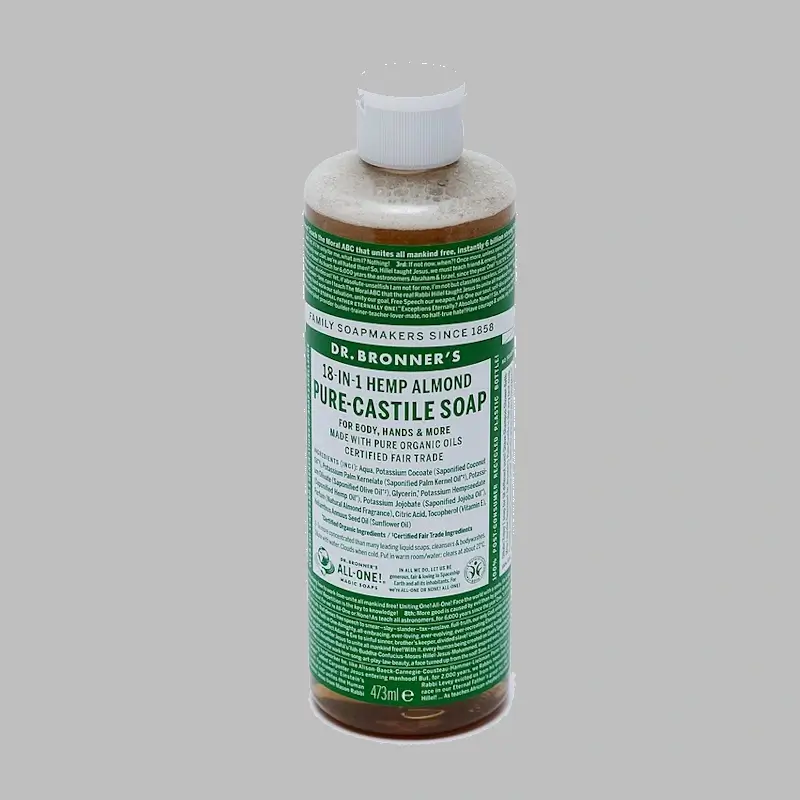
Unscented Castile Soap for Spider Mites
Best for contact treatment when you need to knock down visible mites between neem oil rounds. Use the unscented version, keep the mix weak, and test one leaf first. Thin-leaved plants can be fussy little divas about soap sprays.
Works well as an alternating treatment alongside neem oil to reduce resistance buildup.
Rubbing alcohol — spot treatment
70% isopropyl alcohol diluted 1:1 with water. Apply with a cotton swab directly to visible mites and webbing. Good for early isolated outbreaks on thick-leaved plants (hoyas, pothos, snake plants).
Test on one leaf first. Calathea, ferns, and other thin-leaved plants can react badly to alcohol even when diluted.
Predatory mites — biological control
Phytoseiulus persimilis is the most effective biological control for spider mites indoors. These predatory mites are blind but can detect spider mite webbing, and they move fast. They eat adults and eggs and reproduce faster than T. urticae at relative humidity above 60%.
Order online. They arrive in a carrier (usually vermiculite or bran) and are sprinkled directly onto affected leaves. Pause all sprays at least 5 days before release to avoid killing them. They don’t establish in the absence of spider mites — once the population collapses, they’ll die off naturally.
Not suitable for very dry rooms — below 50% humidity, their effectiveness drops sharply.
The Misting Myth — and What Actually Helps
Most spider mite advice recommends misting plants to raise humidity and create an inhospitable environment. The logic is sound in principle — spider mites do poorly above 60% relative humidity. The problem is that misting raises ambient humidity for roughly 10 minutes. It also deposits water directly on leaf surfaces, which in low-airflow conditions can encourage fungal issues.
What actually raises humidity around houseplants:
- Pebble tray with water placed under the pot — steady passive evaporation throughout the day
- Grouping plants together — they create a shared microclimate with higher ambient humidity
- A small humidifier positioned within 1–2 metres of susceptible plants
- Moving plants away from heat sources — vents, radiators, and sunny windows in winter are the primary reason indoor humidity drops near plants
A basic humidity monitor costs under $15 and tells you whether your measures are actually working. Target above 50% for most tropical houseplants. Below 40% is when spider mite populations accelerate noticeably.
Consider releasing predatory mites (Phytoseiulus persimilis) — they eat both eggs and adults and can consume spider mite populations faster than any spray in a warm, humid room. Pause all sprays at least 5 days before releasing. Sprinkle them from their carrier directly onto affected leaves. They die out naturally once the spider mite population collapses — they don’t establish permanently.
How to Prevent Spider Mites
Most infestations arrive on new plants or on people and pets returning from gardens and nurseries. The rest are the result of indoor conditions (dry air, heat) that happen to make certain plants vulnerable.
Prevention is mostly about quarantine and inspection:
- Quarantine new plants for 10–14 days before placing near existing plants. Check undersides twice during that window.
- Inspect leaf undersides weekly during your normal watering routine — 30 seconds per plant is enough if you’re consistent.
- Wipe leaves monthly with a damp cloth. This removes early-stage populations before they establish and also removes dust that can harbour eggs.
- Keep susceptible plants away from vents and radiators during winter.
- Don’t share tools between infested and healthy plants without wiping them down.
- Sterilize used potting soil before reuse — spider mites don’t breed in soil, but other pests do, and a stressed plant is easier to infest.
Sterilizing soil isn’t as tricky as it sounds. My guide: How to Sterilize Soil to Kill Bugs Naturally explains various processes and provides helpful step-by-step instructions.
What to Expect During Recovery
Treatment success is measured by new growth, not by the existing leaves looking better. Stippled, faded, or damaged leaves do not recover — the cells that were emptied are gone. Trim them once treatment is holding; the plant will redirect energy to new growth rather than trying to sustain damaged foliage.
Expect to see new, unmarked leaves emerging within 3–4 weeks if the infestation has been controlled. New growth that shows stippling immediately means treatment hasn’t been effective enough — the population is still active.
A few things that slow recovery and are worth watching:
- Overwatering after treatment — stressed plants are prone to root rot
- Insufficient light — recovery requires energy
- Continuing to leave heavily damaged leaves on the plant — prune them to redirect growth
Plants that were infested severely for months may take a full growing season to look healthy again. That’s normal. The benchmark is whether new growth is coming in clean.
Common Spider Mite Myths That Might Be Hurting Your Plants
Some of the worst advice about spider mites comes from well-meaning plant parents. These myths don’t just waste time—they can make infestations worse.
Let’s clear a few things up:
Myth #1: “Neem oil kills mites instantly.”
Neem disrupts their life cycle over time—it doesn’t nuke them on contact. You’ll need multiple rounds, spaced days apart.
Myth #2: “Mites only show up in dry homes.”
Dry air helps them thrive, but they can infest any indoor plant—yes, even in humid bathrooms or greenhouses.
Myth #3: “Soap spray once = problem solved.”
It might kill adults, but not the eggs. If you don’t reapply every few days, expect round two. And maybe round three.
Myth #4: “If you don’t see webs, there’s no infestation.”
Webbing comes late. By the time you see it, mites have been feeding for a while. Look for stippling or faded patches first.
Myth #5: “Just rinse the plant and it’ll be fine.”
Rinsing helps, but mites hide deep in crevices, and their eggs stick. And don’t think that wiping with a wet paper towel will help. Think of water as step one, not the full routine.
Bottom line? Spider mites are stubborn. Be skeptical of one-and-done tips. Real results come from smart strategy, layered treatments, and staying consistent.
Spider Mites vs. Other Houseplant Pests
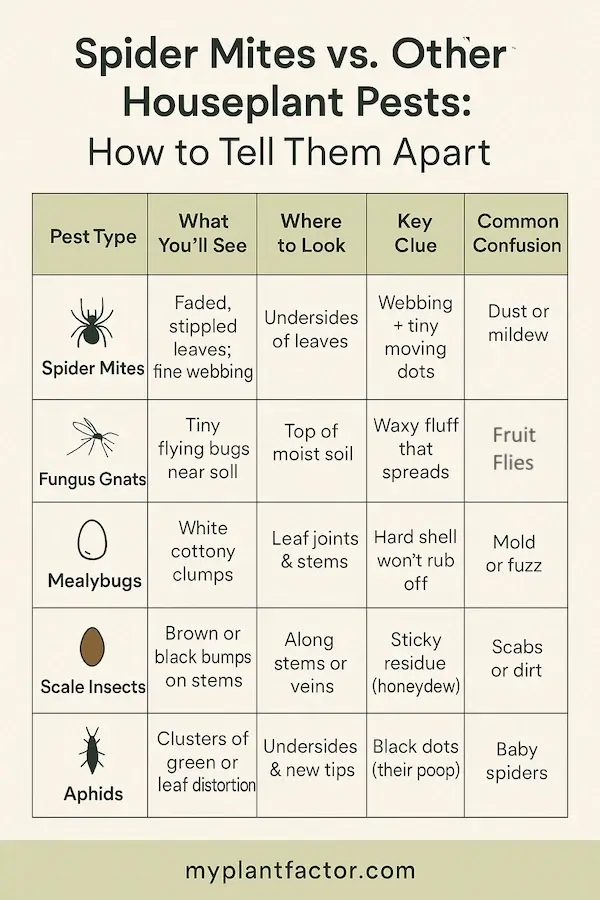
Not every leaf spot or crawling speck means spider mites. Some pests look eerily similar—but need different treatments. This chart breaks down the key differences, so you can spot what’s really going on and take the right action fast.
| Pest Type | What You’ll See | Where to Look | Key Clue | Common Confusion |
|---|---|---|---|---|
| Spider Mites | Faded, stippled leaves; fine webbing | Undersides of leaves | Webbing plus tiny moving dots | Dust or mildew |
| Fungus Gnats | Tiny flying bugs near soil | Top of moist soil | They fly up when you water | Fruit flies |
| Mealybugs | White cottony clumps | Leaf joints and stems | Waxy fluff that spreads | Mold or fuzz |
| Scale Insects | Brown or black bumps on stems | Along stems or leaf veins | Hard shell that won’t rub off easily | Scabs or dirt |
| Aphids | Clusters of green, yellow, or black bugs | New growth and buds | Sticky residue called honeydew | Baby spiders |
| Thrips | Silvery streaks, scarring, or distorted leaves | Leaf undersides and new tips | Black dots of waste on damaged leaves | Fertilizer burn |
Noticing tiny white specks instead of red mites? You might be dealing with a whole different invader. Here’s how to tell the difference in White Bugs on Houseplants: Spot, Treat, and Stop the Infestation.
Spider Mites on Houseplants: FAQs
Do spider mites live in soil?
No. Spider mites live and breed on leaf surfaces, mostly on the undersides of leaves. They do not burrow into soil or reproduce in potting mix. Treating the soil for spider mites usually wastes time and can stress the plant more.
How long does it take to get rid of spider mites on indoor plants?
A mild spider mite infestation usually takes 3–4 weeks to clear with consistent treatment. Moderate or severe infestations can take 6–8 weeks. The key is reapplying treatment on schedule, because eggs can hatch after the first spray.
Does neem oil kill spider mite eggs?
Neem oil does not reliably kill spider mite eggs on contact. Cold-pressed neem oil works through azadirachtin, which disrupts mite development and reproduction after they hatch. That is why repeated applications matter more than one heavy spray.
Can I use neem oil and predatory mites at the same time?
No. Neem oil can kill predatory mites too. Stop all sprays at least 5 days before releasing beneficial mites, and do not resume spraying while they are active. Otherwise, you may wipe out the helpers before they can do their job.
Why do spider mites keep coming back?
Spider mites usually come back because treatment stopped too early, the room is still warm and dry, or a nearby plant still has a small hidden infestation. Check nearby plants for 4–6 weeks after treatment, even if they look clean.
Are spider mites dangerous to humans or pets?
No. Spider mites do not bite people or pets, and they do not spread disease. They are plant pests, not household parasites. Heavy webbing may bother sensitive people, but the mites themselves are not dangerous to humans, cats, or dogs.
How do I know when the spider mites are actually gone?
Spider mites are likely gone when you see no movement during two close inspections one week apart, and new growth appears clean. Do not rely on webbing alone. Old webbing can remain after the active mites have already been removed.
Should I throw a plant away if the infestation is severe?
Only throw the plant away if most of the foliage is destroyed and there are no healthy growing points left. Many indoor plants can recover from severe spider mite damage if treatment is consistent and new growth starts coming in clean.
Check any plants that were near an infestation for the next 4–6 weeks, even if they looked clean during treatment. Spider mites in low numbers are easy to miss, and a second outbreak from a missed plant is the most common reason infestations seem to “come back.”
