



As an Amazon Associate I earn from qualifying purchases at no extra cost to you.
The best soil for indoor plants isn’t one product — it depends on the plant. Use a peat-heavy general mix on your monstera and you’ll be dealing with root rot within a season. Use a chunky aroid mix on your African violet and the roots dry out before they can absorb anything. The container changes everything.
Most houseplant problems that look like watering or light issues turn out to be soil issues. Too much water retention causes roots to suffocate slowly. Too much drainage and the plant dries out between waterings faster than you can manage. The mix you choose is the variable that controls all of this.
Here are seven potting soils that cover most indoor plant situations — plus a guide to matching soil to your specific plant, what to look for on the label, and signs your current soil might already be working against you.
— Best overall: Rosy Soil Indoor Potting Mix> (living soil, gnat-resistant, peat-free)
— Best budget: Miracle-Gro Houseplant Potting Mix (less prone to gnats, widely available)
— Best for aroids & tropicals: Sol Soils Chunky Mix (monstera, pothos, hoyas, philodendron)
— Best for succulents: Bonsai Jack Succulent & Cactus Mix (gritty, extreme drainage)
— Best for orchids: Orchid bark mix — not actually soil; orchids need bark, not potting mix
In this guide
Quick Picks: Best Indoor Plant Potting Soil at a Glance
This page contains affiliate links. If you buy through them, I earn a small commission at no extra cost to you.
| Product | Best For | Price Tier | Rating | Link |
|---|---|---|---|---|
| Miracle-Gro Indoor Potting Mix Best Overall |
Most common tropical foliage — pothos, snake plant, peace lily | $ | ★★★★☆4.2/5 | View on Amazon |
| Grow Queen Aroid & Philodendron Mix Best for Aroids |
Monsteras, philodendrons, anthuriums, pothos | $$$ | ★★★★★4.7/5 | View on Amazon |
| Miracle-Gro Cactus, Palm & Citrus Mix Best for Succulents |
Cacti, echeveria, aloe, haworthia | $ | ★★★★☆4.1/5 | View on Amazon |
| Recycle Potting Soil for Citrus Trees Best for Citrus |
Lemon, lime, kumquat, calamondin | $$ | ★★★★☆4.3/5 | View on Amazon |
| Rosy Soil Indoor Potting Mix Best Organic |
Organic growers avoiding peat-based mixes | $$$ | ★★★★☆4.4/5 | View on Amazon |
| Miracle-Gro Nature’s Care Organic Mix Best Universal Organic |
Mixed collections — ferns, pothos, rubber plants | $$ | ★★★★☆4.0/5 | View on Amazon |
| Miracle-Gro African Violet Potting Mix Best for African Violets |
African violets, streptocarpus, fine-rooted plants | $ | ★★★★☆4.2/5 | View on Amazon |
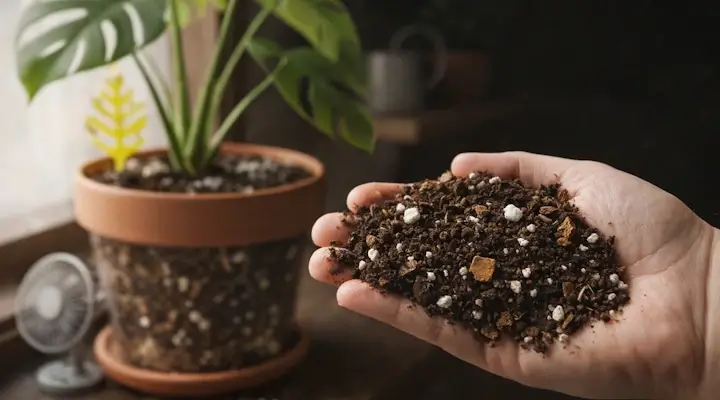
Why the Wrong Soil Kills More Houseplants Than Bad Watering
A plant in a pot lives entirely in whatever you put in that container. It can’t send roots sideways into better soil. It can’t drain into the ground when it’s waterlogged. What you choose at repotting time is what the plant works with until you change it.
Good potting soil has to balance four things at once: drainage (excess water moves through), aeration (air can reach roots), moisture retention (enough water stays available between waterings), and nutrition (basic nutrients are present). Miss any one of these and you’ll be chasing a different set of symptoms for months.
The reason garden soil fails indoors is exactly this. It’s formulated for ground conditions, where roots can spread wide and rain eventually moves on. Compressed into a pot, it becomes dense, excludes air from the root zone, and stays wet far longer than a container plant can handle. It also frequently carries pests into the house — something a formulated potting mix is designed to avoid.
The single most reliable rule: when you’re uncertain, choose more drainage rather than less. Far more houseplants die from roots sitting in wet soil than from drying out too fast.
7 Best Potting Soils for Indoor Plants, Reviewed
Miracle-Gro Indoor Potting Mix — Best Overall Budget Pick
Miracle-Gro’s Indoor Potting Mix is worth distinguishing from their standard all-purpose outdoor formula — these are different products. The indoor version is lighter, drains more freely, and includes a moisture management component designed for container use in lower-light conditions. For most common foliage houseplants, it’s a reliable, widely available starting point.
Miracle-Gro Indoor Potting Mix
Formulated for container plants kept indoors — lighter than the standard outdoor blend, with moisture management that buffers erratic watering habits. Check price on Amazon →
Best For: Beginners with mixed collections — pothos, snake plants, peace lilies, ferns — who want a single mix that works across most common varieties without amendments.
What Works Well
- Lighter texture than outdoor Miracle-Gro blends — less compaction over time
- Moisture management buffers plants against overwatering in low-light settings
- Widely available; inexpensive enough that top-dressing between repottings isn’t a financial burden
Possible Downsides
- Too moisture-retentive for cacti, succulents, and drought-adapted plants
- Contains slow-release synthetic fertiliser — salt buildup can occur in pots that don’t flush regularly
- Quality can be inconsistent batch to batch in terms of peat content and texture
The mix was designed around the watering patterns most indoor plant owners actually have: irregular, and sometimes too frequent. The moisture management component acts as a buffer without eliminating drainage. It isn’t appropriate for everything, but for a mixed tropical collection it’s one of the most forgiving options available at this price point.
Grow Queen Aroid & Philodendron Mix — Best for Tropicals and Aroids
Aroid mixes are chunky by design. Philodendrons, monsteras, pothos, and other aroids evolved to grow in jungle floor debris — partially decomposed bark, organic matter, and open structure that drains almost immediately after watering. Standard peat-heavy potting mixes are too dense for these plants in indoor containers, and the moisture they retain creates exactly the conditions aroids are most susceptible to.
Grow Queen Aroid & Philodendron Mix
A chunky bark-based mix designed for the drainage and aeration aroids need — monsteras, philodendrons, pothos, anthuriums. Check price on Amazon →
Best For: Aroid growers dealing with repeated root rot — monsteras, philodendrons, anthuriums, pothos — where the failure pattern is consistently overwatering or slow drainage rather than underwatering.
What Works Well
- Coarse bark and perlite structure drains fast and resists compaction over time
- Designed for plants that want to dry down between waterings, not stay consistently moist
- pH range appropriate for most aroid species
Possible Downsides
- More expensive per litre than all-purpose mixes
- Chunky texture isn’t suitable for plants with fine or shallow root systems
- May need supplemental fertilising sooner, as chunky mixes hold fewer nutrients
Most root rot on popular aroids traces back to a mix that holds too much moisture for the light levels available indoors. A well-draining specialist mix takes most of that risk off the table. I’ve seen more plants recover from being repotted into an aroid-appropriate substrate than from any other single change in care.
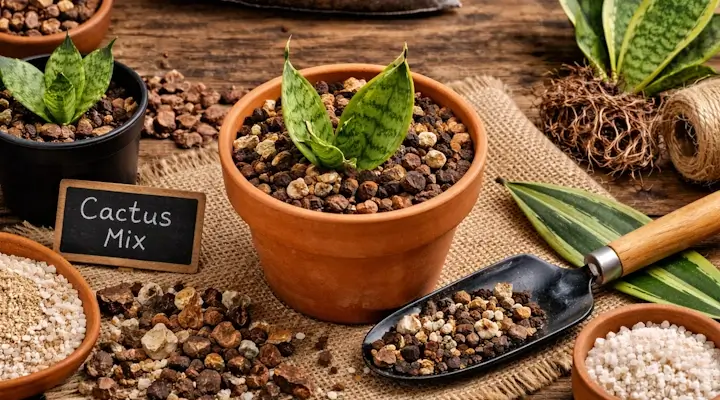
Miracle-Gro Cactus, Palm & Citrus Potting Mix — Best for Succulents & Cacti
Succulent and cactus roots are built for fast drainage and extended dry periods between waterings. Standard potting mix — even the lightweight indoor versions — stays wet long enough to cause root rot in most cacti within a few watering cycles. A specialist cactus mix addresses this by using fast-draining mineral components that shed excess water quickly and don’t hold moisture around the root zone.
Miracle-Gro Cactus, Palm & Citrus Mix
Sand and perlite-enriched formula for fast drainage — suited to cacti, succulents, and other drought-adapted plants. Check price on Amazon →
Best For: Cacti, echeveria, haworthia, aloe, and other succulents where fast drainage and extended dry periods are the key requirements — particularly for growers who’ve had unexplained decline or soft, mushy roots.
What Works Well
- Drains significantly faster than standard all-purpose potting mixes
- Sand and perlite content keeps the mix open between waterings
- Consistent quality; widely available in large bag sizes
Possible Downsides
- Can still be too moisture-retentive for very drought-adapted desert cacti — add 20–30% extra perlite for those species
- The organic fraction will break down over time, gradually reducing drainage in older pots
Cacti and succulents fail indoors mainly because they’re sitting in soil that retains moisture appropriate for tropical plants. Switching to a cactus-specific mix addresses the root cause directly. For most echeveria and aloe, this mix straight out of the bag is sufficient. For columnar cacti, adding extra perlite is worth it.
Recycle Potting Soil for Citrus Trees — Best for Citrus
Citrus trees need fast drainage, slightly acidic pH (5.5–6.5), and a mix that supports both the shallow feeder roots and the deeper anchor structure. Standard indoor potting mixes are typically pH-neutral to slightly alkaline, and moisture-retentive enough to cause persistent iron deficiency and root problems in citrus grown in containers.
Recycle Potting Soil for Citrus Trees
pH-adjusted, fast-draining mix formulated specifically for container citrus — lemon, lime, kumquat, calamondin. Check price on Amazon →
Best For: Dwarf citrus varieties kept indoors or on patios — lemon, lime, kumquat, calamondin — particularly where yellowing between leaf veins (interveinal chlorosis) suggests pH or drainage problems with a previous mix.
What Works Well
- pH adjusted for citrus requirements — reduces interveinal chlorosis caused by iron lockout at neutral pH
- Better drainage than standard all-purpose mixes; appropriate structure for container citrus
- Pre-mixed — no pH amendments required straight out of the bag
Possible Downsides
- Less widely available in physical stores — typically online only
- Citrus are heavy feeders; supplement with a citrus-specific fertiliser through the growing season regardless of what mix you use
Citrus grown in containers drift toward iron deficiency and root rot when planted in pH-neutral, moisture-retentive soil. A mix adjusted for their actual requirements prevents both problems from developing. General-purpose indoor potting soil isn’t a practical long-term option for container citrus — the pH mismatch alone causes persistent issues that no amount of fertilising will fully correct.
Rosy Soil Indoor Potting Mix — Best Organic Option
Rosy Soil uses coco coir and biochar-based components instead of peat moss as its moisture-retention base. Most mainstream mixes rely on peat, which performs reasonably well when kept consistently moist but becomes hydrophobic when it dries out completely — water starts channelling around the root ball rather than through it. Coco coir absorbs and releases moisture more predictably, and doesn’t have that dry-repellency problem.
Rosy Soil Indoor Potting Mix
Peat-free, coco coir and biochar-based formula for organic growers who want better drainage without synthetic inputs. Check price on Amazon →
Best For: Organic growers with tropical foliage plants who want to avoid peat and synthetic fertilisers without sacrificing drainage quality or aeration.
What Works Well
- Peat-free formula — better drainage than many peat-based mixes, and more predictable moisture behaviour when the mix dries down
- Biochar component improves aeration and supports beneficial microbial activity
- Works well for most common tropical foliage plants
Possible Downsides
- More expensive per litre than mainstream peat-based mixes
- Organic nutrient availability can be lower; may need supplemental organic feeding sooner
- Not suitable for cacti or succulents as-is
The practical advantage over peat-based mixes is that coco coir rewets easily after drying out. For plants that are intentionally allowed to dry down between waterings — most aroids, pothos, many ferns — this makes the next watering more effective. A dried-out peat mix often needs to be soaked before it starts absorbing water normally again.
Miracle-Gro Nature’s Care Organic Potting Mix — Best Universal Organic
For growers who want an organic all-purpose option without buying a specialist formulation for every plant type, Nature’s Care is the most practical mainstream choice. It covers most common tropical foliage plants, is certified organic, and is available in larger bag sizes at a cost per litre that makes regular repotting less of a financial calculation.
Miracle-Gro Nature’s Care Organic Potting Mix
Certified organic all-purpose mix for mixed houseplant collections — ferns, pothos, peace lilies, rubber plants. Check price on Amazon →
Best For: Mixed houseplant collections — ferns, pothos, peace lilies, rubber plants — where you want a single organic mix without managing multiple specialist products.
What Works Well
- OMRI-listed organic certification; no synthetic fertilisers
- Good general drainage for tropical foliage plants
- Available in larger bag sizes at a reasonable per-litre cost
Possible Downsides
- Not appropriate for aroids that prefer chunky bark-based substrate
- Organic nutrients deplete faster than slow-release synthetic formulas — supplement every 4–6 weeks through the growing season
It’s a reliable baseline for the type of plant collection most people have: a few pothos, a peace lily, some ferns, maybe a rubber plant. Nothing with extreme drainage demands, nothing specialist. For that use case, it’s a solid, consistent performer.
Miracle-Gro African Violet Potting Mix — Best for African Violets
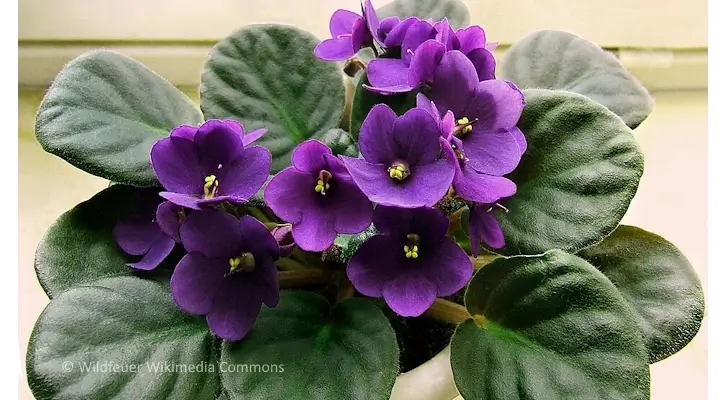
African violets fail in standard indoor potting mix for a specific reason: the dense, moisture-retentive texture compacts around their shallow root system and holds moisture at the crown — the tight rosette centre where leaves emerge. Crown rot is the result, and it looks similar enough to underwatering that growers often make the problem worse by increasing watering frequency.
Miracle-Gro African Violet Potting Mix
Lightweight, pH-adjusted mix for African violets and other fine-rooted plants prone to crown rot in standard indoor mixes. Check price on Amazon →
Best For: African violet growers who’ve had repeated wilting, crown rot, or failure to flower — particularly where the same plant has been in the same mix for more than 12 months.
What Works Well
- pH adjusted for African violets (5.8–6.2) — slightly acidic, which is what these plants need
- Lightweight texture that doesn’t compact around fine, shallow roots
- Well-suited to bottom watering, which is the recommended method for avoiding crown moisture
Possible Downsides
- Single-use specialist — too moisture-retentive for succulents, too fine-textured for aroids
- Typically sold in smaller bags; cost per liter is higher than all-purpose options
The main failure mode with African violets is using a standard indoor mix that holds too much moisture near the crown. Switching to a lighter, faster-draining specialist mix eliminates most crown rot problems without any other change to care routine. It also works well for streptocarpus and some moisture-sensitive begonias.
Which Potting Soil Is Right for Your Plant?
The single most common soil mistake is buying one bag for all houseplants. A monstera and a snake plant in the same mix is almost always a problem waiting to develop — one wants chunky, fast-draining bark; the other needs something close to a succulent mix.
| Plant | Soil type | Key requirement | Avoid |
|---|---|---|---|
| Monstera | Chunky aroid mix | Bark + perlite, fast drainage | Dense standard potting mix |
| Pothos | General or chunky | Tolerant but prefers aeration | Anything that stays wet for days |
| Philodendron | Chunky, well-draining | Similar to monstera | Peat-heavy moisture-retaining mixes |
| Hoya | Chunky aroid-style mix | Good aeration, some moisture | Compacting dense mixes. You can find suitable substrates in the article Best Soil Mixes for Hoyas |
| Snake plant / ZZ plant | Fast-draining, low nutrient | Sandy-ish, nearly succulent-style | Heavy mixes that hold moisture. Here are more reasons why you snake plant is drooping |
| Orchid | Bark-only substrate | No soil — pure orchid bark | Any potting soil at all |
| Succulent / Cactus | Gritty mineral mix | Maximum drainage, minimal organic | Peat-based moisture-retaining mixes |
| African violet | Light, slightly acidic | Specific African violet mix | Generic potting soil (too heavy) |
| Fern / Calathea | Moisture-retentive, light | Holds water longer than average | Chunky fast-draining mixes |
| Peace lily | Rich, moisture-retentive | Nutrients + consistent moisture | Anything that dries out too fast |
The orchid note is worth emphasising. Phalaenopsis orchids — the ones sold in almost every supermarket — are epiphytes. Their roots are designed to cling to bark and dry out between waterings. Potting soil will kill them reliably. Use orchid bark, not potting mix.
For hoyas, like the ever-popular hoya carnosa varieties, chunky works well. They’re technically semi-epiphytic and prefer airy root conditions. The same aroid-style mix used for monstera handles them well — just note that individual species vary in how wet they like to stay.
What the Ingredients Actually Do
Reading a potting mix label is useful if you know what you’re looking at. Most indoor potting soils are built from some combination of these components, each doing a specific job.
Perlite is the white pellet material you see in most potting mixes. It doesn’t absorb water — it creates air pockets in the soil that prevent compaction and improve drainage. More perlite means faster drainage.
Pumice does the same job as perlite, but it’s heavier and chunkier. Many collectors prefer it because it’s less dusty and holds structure better in the pot over time. The two are interchangeable in most cases.
Coco coir is shredded coconut fibre. It retains moisture without compacting, and it’s pH-neutral — making it a good base component for most mixes. It’s also renewable, which is why it’s increasingly replacing peat moss in premium products.
Peat moss functions similarly to coco coir — it retains moisture and contributes to soil structure. It’s slightly acidic, which suits plants like African violets. The downside is environmental: peat extraction is slow to regenerate. Many premium brands are moving away from it. More info: RHS guidance on peat-free growing
Bark and coco chips create structure and airflow. In chunky aroid mixes, bark is often the largest component. Finer bark is used in orchid substrates; coarser bark in aroid mixes. Size matters — fine bark compacts faster than chunky.
Worm castings are slow-release organic nutrition. They’re safe to use in higher quantities than synthetic fertilisers and also introduce beneficial microbial life into the soil. Most premium mixes include a small proportion. You can add more on top as a dressing.
Biochar is a relatively newer addition — a porous carbon material that creates habitat for beneficial soil microbes and improves drainage. It appears in premium products like Rosy Soil. The research on its benefits is solid, and it performs well in practice.
One ingredient to know about: if a potting soil lists fertiliser or plant food in the ingredients, skip additional fertilising for at least three months after repotting. Adding more to an already-fertilised mix causes salt buildup that damages roots.
Signs Your Soil Is Already Wrong
If a plant has been struggling despite correct light and watering, the soil is usually worth examining before anything else.
Yellowing leaves with wet soil is the most common soil indicator. The yellow usually appears at older, lower leaves first, and the soil feels consistently damp even two or three days after watering. This points to poor drainage — the roots are sitting wet and beginning to rot. This article explores other reasons why houseplant leaves turn yellow.
Soil that dries out within 24 hours of watering is draining too fast. This is less common but happens in mixes with a very high perlite or bark ratio, or when the soil has become hydrophobic. Hydrophobic soil repels water rather than absorbing it — water runs straight through and pools at the bottom of the pot without ever reaching roots.
Fungus gnats appearing around the pot are a soil signal rather than just a pest problem. Gnats lay eggs in damp organic matter near the soil surface.
A soil that stays consistently moist in the top few centimetres creates the right conditions for them. Switching to a drier-draining mix, or allowing the top layer to dry out fully between waterings, breaks the cycle. This helps avoid other problems, such as tiny black bugs in potting soil or thrips on plants.
If you notice bugs in potting soil, it may be time to sterilize your houseplant soil naturally.
White crust forming on the soil surface is mineral buildup from tap water. It’s usually not immediately harmful, but it means salt accumulation is happening in the root zone. Flush the soil thoroughly every few months or switch to filtered water.
Roots circling at the surface or emerging from drainage holes signal that the plant needs repotting, not necessarily that the soil is wrong — but it’s a good opportunity to reassess the mix at the same time.
Can You Mix Your Own Indoor Potting Soil?
Yes, and for specific plant types it often works better than any off-the-shelf product. The main advantage is control over drainage — you can dial it up or down depending on how a particular plant behaves.
These are starting points, not fixed recipes. Adjust based on your watering habits: if you tend to water frequently, lean toward more perlite; if you forget to water, lean toward more coco coir.
Basic tropical / aroid mix (monstera, pothos, philodendron, hoya):
- 4 parts orchid bark (fine or medium grade)
- 2 parts perlite or pumice
- 2 parts coco coir
- 1 part worm castings
Basic succulent / cactus mix:
- 2 parts coarse perlite or pumice
- 1 part coarse horticultural sand
- 1 part regular potting soil
Basic general-purpose mix (most tropical houseplants that aren’t aroids):
- 3 parts coco coir
- 1 part perlite
- 1 part worm castings
- Small handful of bark chips for aeration
Mix dry ingredients before adding plants or water. The proportions are forgiving — you won’t ruin a plant by being slightly off. What matters is that the mix drains freely and doesn’t compact solid after a few weeks.
How Often Should You Replace Indoor Potting Soil?
Most houseplants benefit from fresh potting mix every 12 to 18 months. Organic components in soil break down over time — bark decomposes, coco coir compresses, and the mix becomes increasingly dense. A mix that drained well when you bought the plant may be holding significantly more water two years later.
Signs the soil needs replacing (rather than just repotting into a larger container):
- The mix pulls away from the pot sides when dry, indicating it’s lost structure
- The plant has stopped growing despite good light and regular watering
- Water sits on the surface for more than 30 seconds before draining
- It’s been more than two years since the last repot
Top-dressing with a thin layer of worm castings every six months can extend the interval between full repots. It refreshes nutrients without disturbing the root system.
Frequently Asked Questions
Is potting soil the same as dirt for houseplants?
No — and this trips people up. “Dirt” from a garden or yard isn’t a substitute. Yard dirt is denser, holds far more water than a container plant can handle, and often carries pests or weed seeds a bagged mix doesn’t. If you’re searching for dirt for indoor plants, what you actually want is a potting mix built for containers — not literal dirt.
What’s the best soil for house plants if I have a mixed collection?
A general indoor potting mix — the Miracle-Gro Indoor Potting Mix or Nature’s Care Organic Mix above — covers most common foliage plants on a windowsill. The exceptions are succulents, cacti, and orchids. Give those their own mix rather than making one bag do everything. That mismatch is a common cause of problems that look like watering issues but aren’t.
Do I need a special potting mix for indoor plants?
Yes. Indoor plants grow in sealed containers, which means drainage and aeration don’t self-correct the way they do in the ground. Potting mixes are formulated to drain well while retaining enough moisture for root health. Garden soil compacts inside containers and holds far more water than an indoor plant can tolerate, which leads to root rot.
What is the difference between potting soil and potting mix?
In practice, the terms are used interchangeably and most products labelled either way will perform similarly for container plants. Technically, “potting soil” may include actual soil, while “potting mix” typically refers to a soilless blend of organic and inorganic components. For indoor plants, either works — what matters is the ingredient list, not the label.
Can I use outdoor potting soil for indoor plants?
Not reliably. Outdoor potting soils are often denser and richer in organic matter — which is useful outdoors where it feeds plants over a long season, but indoors it holds too much moisture and can attract fungus gnats. An indoor-specific mix tends to be lighter and dries out more evenly, which suits container conditions better.
Is peat moss or coco coir better for indoor plants?
They perform similarly in terms of moisture retention and structure. Coco coir is pH-neutral and a renewable resource; peat moss is slightly acidic and slow to regenerate environmentally. For most houseplants, coco coir is the better choice. The exception is African violets and other acid-loving plants, where peat moss’s slight acidity is a benefit.
Do different houseplants need different potting soil?
Yes. Aroids like monstera and pothos prefer chunky, fast-draining mixes; succulents and cacti need gritty, almost soil-free mixes; orchids need bark rather than any potting soil at all. Using a general potting mix for a succulent or orchid is a consistent cause of problems that look like watering errors.
How often should I replace indoor potting soil?
Every 12 to 18 months for most houseplants. Organic components break down over time and the mix becomes progressively denser. A soil that drained well when you repotted a plant two years ago may now be holding significantly more water than the plant can handle. Signs it’s time: the mix pulls away from the pot sides when dry, water sits on the surface before draining, or the plant has stopped growing.
Can I mix my own indoor potting soil?
Yes, and for specific plants it often works better than bagged products because you can control the drainage precisely. A basic aroid mix — orchid bark, perlite, coco coir, and worm castings — costs less per litre than specialist pre-mixed products and gives you more flexibility. See the DIY recipes section above for starting ratios.
Why do fungus gnats appear in indoor plant soil?
Fungus gnats lay eggs in damp organic matter near the soil surface. A soil that stays wet in the top few centimetres is the cause, not a symptom of some other problem. Switching to a drier-draining mix and allowing the top layer to dry fully between waterings disrupts the egg-laying cycle. The gnat problem usually resolves within two to three weeks once the soil is dry enough.
