



As an Amazon Associate I earn from qualifying purchases at no extra cost to you.
If you’ve noticed tiny red specks crawling across your windowsill, plant pot, or the leaves closest to the window, you’re most likely dealing with clover mites on plants. They show up in spring and autumn, almost always on plants near exterior walls or south-facing glass.
The tricky part isn’t getting rid of them — it’s knowing what you’re actually looking at. Clover mites are easy to confuse with spider mites, and the two pests need completely different responses. Treating clover mites like spider mites wastes time and often does nothing.
Table of contents
The good news is that clover mites can’t reproduce indoors, don’t bite, and don’t spread disease. But there are a few things worth knowing before you reach for the neem oil — including one popular treatment that’s more likely to stain your windowsill than solve the problem.
For information on other types of bugs, my comprehensive guide to houseplant pest identification can help you discover if other insects or spiders are affecting indoor plant health.
What Are Clover Mites?
Clover mites (Bryobia praetiosa) are tiny arachnids — researchers say they are more closely related to spiders, chiggers, ticks, and spider mites than to insects. They feed by piercing plant cells and sucking the sap.
Adults measure about 1/30 of an inch, roughly the size of a printed period. They’re reddish-brown to greenish-brown, oval-shaped, and have eight legs. Their front pair is twice as long as the other six and held forward, which makes them look like antennae at first glance.
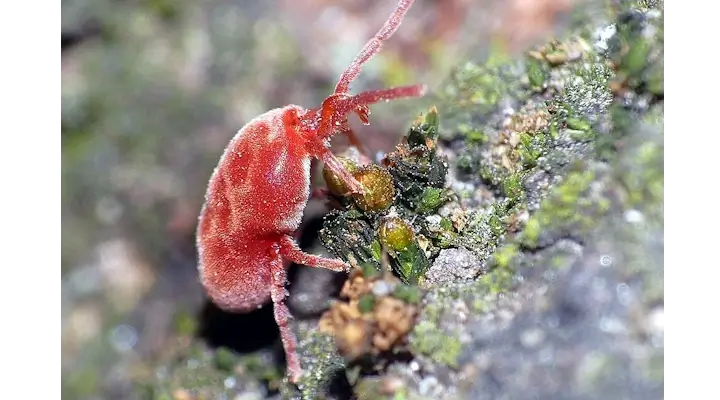
There are no known male clover mites. Females reproduce by parthenogenesis — laying eggs without fertilization. Each female lays around 70 eggs, usually in cracks, window frames, bark, and crevices around building foundations. Eggs overwinter and hatch in early spring when temperatures reach about 45°F (7°C).
Clover mites are cool-season pests. They’re most active in spring and fall. When summer heat arrives, they go dormant. When it turns cold again in fall, they re-emerge — and that’s typically when they move toward buildings.
Clover Mites vs Spider Mites — How to Tell Them Apart
This is the most common point of confusion, and it matters because the two pests are handled differently.
| Feature | Clover Mites | Spider Mites |
|---|---|---|
| Color | Reddish-brown to greenish-brown | Red, yellow, green, or pale |
| Visibility | Visible to the naked eye | Near-microscopic |
| Webbing on plants | No webbing | Fine webbing, usually under leaves |
| Preferred season | Cool weather, usually spring or fall | Warm, dry conditions, often summer |
| Reproduce indoors | No | Yes |
| Plant damage | Faint silver stippling | Yellow speckling, webbing, leaf drop |
| Bite humans | No | No |
| Primary habitat | Lawns, foundations, windowsills, outdoor plants | Indoor and outdoor plants |
| Best treatment | Vacuuming, soap spray, diatomaceous earth | Neem oil, insecticidal soap, miticide |
The clearest field test: check the undersides of your leaves. Webbing means spider mites. No webbing, red specks crawling on surfaces and windowsills in cool weather — that’s clover mites.
If you’ve identified spider mites instead, my article about spider mites on indoor plants covers treatment in more detail.
What Do Clover Mites Do to Plants?
Outdoors, a large clover mite population causes visible damage: silvery or bronze streaking on grass blades, faint stippling on ornamental plant leaves, and in heavy infestations, patches of lawn that look similar to winter kill — yellow or brown areas that appear from a distance to be drought damage.
On houseplants, the damage is usually minor. Because clover mites can’t reproduce indoors and dehydrate within a few days without outdoor conditions, they rarely reach numbers high enough to cause meaningful plant stress inside. What you’ll most likely see is faint silvery speckling on leaf surfaces where they’ve been feeding.
The more practical concern indoors is the staining. Clover mites contain a red pigment in their bodies. If you crush them — even accidentally by wiping a windowsill — they leave a red stain that’s difficult to remove from fabric, walls, or painted surfaces. That’s why vacuum removal is always the right move indoors, not wiping.
If the damage looks different from what’s written here, you might want to look for signs that thrips have infested your houseplants.
Which Plants Do Clover Mites Target?
Clover mites feed on over 200 plant species. Outdoors, they strongly prefer heavily-fertilized lawns, clover, and nutrient-rich ornamental plantings. The following table breaks down the plants most and least likely to attract them.
| Plants That Attract Clover Mites | Plants Clover Mites Usually Avoid |
|---|---|
| Lawn grass, especially over-fertilized grass | Marigold |
| Clover | Zinnia |
| Daffodil | Petunia |
| Primrose | Chrysanthemum |
| Salvia | Rose |
| Alyssum | Geranium |
| Strawberry | Juniper |
| Dandelion | Spruce |
| Most ornamental shrubs | Arborvitae, barberry, and yew |
Indoors, clover mites don’t actively seek out houseplants — they come in because they’re following temperature gradients or were laid as eggs in window frames and foundation cracks. Potted plants won’t sustain them for long.
How to Get Rid of Clover Mites
The right treatment depends on where the mites are — indoor removal is different from outdoor control. Start with the least interventional method and escalate only if needed.
| Method | Where to Use It | Effectiveness | Notes |
|---|---|---|---|
| Vacuuming | Indoors | High | Do not crush the mites. Dispose of the vacuum bag outside immediately. |
| Dish soap and water spray | Plants and hard surfaces | High | Dehydrates mites on contact. Test on one leaf first if using on plants. |
| Diatomaceous earth | Windowsills, entry points, and dry soil surfaces | Medium to high | Use food-grade diatomaceous earth. Apply a thin layer and reapply after rain or watering. |
| Sticky traps | Windowsills and entry points | Medium | Good for monitoring ongoing mite activity without spraying. |
| Neem oil spray | Outdoor plants | Medium | Can repel mites and disrupt activity, but repeat applications are usually needed. |
| Miticide or insecticide | Outdoor heavy infestations | High | Usually unnecessary indoors. Always follow the product label. |
Treating Clover Mites Indoors
Vacuum to get rid of clover mites
Run the nozzle along windowsills, walls, curtain edges, and any surface where you’ve seen activity. Empty the vacuum bag into a sealed bag and put it in the outside bin — not the kitchen waste — because mites can escape a bag left indoors.
After vacuuming, wipe affected surfaces with a damp cloth and a few drops of dish soap. The soap residue acts as a contact killer for any you’ve missed and leaves a brief deterrent. Let it dry and don’t rinse — the thin film helps.
Diatomaceous earth for clover mites
Sprinkling diatomaceous earth (DE) along windowsills and door frames creates a barrier. The fossilized silica particles puncture the mite’s exoskeleton, causing dehydration. Apply a thin, even layer — more is not better, and a visible pile just means they go around it.
Don’t use indoor pesticide sprays for clover mites unless the infestation is severe. They’re not necessary in most cases. The mites will die within a few days on their own if they can’t get back outside.
Neem oil for clover mites
Neem oil contains azadirachtin, and this natural compound works by coating soft-bodied pests and disrupting how they feed, move, and reproduce. For clover mites, it’s most useful outdoors on affected foliage, lawn edges, patios, and foundation plantings where mites keep gathering. Indoors, vacuuming still comes first. Neem oil is backup, not the main event.
Spray neem oil in the early morning or evening, when the plant is out of direct sun. Coat the affected leaves lightly, including stems and undersides, then repeat according to the product label. Test one leaf first, because some houseplants throw a fit over oil sprays. Fair, honestly.

Cold-Pressed Neem Oil for Spider Mites
Best for mild spider and clover mite outbreaks where you need repeated treatment across several rounds. Use it after rinsing the plant first, then spray leaf undersides carefully at dusk. Not glamorous. Usually necessary.
Treating Clover Mites Outdoors
For plants showing light damage, a direct spray of diluted dish soap solution (a few drops in a litre of water) is usually enough. Hose down affected plants the following day to rinse.
For lawn infestations, additional watering helps. Clover mites prefer dry soil for egg-laying — consistently moist lawn makes the environment less attractive. Don’t over-water, but don’t let patches go dry either.
In heavy infestations, a miticide or broad-spectrum insecticide applied around the foundation perimeter and to affected lawn areas will knock populations back. Apply in the morning when mites are most active, and follow the product label for reapplication intervals.

Best Contact Spray for Clover Mites
This plant-based spray is useful when you need a quick treatment for clover mites around windowsills, entry points, patios, or outdoor plant areas. It’s non-staining, scent-free, and made for use around family and pet areas when applied as directed.
Use it after vacuuming visible mites indoors, or as part of an outdoor control plan around foundations, lawns, and garden edges. Just don’t crush clover mites first. That red smear is the real villain here.
Before treating clover mites, it’s a good idea to discover if other pests are damaging plant foliage and stems. My article about houseplant pest identification can help spot other bugs and this article on tiny black bugs in potting soil can also be useful.
Clover Mites Inside Your Home
Clover mites come indoors for two main reasons: temperature becomes too hot or cold outside, or eggs were laid in cracks in the foundation or window frames and hatched on the wrong side of the wall.
Once inside, they can’t reproduce. They have no food source that sustains a population — houseplants and indoor surfaces don’t provide what they need. Within a few days, the mites dehydrate and die without any treatment. The population will not grow.
The two things to avoid: crushing them (staining) and doing nothing while ignoring the entry point. Vacuum, wipe, and then seal.
Entry point sealing is the most important long-term step. Apply weatherstripping to door frames, caulk cracks in the foundation and around window sills, and check that window screens fit tightly. Clover mites are small enough to pass through loose screen mesh.
I’ve seen a lot of indoor clover mite problems that come down to one unsealed gap around a south-facing window frame — the warm side of the building is where they congregate in spring and fall before moving in.
How to Prevent Clover Mites From Coming Back
The most effective prevention is structural and environmental, not chemical.
Create a bare perimeter strip. Remove grass and vegetation from the 18 inches immediately around your home’s foundation — especially on south and southwest-facing sides where sun warms the soil. Fill the strip with pea gravel or coarse bark mulch. Clover mites won’t readily cross loose, dry material.
Don’t over-fertilize. Highly fertilized lawns are significantly more attractive to clover mites. One to two lawn fertilizer applications per year is usually sufficient. Rich, lush growth is what pulls them in.
Plant repellent species at the border. Marigolds, zinnias, petunias, and chrysanthemums planted around the foundation create an unappealing zone for clover mites. This isn’t a myth — it’s based on which plant species they consistently avoid in the research literature.
Seal and caulk every entry point. Do this once, properly, and it reduces most indoor clover mite problems to zero.
Water dry lawn patches actively. Clover mites prefer dry soil for egg-laying. Keeping patches consistently moist — particularly along the foundation — reduces overwintering egg populations.
Frequently Asked Questions
Do clover mites bite?
No. Clover mites feed only on plant sap. They do not bite humans or pets, and they cannot pierce skin. The tiny red specks you see near windows, walls, or plant pots are not a sign of bites.
Are clover mites dangerous to humans or pets?
No. Clover mites do not carry disease, damage food, or harm structural materials. Indoors, their main nuisance is the red stain they leave if crushed on fabric, painted surfaces, or windowsills.
Can clover mites damage houseplants?
Not usually. Clover mites may cause faint silver stippling on leaves, but they cannot reproduce indoors and usually die within a few days. A small number near a window is more annoying than dangerous for most houseplants.
Will clover mites go away on their own indoors?
Yes. Clover mites usually dehydrate and die indoors within a few days. Vacuum visible mites, avoid crushing them, and seal the entry point so more do not keep coming inside.
How do I tell clover mites from spider mites?
Check the undersides of the leaves. Spider mites create fine webbing, but clover mites do not. Clover mites are also easier to see with the naked eye and often crawl near sunny windows in cool weather.
Does diatomaceous earth kill clover mites?
Yes, diatomaceous earth can kill clover mites when they crawl across it. The silica particles damage their outer bodies and dry them out. Apply a thin layer only. Too much product can make the mites walk around it.
What plants repel clover mites?
Clover mites usually avoid plants such as marigold, zinnia, petunia, chrysanthemum, rose, geranium, juniper, spruce, arborvitae, barberry, and yew. Planting these near foundations can make the area less inviting.
What do clover mite eggs look like?
Clover mite eggs are round, bright red, and tiny, about 0.12mm wide. They are usually laid in cracks, window frames, foundation gaps, bark, and other sheltered crevices. They are hard to see without close inspection.
Picture: Clover mite close up Vándormadár, CC BY 4.0 via Creative Commons.
