



As an Amazon Associate I earn from qualifying purchases at no extra cost to you.
Why Standard Potting Soil Doesn’t Work for Hoyas
Hoyas are epiphytes. In their natural environment — across Southeast Asia, Australia, and parts of India — most species grow attached to trees, cliff faces, or rocks. Their roots are exposed to air between rainfalls, not submerged in dense, moisture-retaining soil. Standard indoor potting mix is essentially the opposite of what they evolved for.
When you put a hoya in regular potting soil, a few things happen quickly. The dense organic matter compacts around the roots. Water collects rather than drains through. The roots stay damp between waterings and, without adequate airflow, rot sets in. It tends to look like a slow decline at first — yellowing leaves, reluctance to grow — before you lift the plant and find the root system is mostly gone.
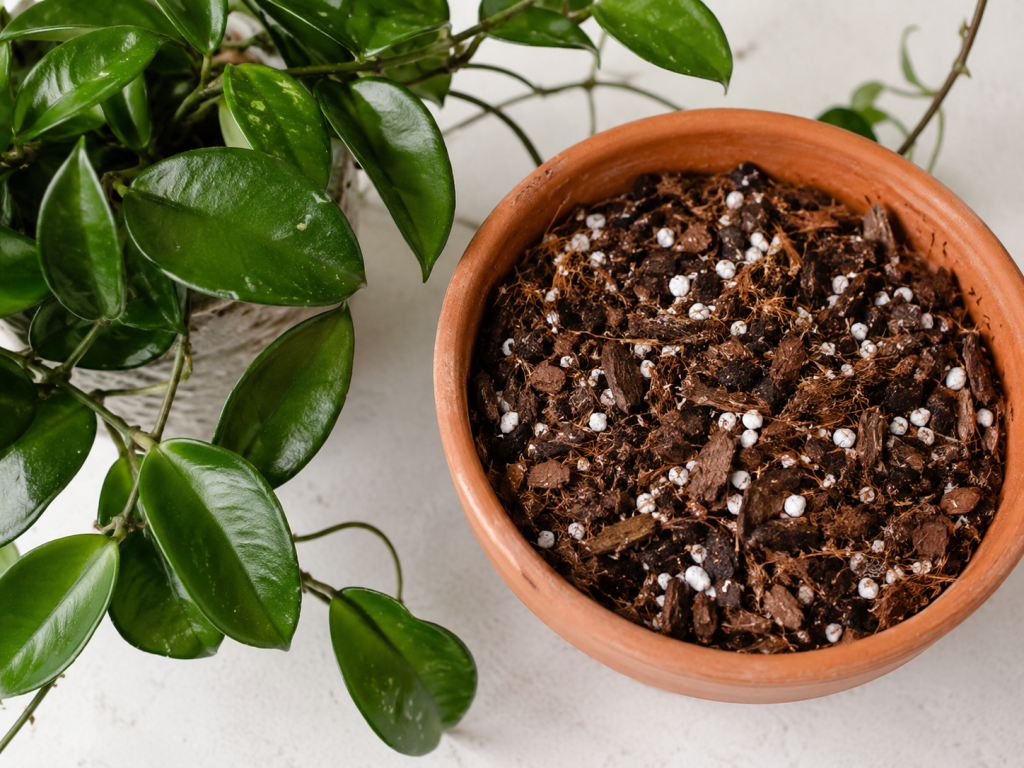
The fix is straightforward: a chunky, fast-draining mix that holds just enough moisture while letting excess water escape immediately. Bark, perlite, and coco coir are the three core ingredients. Everything else is secondary.
Whatever type of hoya you have — from a variegated hoya carnosa variety to a rare type of hoya — and whether you buy it pre-made or mix it yourself, you need a substrate that functions like the bark and organic debris a hoya would colonize in the wild. It holds some water and nutrients, but it also breathes.
Best Pre-Made Hoya Soil Mixes: At a Glance
| Soil Mix | Best For | Key Ingredients | Price Point | Amazon Link |
|---|---|---|---|---|
| Soil Sunrise Hoya Mix | Most hoyas, all-around use | Bark, perlite, coco coir | $$ | Check price |
| rePotme Hoya Classic | Heavy rooters, wax plants | Bark, perlite, lime | $$ | Check price |
| Sol Soils Chunky Houseplant | Chunky-preferring species | Large bark chunks, perlite | $$$ | Check price |
| Back to the Roots Organic | Budget pick, fast shipping | Coco coir, organic matter | $ | Check price |
| Gardenera Premium Hoya Mix | Small to medium collections | Bark, perlite, sphagnum | $$ | Check price |
The 5 Best Potting Soils for Hoyas
1. Soil Sunrise Hoya Plant Potting Soil Mix
Best For: General hoya collections, wax plants, and hoya carnosa varieties
Soil Sunrise is purpose-built for all types of hoyas, which immediately puts it ahead of generic houseplant soils that have been loosely repurposed. The formulation leans toward bark and perlite as primary components, with coco coir providing moisture retention without compaction. It drains fast and doesn’t clump after watering — exactly the behavior you want.
The texture is noticeably chunkier than standard mixes. When you pour it into a pot, there are visible bark pieces rather than the fine, soil-like consistency of all-purpose mixes. For epiphytes, that coarseness matters — it keeps air pockets open around roots even after multiple watering cycles.
It comes in a range of bag sizes, which makes it practical for both small collections and larger repotting runs. No amendment needed before use for most hoyas, though adding extra perlite for very chunky-preferring species like hoya kerrii won’t hurt.
What Works Well: Fast drainage, purpose-built formula, chunky texture that holds its structure over time
Possible Downsides: Slightly pricier than generic options; smaller bag sizes may not be economical for large collections
2. rePotme Hoya Classic Potting Mix
Best For: Established hoyas, wax plants, and collections where consistent quality matters
rePotme has been a reliable name in specialty plant mixes for a while, and the Hoya Classic is their dedicated formulation. The base is fir bark with coarse perlite, plus a small amount of lime to buffer pH — something most off-the-shelf mixes skip entirely. Hoyas prefer slightly acidic to neutral pH around 6.0–7.0, and the lime addition helps maintain that range as the bark breaks down over time.
The mix arrives wetter than some competitors, which is worth knowing. Give roots a few days to adjust after repotting before resuming your normal watering schedule.
rePotme offers multiple bag sizes and is consistent batch to batch, which matters if you’re repotting an entire collection at once and don’t want variable results. The texture is less chunky than Sol Soils but chunkier than most garden-center alternatives — a good middle ground for most hoya species.
What Works Well: pH-buffered formula, consistent quality, well-established brand
Possible Downsides: Ships wet; requires a slightly longer adjustment period post-repotting
3. Sol Soils Chunky Houseplant Mix
Best For: Mature hoyas, bright-light environments, and growers who water frequently
Sol Soils has a reputation in the houseplant community for making genuinely chunky mixes — not mixes that call themselves chunky and deliver a fine, dense substrate. The Chunky Houseplant Mix uses larger bark pieces and high-ratio perlite that produces a noticeably open, coarse texture compared to most competitors.
For hoyas in bright indirect light or warm environments where drying out between waterings happens fast, this level of drainage prevents the brief wet period from ever becoming a problem. For lower-light settings or cooler rooms where soil stays damp longer, the extra drainage helps compensate.
The trade-off: very chunky mixes dry out quickly, which means watering frequency increases. If you tend to underwater rather than overwater, this mix may work against you. Check soil moisture more often than you would with a denser substrate.
Sol Soils is a small-batch operation. Quality is high, but stock can be inconsistent and shipping times vary. Worth it when you can get it.
What Works Well: Genuinely chunky texture, excellent aeration, ideal for mature root-bound plants
Possible Downsides: Dries faster, requiring more frequent checks; stock availability can be inconsistent
4. Back to the Roots Organic Indoor Potting Mix
Best For: Budget-conscious growers, USDA organic preference, fast-shipping situations
Back to the Roots is the outlier on this list. It’s not hoya-specific and isn’t chunky in the same way the others are. What it is: USDA-certified organic, widely available, and genuinely better than standard potting soil for epiphytes when used with amendments.
The base is coco coir with organic compost, which drains reasonably well but benefits from mixing in perlite and bark before use. On its own it’s too moisture-retentive for hoyas — with a 40% perlite-and-bark amendment in equal parts, it performs well for most species.
If you’re building your first hoya collection and want to spend less on soil while still getting something workable, this is the option to start with. Standard Amazon delivery means you can repot quickly when you’ve just acquired a plant and can’t wait for specialty shipping.
What Works Well: Budget-friendly, organic certification, widely available and ships fast
Possible Downsides: Needs amendment before use for hoyas; not as purpose-built as the hoya-specific options
5. Gardenera Premium Potting Mix for Hoya
Best For: Small to medium collections, wax plants, and growers who want a ready-to-use hoya-specific option
Gardenera’s hoya mix is purpose-built and ready to use without amendment for most hoya species. The formulation includes bark, perlite, and sphagnum moss in a ratio that balances drainage with enough moisture retention for species that prefer not to dry out completely — hoya obovata, for example, or thinner-leafed varieties that flag fast when dry.
The sphagnum component is worth noting. It holds moisture longer than bark or coco coir alone, which gives this mix a slightly different watering dynamic. It still drains well, but check actual soil dryness before watering rather than following a fixed schedule.
Gardenera bags are smaller than most competitors, which can be a drawback for large repotting sessions but an advantage if you have a small collection and don’t want leftover soil sitting open in storage. Shelf life on pre-mixed soils drops once opened; smaller bags reduce waste.
What Works Well: Purpose-built, ready to use, good for moisture-sensitive species
Possible Downsides: Smaller bag sizes; sphagnum component means slightly slower drying — check before watering
DIY Hoya Soil Requirements: Ingredients and Ratios
The best hoya soil mix is a chunky, bark-based mix of 40% orchid bark, 30% perlite, and 20–30% coco coir. Here’s how to make it.
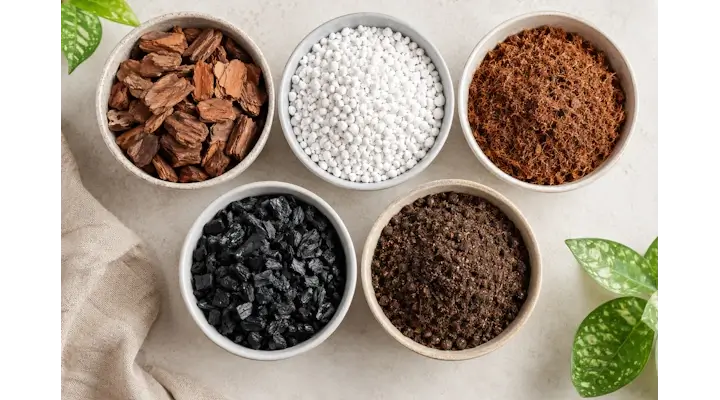
Making your own hoya mix costs less per batch than most pre-made options and gives you direct control over drainage level. The ingredient list is short.
Base Recipe (by volume):
- 40% medium-grade orchid bark — Check price on Amazon
- 30% coarse perlite — Check price on Amazon
- 20% coco coir — Check price on Amazon
- 5% activated charcoal — Check price on Amazon
- 5% worm castings — Check price on Amazon
What each ingredient does:
Orchid bark is the structural backbone. It creates air pockets that keep roots from suffocating and prevents the mix from compacting over time. Medium-grade is the right size for most hoyas — fine grade compacts too quickly; jumbo chunks may leave smaller roots without enough contact to anchor.
Coarse perlite improves drainage and aeration. The coarse grade (rather than standard or fine) stays in the mix without sifting to the bottom over time and doesn’t break down the way fine perlite does after repeated watering.
Coco coir provides moisture retention — just enough that the mix doesn’t dry out in a single day. It’s a sustainable alternative to peat moss with similar water-holding properties and a pH that works for hoyas without adjustment.
Activated charcoal absorbs impurities from water and reduces bacterial buildup in the substrate. A small amount goes a long way and isn’t strictly necessary, but it extends the healthy life of the mix before it starts to break down.
Worm castings add a slow-release nutrient component. Hoyas are light feeders, so a small addition is enough to support growth without fertilizer burn risk. Skip this if you prefer to feed separately with liquid fertilizer.
Mixing instructions: Combine all ingredients in a large container and mix thoroughly until perlite and charcoal are evenly distributed throughout the bark. The mix is ready to use immediately. Store unused portions in a sealed bag or container — moisture from the air will cause clumping if left open.
Adjusting for species:
- Extra-chunky species (hoya kerrii, hoya serpens, hoya fitchii): increase bark to 50%, reduce coco coir to 10%
- Moisture-sensitive species (hoya obovata, hoya latifolia): increase coco coir to 30%, reduce bark to 35%
Pre-Made vs DIY: Which Should You Choose?
The honest answer depends on how many plants you’re maintaining.
For a small collection — under ten plants — pre-made mixes are the more practical choice. The cost difference is marginal when you’re buying a single bag, the quality of purpose-built options like Soil Sunrise and rePotme is genuinely good, and you don’t have to store five separate ingredients between uses.
For a larger collection or regular repotting, DIY becomes the better investment quickly. A single bag each of orchid bark and perlite covers more pots than an equivalent spend on pre-made mixes. You also get precise control over drainage levels for different species.
One real advantage of DIY: you can adjust mid-repot. Noticing that a plant’s roots look particularly sensitive or that the bark ratio feels too chunky for a smaller pot? Add a handful of coco coir. Pre-made mixes commit you to a fixed formula.
What NOT to Put in Hoya Soil
Standard potting soil on its own is the main one. Products like Miracle-Gro All Purpose are formulated for plants that tolerate extended moisture. They contain peat, vermiculite, and wetting agents that keep the mix damp. For hoyas, that translates to root rot within weeks of repotting.
Garden soil has no place in any container mix. It compacts almost immediately in pots, eliminates drainage entirely, and often introduces pests. Don’t use it as a filler to extend a pre-made mix.
Fine vermiculite as a primary ingredient. Vermiculite holds moisture well but doesn’t drain fast enough for hoyas when used in significant quantities. It causes fewer problems as a minor addition, but shouldn’t replace perlite as the main aeration component.
Slow-release fertilizer pellets in the mix. Hoyas are sensitive to fertilizer burn, and pre-incorporated slow-release fertilizers — common in some potting mixes — cause tip burn, root damage, and leaf drop. Stick to liquid feeding at reduced rates and keep the soil itself unfertilized.
Signs Your Hoya Is in the Wrong Soil
Yellowing leaves that don’t respond to watering adjustments. If leaves are going yellow despite normal care and you’ve ruled out pests and light issues, dense soil causing low-level root stress is a likely cause. Lift the plant and check root health before assuming a nutrition problem.
Soil that stays wet for more than 7–10 days. A healthy hoya mix in normal indoor conditions should dry out within a week in most environments. If the soil still feels moist more than a week after watering, it’s holding too much moisture. This isn’t about how often you water — it’s about the mix.
Mushy stems near the soil line. This is late-stage rot signaling that damage is working upward through the plant. Unpot immediately, cut away all affected roots, let the healthy roots air-dry for a few hours, and repot into a fast-draining mix.
Roots growing primarily out of drainage holes. Some aerial root growth is normal for hoyas. But if the majority of root mass is escaping through drainage holes while soil-bound roots are thin or absent, the substrate inside the pot may be hostile to root development — too compacted, too wet, or too nutrient-depleted from breakdown.
No growth during active season. Hoyas aren’t fast growers, but complete stagnation during the warm months when conditions seem right often points to root stress from poor substrate rather than any above-ground issue.
This mix is built specifically for hoyas. If you’re managing a mixed collection with different watering needs, our broader soil guide breaks down how to match potting mix to plant type across the board.
Frequently Asked Questions
What is the best soil mix for hoyas?
A mix of 40% bark, 30% perlite, and 20–30% coco coir is the standard foundation for most hoya species. Purpose-built pre-made mixes like Soil Sunrise Hoya Mix use this general formulation and are ready to use without amendment for most varieties.
Can I use cactus soil for hoyas?
Cactus mix works better than standard potting soil and is a reasonable short-term option if you need to repot quickly. It drains faster than all-purpose mixes but usually lacks the bark component that gives hoya mixes their structure. Add 20–30% perlite before using it to improve aeration.
How often should I repot hoyas into fresh soil?
Every 2–3 years as a general rule, or sooner if you notice soil breakdown, compaction, slow drainage, or a sour smell. Bark-based mixes break down faster than soil-based mixes as the bark decomposes over time.
Do hoyas like acidic or alkaline soil?
Hoyas prefer slightly acidic to neutral soil, around pH 6.0 to 7.0. Most bark-based mixes naturally fall into this range. If you want to check, a basic soil pH meter or strip test is accurate enough for houseplant use.
Why does my hoya keep getting root rot?
Root rot is almost always a mix of too much moisture and too little airflow around the roots. The soil matters more than watering frequency. Even infrequent watering can cause rot if the mix stays wet. Switch to a bark-based mix and make sure the pot has drainage holes.
Should I add fertilizer to hoya potting mix?
Skip pre-incorporated slow-release fertilizers in the mix. Hoyas are light feeders, and pre-mixed fertilizers can increase root burn risk. Use liquid fertilizer at half strength during active growth in spring and summer. Stop feeding in fall and winter.
Is sphagnum moss good for hoyas?
Sphagnum moss works as a small part of a broader hoya soil mix, but not as the only substrate. It holds moisture very well, which can cause root rot when used alone. Mixed in at 10–15%, it adds moisture retention without overwhelming drainage.
