


As an Amazon Associate I earn from qualifying purchases at no extra cost to you.
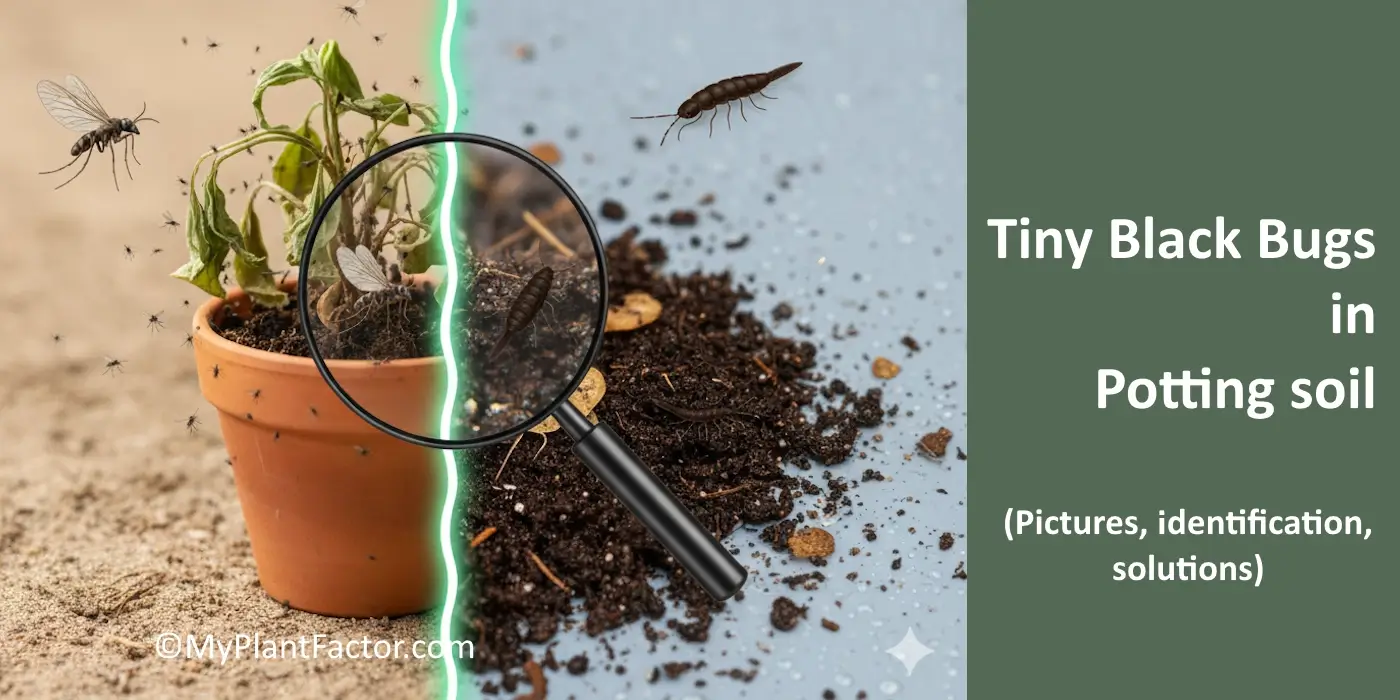
If you’ve spotted tiny black bugs in potting soil, especially after watering, you’re not alone. I get this question constantly—“Are they dangerous?” “Should I toss the plant?” “How can I get rid of tiny black bugs in houseplant soil fast?”
Most of the time, you’re dealing with fungus gnats or springtails — but soil mites, black aphids, and root aphids also turn up in indoor potting mix, and each one responds to a different fix.
🔍 Quick Answer: What Are the Tiny Black Bugs in Your Soil?
There are five common culprits — and each one needs a different fix. Find yours in the table below.
| Bug | Key Sign | Harmful? | Quick Fix |
|---|---|---|---|
| Fungus gnats | Tiny flies hovering near soil; larvae live in top 2 inches | Larvae damage roots | Let soil dry between waterings; yellow sticky traps |
| Springtails | Jump when disturbed; appear in clusters after watering | Harmless to plants | Reduce moisture; usually self-resolve |
| Shore flies | Darker and stubbier than gnats; slower-moving | Minimal damage | Improve drainage; yellow sticky traps |
| Soil mites | Very small; clustered near soil surface or pot edges | Usually harmless | Repot with fresh soil if population is large |
| Black aphids | Found on roots or lower stems; clustered and slow | Yes — feed on plant | Neem oil soil drench; inspect and treat roots |
Scroll to your bug type below for photos, full ID tips, and the treatment that actually works.
Quick Guide
- Tiny Black Bugs in Potting Soil: Are They Fungus Gnats or Springtails?
- How to Tell Fungus Gnats and Springtails Apart
- Why Tiny Black Plant Bugs Appear After Watering
- How to Get Rid of Tiny Black Bugs in Soil Naturally
- Should You Replace Potting Soil After Bugs?
- How to Prevent Fungus Gnats and Springtails in Potting Soil
- Tiny Black Bugs in Houseplants FAQs
These houseplant bugs love moisture, decaying roots, and the quiet corners of your indoor greenery. I’ve dealt with them in my own collection, and trust me, they’re more annoying than harmful. The secret? Drying out the top layer, setting a few yellow sticky traps, and treating gently with neem oil or hydrogen peroxide solution.
Let’s walk through how to spot which bug you’ve got—and how to send it packing without wrecking your plant’s rhythm. If you think you’ve got issues with types of pests, check out my article on tiny black bugs on houseplants that cause damage.
What Are the Tiny Black Bugs in Your Potting Soil?
The most common suspects are fungus gnats and springtails. But soil mites, black aphids, and root aphids all show up in houseplant mix too — and they behave differently enough that a wrong diagnosis usually means the treatment doesn’t work. Here’s what each one actually looks like.
Fungus Gnats

Fungus gnats are the most common tiny black bug in houseplant soil. Adults are small, dark flies — around 2–3mm long — with long legs and semi-transparent wings. They move slowly, drifting near the soil surface or collecting on window glass. They look like miniature mosquitoes, though they don’t bite.
The adults are mostly a nuisance. The real problem is the larvae. Fungus gnat eggs hatch in moist soil into tiny white worms — thread-like, translucent, with a small black head — that feed on fungi, decaying matter, and tender root tips. In heavy infestations or on young seedlings, larval feeding can stunt growth or weaken an already stressed root system.
Colorado State University Agricultural Biology confirms that larvae are the damaging stage, and that the cycle only continues when soil stays consistently wet. Dry out the potting mix properly between waterings and the adults can’t lay viable eggs. The population collapses on its own.
Not sure if you have adults or larvae? Press a small piece of raw potato onto the soil surface and leave it for 48 hours. If tiny white worms are clinging to the underside when you lift it, larvae are active. Yellow sticky traps placed near the pot will tell you how many adults are flying.
Springtails

Springtails are wingless jumping insects — not flies — that live in the top layer of damp soil. Penn State Extension notes they feed on fungi, mold, and decaying matter, not live plant roots. They’re harmless to healthy plants and show up most often after watering, when moisture brings them to the surface.
The movement gives them away instantly. Springtails snap upward when disturbed — a sudden flick from a fork-like structure under their body. They don’t hover or drift. If whatever you’re seeing jumps rather than flies, it’s almost certainly a springtail, not a fungus gnat.
Their numbers drop naturally when conditions dry out. In most cases, letting the top layer of soil dry between waterings is the only treatment needed.
Fungus Gnats vs. Springtails: Quick Reference Table
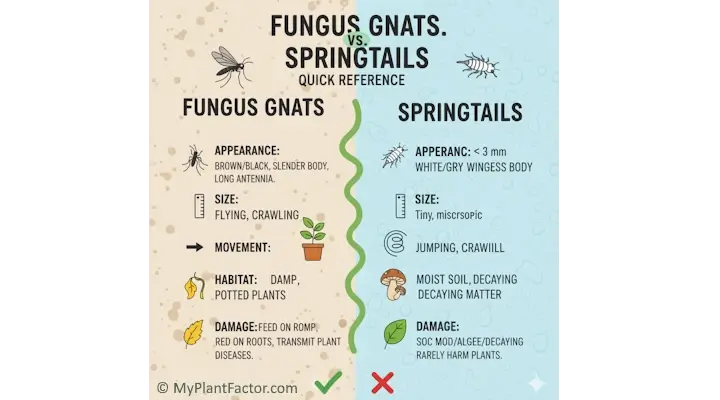
Note: It’s also easy to mistake springtails for thrips and other houseplant pests.
Soil Mites

Soil mites are extremely small — usually 0.5mm or less — which makes them easy to miss. Most species are white, tan, or pale, though some run darker. They move slowly and steadily across the soil surface, no jumping, no flying, just a very deliberate crawl. You might need to crouch down and look closely before you’re sure you’re seeing them at all.
They’re largely beneficial. Soil mites break down organic matter, help decompose debris, and are part of a biologically active potting mix. Their presence usually signals rich, moist soil rather than a problem. They appear most often in mixes that contain outdoor compost or bark.
If numbers are high: let the soil dry out more between waterings and refresh the top inch of potting mix. That’s usually enough to bring populations back down. Unlike fungus gnats, they don’t need chemical treatment — just a habit adjustment.
Black Aphids

Black aphids — sometimes called blackfly — are soft-bodied, pear-shaped insects around 1–2mm long. They’re matte black, slow-moving, and tend to cluster rather than spread out. You’re more likely to find them on lower stems near the soil line than actually in the mix, but they can look like soil bugs when they drop from stems or gather at the base of a plant.
Unlike the other bugs on this list, black aphids are sap feeders. They pierce stems and leaves to extract plant fluid, which leads to sticky residue on leaves, curled or yellowing new growth, and a general decline that doesn’t match the watering situation. If you’re finding black clusters near the soil but also noticing those leaf symptoms, you’re probably dealing with aphids rather than gnats.
The fix is different here: neem oil or insecticidal soap sprayed directly on the insects, covering the stem base and undersides of lower leaves. Repeat every three to four days until they’re gone. Soil treatments like hydrogen peroxide won’t reach them — they’re not living in the mix.
If you think the tiny black bugs in soil are aphids, my article on how to get rid of black aphids naturally has top expert tips on erradicating these pesky flying insects.
Root Aphids
Root aphids are the hardest to spot because they live below the soil surface, feeding directly on roots.
They’re typically pale — whitish, cream, or tan — not black, though they can be mistaken for debris until you look closely. They move very slowly. The first indication is usually the plant behaving oddly: wilting or leaves turning yellow despite adequate water, or growth that stalls and doesn’t respond to feeding.
To check, slide the plant out of its pot and inspect the root ball. Root aphids are small, waxy, slow-moving insects clustered on the roots, sometimes with a fine white powdery coating around them. They often go undetected for months because there’s nothing visible at the surface.
They’re the most damaging bug on this list. A minor infestation can be treated with a soil drench of neem oil solution — work it thoroughly into the mix and repeat weekly. Severe infestations usually mean repotting entirely: remove the plant, wash the root ball under running water, and replant in fresh sterile soil.
How to Tell Which Soil Bug You Have
Movement is the fastest ID test. It tells you more in five seconds than any written description. But if movement alone doesn’t settle it, habitat and plant symptoms fill in the rest.
Five Soil Bugs at a Glance
| Bug | Size | Movement | Where Found | Plant Damage | Primary Fix |
|---|---|---|---|---|---|
| Fungus gnats | 2–3mm | Slow hover/drift | Soil surface + air above pot | Larvae damage roots | Dry soil, sticky traps, hydrogen peroxide, BTI |
| Springtails | 1–2mm | Sudden upward snap | Soil surface, pot rim, drainage holes | None — harmless | Let soil dry out |
| Soil mites | <1mm | Slow steady crawl | Throughout moist organic mix | None — usually beneficial | Dry soil, refresh top inch |
| Black aphids | 1–2mm | Barely move, cluster | Stem bases, near soil line | Sap feeding — sticky leaves, yellowing | Neem oil or soap spray directly on insects |
| Root aphids | 1–2mm | Very slow | Root ball, lower soil — underground | Root damage, wilting, stunted growth | Neem soil drench, repot if severe |
Movement and Appearance
Watch what the bug does when you disturb the soil. That’s your fastest ID:
- Fungus gnats — drift upward slowly and hover near the pot rim. They look floaty, a little aimless. They’ll land on window glass.
- Springtails — snap sharply upward and disappear. No hovering, no drifting. They’re gone before you’ve processed what happened.
- Soil mites — crawl steadily in one direction. No jumping, no flying. If you’re watching something very small just walk across the soil, that’s usually a mite.
- Black aphids — barely move at all. They sit in clusters on stems or at the soil line. If you poke them, they shift slightly but don’t go far.
- Root aphids — you won’t see these on the surface. They live underground on the roots. If everything else looks fine at soil level but the plant is declining, check the root ball.
Habitat Clues
Where you find them in and around the pot is the second clue:
Fungus gnats show up at the soil surface and in the first inch of mix, plus hovering in the air just above the pot — especially near windows and grow lights.
Springtails gather at the pot rim, the drainage hole, and the very top layer of soil. They appear suddenly after watering and vanish just as quickly as things dry out.
Soil mites spread throughout moist potting mix. You’ll see them moving across the surface in the slower moments — they don’t respond to disturbance the way gnats and springtails do.
Black aphids cluster on lower stems near the soil line and under lower leaves. If you’re seeing black specks at the base of the plant rather than in the soil itself, check the stem.
Root aphids are invisible at the surface. The habitat clue is the plant, not the soil — a plant that wilts, stalls, or declines without obvious cause, especially one that doesn’t respond to normal care adjustments.
If the soil stays wet, any of the moisture-loving bugs on this list will stick around. Dry soil is the baseline fix for the top three. Aphids — black or root — need a different approach entirely.
Concerned about whether tiny black bugs in houseplant soil are dangerous? Check out my article on black bugs dangerous to humans and pets.
Why Tiny Black Plant Bugs Appear After Watering
Ever notice those tiny black specks appearing right after you water? That’s when they’re happiest. Moist soil wakes up everything—fungus gnats, springtails, even bits of fungal growth your eyes can’t see.
The top layer turns into a buffet of soft roots, organic matter, and microscopic fungi. Too much water, slow drainage, or heavy potting mix keeps things soggy long enough for eggs to hatch and bugs to crawl up in search of air.

It’s not your imagination—they really do appear right after watering. The soil warms, humidity rises, and suddenly, your indoor plants have a tiny crowd at the surface. Luckily, it’s just a moisture imbalance talking, not a disaster.
If you’re spotting them across multiple pots, my detailed guide on houseplant pest identification explains how infestations spread.”
How to Get Rid of Tiny Black Bugs in Soil Naturally
The good news is that getting rid of tiny black bugs in potting soil is relatively simple. It involves changing the conditions they love. Let the top layer of the potting mix dry before watering again—dry soil breaks their rhythm faster than any spray.

We’ve all been there—your plant’s thriving one day, then tiny black dots appear overnight. Don’t worry, I’ve sourced the most common and effective solutions here.
Dry Out the Top Layer of Soil
Let the top inch of soil dry between waterings. Springtails and fungus gnats rely on moisture to breed. Several growers on Reddit mentioned their infestations disappeared within a week after they stopped watering so frequently and improved airflow.
A soil moisture meter is one of the best tools you can use to water your houseplants only when they need it. They are cheap and easy to use and can also check other factors that can affect soil health. I’ve written at length about the benefits of moisture meters for houseplant soil and also reviewed the top products online.
Best for Stopping Wet Soil Problems Early
A moisture meter helps you check what’s happening below the surface, where fungus gnat trouble usually starts. It’s handy if the top looks dry, but the root zone is still sitting in damp, bug-friendly soil.
As well as moisutre levels, this one checks pH level, light levels, and nutrients.
Use Sticky Traps and Barriers
Place yellow sticky cards around the pots to catch flying adult houseplant bugs. A Reddit user shared that after setting traps near each plant, “I caught dozens overnight and finally saw the numbers drop.” Sticky traps prevent new eggs from being laid.

Best for Flying Bugs Above the Soil
Yellow sticky traps are the quick “what’s actually flying around my plant?” test. They catch adult fungus gnats fast, help confirm the problem, and make the pot look less like a tiny bug airport.
Neem Oil and Insecticidal Soap
A light spray of neem oil or insecticidal soap works on larvae without harming the plant. Many community members said neem became their go-to: one commented, “Two sprays, three days apart, and the soil bugs were gone.”
Our article on how to make your own homemade neem oil bug spray has an easy to follow recipe. It’s safe to use around pets and doesn’t damage plant foliage. If you don’t want to bother with mixing ingredients, you can check out my top recommendations for neem oil products you can buy online.
Best for Aphids and Crawling Pests
Neem oil works best when you can spray pests directly. It’s useful for black aphids near the soil line, but don’t treat it like magic bug soup. Test one leaf first and avoid spraying stressed plants.
If you’ve noticed white bugs on plants, then you can also use neem oil to get rid of mealybugs on houseplants.
Soil Sterilization and Repellents
A few stragglers after the top layer’s dried out usually means it’s time for a proper reset rather than another spot treatment. I’ve laid out the full sterilization options — heat, freezing, a hydrogen peroxide drench, and when it’s actually faster to just buy fresh mix instead — in how to sterilize soil naturally. Start there rather than piecing fixes together bug by bug.
Best for Refreshing Buggy, Tired Soil
Fresh potting soil helps when the old mix stays wet, smells stale, or keeps attracting soil bugs. Use it after removing the top inch, or repot fully if the root ball looks soggy, compacted, or suspiciously alive.
A few small steps and your soil feels brand new—clean, balanced, and ready for healthy roots again.
Should You Replace Potting Soil After Bugs?
You don’t always need to replace potting soil after a pest problem. If bugs are limited to the surface, drying and sterilizing the mix usually solves it. Replace soil only when roots are damaged, the smell is sour, or larvae persist after treatment.
When to Replace the Soil Completely
If your soil smells sour, stays soggy, or keeps crawling no matter what you do, it’s time to start fresh. Damaged roots or heavy larval buildup mean the mix has lost balance. I’ve seen plants bounce back overnight once they’re repotted in clean soil.
When You Can Reuse and Refresh It
But don’t rush to throw everything out. Most of the time, you can rescue your mix. Let it dry completely, then sterilize it—either by baking it low and slow or freezing it solid. One plant parent on Reddit said, “I baked my potting mix and reused it—worked perfectly.” Sometimes, the soil just needs a reset.
Choosing the Right Potting Mix for a Fresh Start
If you do repot, pick a sterile potting mix that drains freely and won’t hold onto water. Look for coir fibre, perlite, a succulent soil mix, or bark-based blends. However, always buy an indoor plants potting mix from a reputable source because some cheaper soils can contain tiny black bugs.
Why not discover some excellent indoor gardening ideas to add color and texture to living spaces, including rooms that have low light.
How to Prevent Black Bugs in Potting Soil
Keeping these bugs away isn’t hard—it’s all about soil habits. Start with clean mix, water less often, and let air flow through your space. Healthy, dry soil doesn’t just stop fungus gnats, soil mites, springtails—it keeps your whole indoor garden happier.
If you don’t want the bother and mess of creating your own potting mix, this guide to the best soil for indoor plants matches the right pre-made soil mixes with the types of houseplants in your collection.

Watering and Soil Care
Water lightly, not on schedule. Let the top inch dry out first. One houseplant parent on Reddit said, “Once I stopped watering every few days, I never saw another gnat.” Less moisture means fewer larvae, and your roots will thank you.
Choose Quality Potting Mix
Skip cheap soil. Go for sterile blends made for indoor plants. Add coir fibre or perlite to keep it airy. I’ve seen fewer pest problems since switching to higher-quality mixes like Yates Premium or the Bunnings indoor range.
Improve Airflow and Light
Bugs love still, humid air. Move plants slightly apart and let light reach the soil surface. Even a small desk fan can change everything. It’s simple physics—drier soil, fewer pests.
Clean Tools and Pots
Before repotting, give your pots and tools a quick rinse with mild soap or a bit of diluted hydrogen peroxide. You’ll wipe out eggs and mold spores you didn’t even know were there.
Add Natural Deterrents
A dusting of diatomaceous earth or a few sticky traps make good insurance. Some growers sprinkle Mosquito Bits every few months, others add beneficial nematodes. Both keep soil balanced and peaceful—exactly what your plants want.
