


As an Amazon Associate I earn from qualifying purchases at no extra cost to you.
If you’re searching for a moisture meter for indoor plants, you’re probably tired of guessing when to water. Overwatering kills more houseplants than neglect, especially in ceramic pots where soil stays wet longer.
A soil moisture meter removes that guesswork. The probe measures moisture around the root level so you can see whether the soil is dry, damp, or saturated.
This matters most for plants like rubber plants, pothos, snake plants, and orchids where watering schedules vary widely.
Used properly, a simple soil meter can stabilize watering routines and prevent root rot before it starts. The right tool doesn’t replace observation, but it makes indoor plant care far more predictable.
Quick Picks: Best Moisture Meters at a Glance
As an Amazon Associate, MyPlantFactor earns from qualifying purchases.
These soil moisture meters are reliable tools that help indoor gardeners avoid overwatering and underwatering. Here are the best options for houseplants.
| Product | Type | Best For | Why It Stands Out | Rating | Link |
|---|---|---|---|---|---|
| XLUX Soil Moisture Meter | Analog | Best Overall | Long probe, simple dial, and consistently useful for everyday indoor watering. | View on Amazon | |
| Gouevn Soil Moisture Meter | Analog | Best Budget | A simple low-cost option if you just need quick moisture checks. | View on Amazon | |
| VIVOSUN Soil Moisture Meter | Analog | Best for Beginners | Easy dial reading and simple setup for first-time plant owners. | View on Amazon | |
| Bend-Screen Moisture Meter | Analog | Best for Big Pots | Angled screen is easier to read on floor plants and deeper containers. | View on Amazon | |
| Upgraded Soil Moisture Meter | Analog | Best if You Overwater | Helpful if you tend to water too often and need clearer confirmation first. | View on Amazon | |
| Digital Soil Moisture Meter | Digital | Best Digital | Better for people who prefer screen-based readings and extra data. | View on Amazon | |
| HSLGOVE 3-in-1 Soil Meter | 3-in-1 | Best Multipurpose | A practical option if you want moisture, light, and pH in one tool. | View on Amazon |
These meters all measure soil moisture around the root zone, which is what matters most for watering indoor plants. The main differences come down to display type, probe length, and whether you want extra readings like light levels or soil pH.
Why Indoor Plant Parents Need a Moisture Meter
Indoor plant soil rarely dries evenly. The top layer may feel dry while the root ball underneath is still wet. Many watering mistakes start here. Surface dryness tricks plant owners into adding more water when the lower soil hasn’t finished draining.
Pot type also changes how soil behaves. Ceramic and decorative cachepots slow evaporation, especially when drainage holes are small. Plastic pots hold moisture even longer. The result is soil that stays damp far past the last watering.
Different soil mixes make things even less predictable. Orchid bark drains quickly. Standard potting soil holds water much longer. Add fertilizer salts, humidity, or low light, and the soil moisture pattern shifts again.
That’s why watering schedules rarely work. A plant doesn’t care if it’s “watering day.” What matters is moisture around the roots. A soil moisture meter measures that zone directly, which is why it can stabilize watering routines for indoor plants.
How a Moisture Meter Actually Works
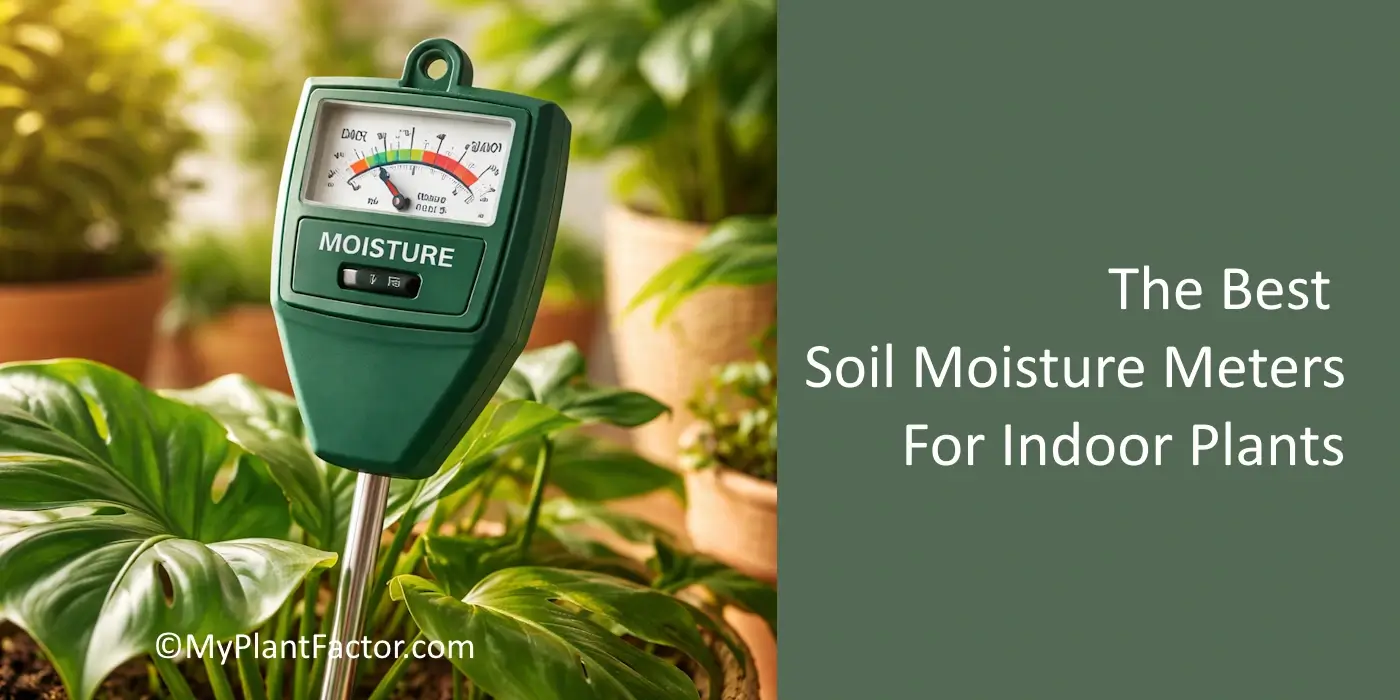
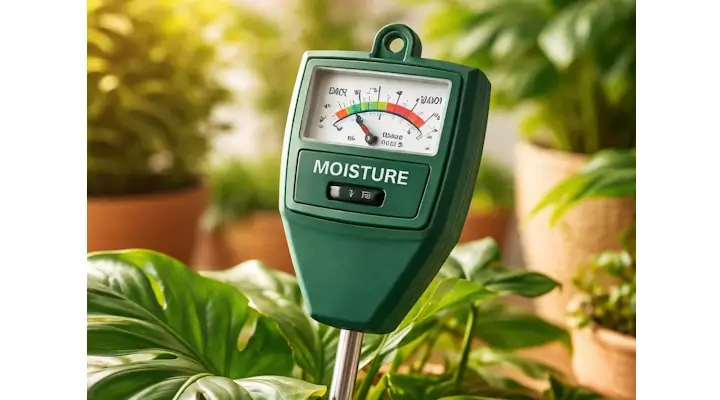
A soil moisture meter measures how easily electricity moves through the soil. When the metal probe enters the potting mix, a tiny electrical current passes between the probes. Wet soil conducts electricity more easily than dry soil, so the meter converts that resistance into a moisture reading.
That reading appears on a dial or digital display. Most analog meters use a simple color-coded scale—dry, moist, or wet. The goal isn’t laboratory precision. It’s a quick snapshot of hydration levels around the root zone.
Probe depth matters more than most people think. If you only measure the top inch of soil, the result can be misleading. Roots usually sit deeper in the pot, where moisture stays longer.
That’s why many meters use longer metal probes. When inserted near the root ball, they measure the moisture where the plant actually drinks.
Signs You May Need a Soil Moisture Meter

Most watering problems happen because the soil looks dry on top while deeper layers stay wet. A soil moisture meter removes the guesswork by showing what’s happening around the roots—where watering decisions actually matter.
Signs a moisture meter could help include:
• Your plant keeps drooping even though you recently watered it
• Leaves turn yellow or fall off without an obvious reason
• The soil feels dry on top but plants still show overwatering symptoms
• You struggle to judge when soil is actually dry enough to water again
• Large pots stay wet for days after watering
• You’ve lost plants to root rot in the past
• You own several houseplants with different watering needs
• You often “play it safe” and water just in case
For many indoor gardeners, a quick moisture check becomes one of the easiest ways to prevent both overwatering and underwatering.
Signs You May Need a Soil Moisture Meter
Most watering problems happen because the soil looks dry on top while deeper layers stay wet. A soil moisture meter removes the guesswork by showing what’s happening around the roots—where watering decisions actually matter.
Signs a moisture meter could help include:
• Your plant keeps drooping even though you recently watered it
• Leaves turn yellow or fall off without an obvious reason
• The soil feels dry on top but plants still show overwatering symptoms
• You struggle to judge when soil is actually dry enough to water again
• Large pots stay wet for days after watering
• You’ve lost plants to root rot in the past
• You own several houseplants with different watering needs
• You often “play it safe” and water just in case
For many indoor gardeners, a quick moisture check becomes one of the easiest ways to prevent both overwatering and underwatering.
If two or three of those sound familiar, a soil moisture meter can save a lot of guesswork. Here are the ones indoor gardeners rely on most.
Best Moisture Meters for Indoor Plants Reviewed
If you search for a plant moisture meter online, you’ll find dozens of nearly identical tools. Same dial. Same probe. Same promises. But indoor gardeners tend to settle on a handful that actually work well in real pots with real plants.
XLUX Soil Moisture Meter — Best Overall
The XLUX moisture meter is one of the most widely used plant moisture meters for indoor plants. It’s a simple analog soil test meter that focuses on one job—checking soil moisture around the roots. The long probe reaches deeper into pots, which helps avoid misleading surface readings.
Best For
Plant owners who want a dependable tool to monitor soil moisture without dealing with batteries or complicated settings.
What Works Well
• Long probe reaches deeper root level
• Clear color-coded dial display
• No batteries required
• Durable metal probe slides easily into potting soil
Possible Downsides
• Doesn’t measure light levels or soil pH
• Analog dial is less precise than digital displays
Why It Works for Indoor Plants
Many watering problems come from guessing how wet the soil really is. This meter reads moisture at the root level where plants absorb water, making it easier to stabilize watering routines.
If overwatering has been a recurring issue, this type of moisture meter is one of the simplest tools to add to your plant care routine.
Gouevn Soil Moisture Meter — Best Budget Option
The Gouevn soil moisture meter is a basic analog meter designed for quick moisture checks in potted plants. It focuses purely on soil moisture readings and skips extra sensors that can complicate cheaper meters.
Best For
Plant owners who want an inexpensive way to monitor soil moisture in an indoor garden.
What Works Well
• Very affordable entry-level meter
• Clear dry-moist-wet dial scale
• No batteries required
• Lightweight and easy to store
Possible Downsides
• Probe length is shorter than premium meters
• Build quality is simpler than higher-priced models
Why It Works for Indoor Plants
For many indoor gardeners, the biggest problem is simply knowing when soil has dried enough to water again. This meter provides a quick reading that helps avoid watering soil that’s still damp.
If you’re just starting a plant collection, a basic meter like this can quickly improve watering practices.
VIVOSUN Soil Moisture Meter — Best for Beginners
The VIVOSUN moisture meter is designed to be straightforward. The dial is easy to read and the probe responds quickly once inserted into the soil. Many plant owners use it as their first soil moisture meter while learning watering habits.
Best For
New plant owners who want a simple tool to build a consistent plant care routine.
What Works Well
• Clear dial display that’s easy to interpret
• Lightweight design
• No batteries required
• Works well with standard potting soil
Possible Downsides
• Probe can struggle in very compact soil
• Limited features compared with digital meters
Why It Works for Indoor Plants
Beginners often rely on watering schedules instead of soil conditions. A moisture meter like this shifts the focus back to the plant’s soil moisture level.
That small change usually improves watering equilibrium across an indoor plant collection.
Bend-Screen Soil Moisture Meter — Best for Large Pots
Large indoor pots can stay wet deep down even when the surface feels dry. This soil moisture meter with an adjustable display uses a long probe and screen that’s easy to read at all angles. This lets you read the moisture level without crouching beside floor plants or large containers.
The angled screen is surprisingly practical when checking moisture in tall planters or heavy ceramic pots. Instead of bending over repeatedly, you can read the dial comfortably while monitoring deeper soil where roots actually absorb water.
Best For
Indoor gardeners with large pots or heavy floor plants.
What Works Well
• Angled display is easier to read in large pots
• Long probe reaches deeper root zones
• Analog dial gives quick moisture readings
• Useful for monitoring soil moisture in tall containers
Possible Downsides
• Slightly bulkier than standard meters
• Fewer available reviews than some established brands
Why It Works for Indoor Plants
Large pots often stay wet longer at the root level. A longer probe helps detect hidden moisture that surface checks can miss.
For large indoor plants like rubber plants or fiddle leaf figs, deeper readings make watering decisions much more reliable.
Upgraded Soil Moisture Meter — Best if You Overwater Often
If you tend to water plants “just to be safe,”this upgraded soil test meter helps break that habit. The probe quickly shows whether the soil is still wet near the roots, making it easier to pause watering before overwatering turns into root rot.
The dial provides a clear dry-to-wet reading that helps confirm when soil has actually dried enough to water again. For plant owners who frequently second-guess watering schedules, it adds a quick check before grabbing the watering can.
Best For
Plant owners trying to correct chronic overwatering habits.
What Works Well
• Clear moisture scale that’s easy to interpret
• Measures soil moisture quickly after insertion
• Works well across different pot sizes
• No batteries required
Possible Downsides
• Analog dial still requires interpretation
• Doesn’t include light or soil pH sensors
Why It Works for Indoor Plants
Many indoor plant problems start when wet soil goes unnoticed. This meter helps monitor the water levels near the root ball so you can delay watering until the soil actually dries.
For anyone who tends to water “just in case,” that extra confirmation can make a big difference.
Digital Soil Moisture Meter — Best Digital Option
Digital moisture meters replace analog dials with a backlit screen that shows precise readings for soil moisture, temperature, and light intensity. For indoor plant owners who prefer clear numbers instead of needle gauges, the display makes soil conditions easier to interpret.
The sensor probe checks moisture deeper in the soil where roots are active, while the digital readout removes guesswork. That combination can help prevent common watering mistakes that lead to drooping leaves or slow plant growth.
Best For
Plant enthusiasts who prefer digital displays over analog dial meters.
What Works Well
• Digital display is easy to read
• Measures moisture, temperature, and light intensity
• Backlit screen works in low lighting conditions
• Helpful for monitoring indoor garden environments
Possible Downsides
• Requires batteries
• Digital sensors can be slightly slower to stabilize
Why It Works for Indoor Plants
Digital meters can be useful when plant care involves multiple variables. Monitoring soil moisture alongside lighting conditions helps plant owners understand how environment affects watering needs.
For tech-focused plant enthusiasts, a digital meter offers a bit more insight than a simple dial.
HSLGOVE 3-in-1 Soil Meter — Best Multipurpose Meter
The HSLGOVE moisture soil meter measures moisture, light levels, and soil fertility, giving a broader picture of what’s happening inside a pot. Instead of assuming watering is the problem, plant owners can check whether poor light or nutrient levels are affecting growth.
For mixed indoor plant collections, that extra information can be useful when troubleshooting yellow leaves or stalled growth. It allows quick checks across several plants without needing separate testing tools.
Best For
Plant enthusiasts who want a single tool for basic soil and lighting checks.
What Works Well
• Measures moisture, light levels, and soil pH
• Analog dial is simple to use
• Useful for mixed indoor plant collections
• No batteries required
Possible Downsides
• Multi-function meters may sacrifice some accuracy
• Dial can take a moment to stabilize
Why It Works for Indoor Plants
Indoor plant care often involves balancing watering and lighting conditions. A multipurpose meter helps monitor both without needing separate tools.
If you’re adjusting light placement while managing watering routines, this type of soil meter can be a practical addition to your plant care setup.
Common Mistakes When Using Plant Moisture Meters
Moisture meters are simple tools, but they’re easy to misuse. When readings look wrong, the problem usually isn’t the meter—it’s how it’s being used. A few small habits can throw off soil conductivity readings and lead to confusing watering decisions.
Common mistakes include:
- Measuring only the surface soil: Topsoil dries much faster than the root zone. Always insert the probe deeper into the plant soil so the reading reflects moisture around the root ball.
- Leaving the probe in the soil permanently: Most meters aren’t designed to stay in pots. Constant contact with moist soil can damage the sensor and distort readings.
- Using meters in extremely dry mixes: Very dry potting soil has low soil conductivity. When that happens, the meter may struggle to detect moisture accurately.
- Ignoring fertilizer salt buildup: Fertilizer salts accumulate over time and can affect soil conductivity. This can lead to readings that appear wetter than the soil actually is.
- Forcing the probe into orchid bark or chunky mixes: Meters work best in standard potting soil. In bark-heavy mixes, gently slide the probe between pieces rather than pushing through them.
How to Use a Moisture Meter Properly
A moisture meter works best when you measure the soil where the roots actually live. The goal isn’t just checking the top layer. You want a clear reading of moisture at the root level so your watering practices match what the plant is experiencing.
Use the meter like this:
- Insert the probe near the root ball: Slide the probe gently into the soil until it reaches the root level. Avoid pushing directly through thick roots. The reading should reflect moisture where the plant absorbs water.
- Measure more than one spot in the pot: Soil moisture isn’t always even. Test two or three locations around the pot to monitor the water distribution across the root zone.
- Read the moisture scale correctly: Most meters show a simple dry–moist–wet scale. “Moist” usually means the plant still has enough water. Wait until readings approach the dry range before watering again.
- Adjust your watering routine slowly: Plants respond gradually. If the meter shows wet soil several days after watering, extend the gap between watering sessions in your plant care routine.
- Monitor hydration levels over time: After a few cycles you’ll start to see patterns. Some plants dry faster than others. Use the meter to monitor the water levels and refine your watering practices.
Buying Guide: What Makes a Good Moisture Meter
Not all moisture meters for potted plants behave the same. Some are simple soil test meters that only measure moisture. Others include extra sensors for light or pH. The right choice usually depends on your plant collection and how much information you actually need.
Analog vs Digital Soil Meters
Analog meters are the most common for indoor plants. They use a simple dial to show moisture levels and don’t require batteries. Many plant owners prefer them because they’re fast and reliable for basic watering decisions.
Digital plant moisture meters can offer clearer readings, but accuracy varies. For everyday plant care, a simple analog soil test meter often works just as well.
Probe Length for Indoor Pots
Probe length matters more than most people expect. Short probes may only measure the top layer of soil, which dries quickly and can give misleading results.
A longer probe allows the meter to reach the root level where moisture actually matters. For larger houseplants or deep pots, longer probes tend to produce more reliable readings.
3-in-1 Meters (Moisture, Light, pH)
Some plant moisture meters combine several readings in one device. These tools can measure soil moisture, light levels, and soil pH.
They can be useful if you’re managing many plants with different lighting conditions. Just remember that multi-function meters sometimes sacrifice precision compared with single-purpose tools.
Build Quality and Accuracy
Build quality affects long-term accuracy. Strong metal probes resist bending and insert more smoothly into compact soil mixes.
Reliable meters also produce stable readings rather than jumping between numbers. Consistent results matter more than fancy features when you’re trying to manage watering routines across multiple plants.
Who Should Use a Soil Moisture Meter

A soil moisture meter isn’t essential for every plant owner, but it becomes very useful once watering starts getting inconsistent. If you’ve lost potted plants from overwatering—or you’re constantly second-guessing your plant care routine—a simple meter can remove a lot of uncertainty.
These tools are especially helpful for certain types of plant setups.
- New plant owners: Beginners often struggle to judge soil moisture by touch. A meter gives quick feedback and helps build confidence with basic watering routines.
- Large plant collections: Once your plant collection grows into a small indoor jungle, watering becomes harder to track. A quick moisture check saves time and prevents accidentally soaking multiple plants.
- Watering-sensitive plants: Plants like snake plants, rubber plants, and succulents dislike consistently wet soil. A moisture meter helps prevent root rot by showing when soil has truly dried.
- Indoor gardeners using ceramic pots: Ceramic and decorative cachepots slow evaporation. A meter helps indoor garden setups where moisture stays hidden deeper in the pot.
- Anyone struggling with watering schedules: Strict watering calendars rarely work. A moisture meter helps plant enthusiasts adjust watering based on real soil conditions instead of guesswork.
Moisture Meter vs Finger Test
Many plant owners rely on the finger test—pushing a finger into the soil to feel for moisture. It works in simple cases, but it has limits. Your finger usually reaches only the top inch of soil, which often dries faster than the root zone.
A moisture meter checks deeper into the pot. The probe measures soil moisture closer to the root level where the plant actually absorbs water. That makes the reading more reliable for larger pots or dense potting mixes.
The finger test still has value. Experienced plant owners often combine both methods. Feeling the soil gives a quick surface check, while the meter confirms whether moisture is still sitting deeper in the pot.
For small plants, the finger test may be enough. But once pots get larger—or your indoor plant collection grows—a moisture meter becomes a more consistent way to monitor watering.
Moisture Meter Alternatives (If You Prefer Low-Tech)
Not everyone wants another tool in their plant care kit. Long before plant moisture meters became popular, indoor gardeners used simple methods to judge soil moisture. These approaches still work, especially if you’re comfortable observing your plants closely.
Here are a few reliable low-tech options.
- Chopstick method: Push a wooden chopstick into the soil near the root ball and leave it for a minute. When you pull it out, damp soil will stick to the wood. If it comes out mostly clean, the soil is likely dry deeper down.
- Manual soil feeling: Some plant owners rely on manual feeling to judge moisture. Push a finger deeper into the potting mix and feel the soil structure. Cool, compact soil usually means moisture is still present.
- Weight of the pot method: Lift the pot right after watering and notice the weight. As the soil dries, the pot becomes noticeably lighter. Many experienced plant owners use this method to judge watering needs quickly.
- Watching air humidity and drying patterns: Air humidity affects how fast soil dries. In dry indoor air, soil loses moisture quickly. In humid rooms, pots stay damp longer. Paying attention to humidity helps you understand how your plants respond to watering.
Frequently Asked Questions
Do moisture meters work in all potting soils?
Most moisture meters work best in standard potting soil. Very chunky mixes, such as orchid bark or heavy perlite blends, can reduce soil conductivity and make readings less consistent.
Can a moisture meter prevent root rot?
A moisture meter can help prevent root rot by showing whether the soil is still wet near the roots. It will not fix drainage problems, but it can stop unnecessary watering before the soil becomes waterlogged.
Are 3-in-1 soil meters accurate?
3-in-1 soil meters are usually most reliable for moisture readings. Light and pH readings can still be useful, but they tend to work better as rough indicators than precise measurements.
How deep should a soil probe go?
The probe should reach close to the root zone, usually about halfway to two-thirds down the pot. Checking only the surface soil often gives a false sense that the pot is drier than it really is.
Do moisture meters work in orchid bark?
Not especially well. Orchid bark creates air gaps that can make moisture readings less reliable. In bark-heavy mixes, many growers still prefer the chopstick method or lifting the pot to judge moisture levels.
