

As an Amazon Associate I earn from qualifying purchases at no extra cost to you.
If you’re looking at Hoya carnosa varieties, it’s easy to fall for the prettiest one first—and that’s usually where the frustration starts.
Some varieties stay compact and easy. Others trail fast, need stronger light, or end up taking over shelves you didn’t plan to sacrifice. Pick the wrong one for your space, and what looked like a dream wax plant can stall, stretch, or simply never give you that full cascading look you wanted.
The upside is that most Hoya carnosa varieties are easy to grow at home. However, some consistently outperform the rest for beginners, hanging displays, and low-maintenance homes. Those are the ones most plant owners wish they’d started with first.
This guide breaks down the best Hoya carnosa varieties by growth style, care level, and home setup, so you can choose the one that actually suits your light, your shelf space, and how much effort you want to give it.
Jump to Your Favorite Hoya:
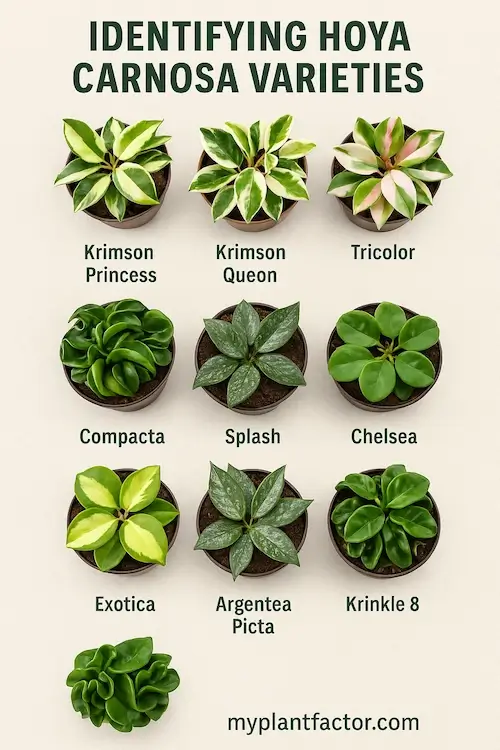
Quick Visual Guide: Identifying the Most Popular Hoya Carnosa Varieties
Most varieties grow happily in pots or hanging baskets, especially when they get that golden combo of bright, filtered light and high humidity. From their porcelain-pink flowers to that thick foliage, these vines feel just as at home in a jungle as they do in your living room.
Its vining nature adds a unique charm, with slender vines that can elegantly trail or climb, depending on their support. The varieties of Hoya carnosa boast an impressive array of flower colors—from pristine white flowers to hints of light pink, purple, and red growing in parachute-shaped clusters. The porcelain-like blooms exude a sweet fragrance, adding a sensory delight to any room.
Hoya Carnosa Overview
This trailing beauty is part of the dogbane family (Apocynaceae) and has become a staple for indoor plant lovers. Known for its glossy, succulent leaves and clusters of sweetly scented, starry blooms, the wax plant brings a delicate charm that lasts.
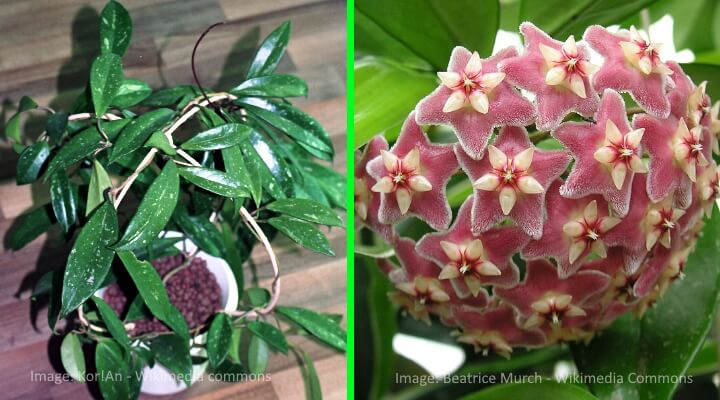
With roots in Eastern Asia and Australia, this beloved species was named by botanist Robert Brown in tribute to his friend Thomas Hoy. It’s been turning heads ever since.
Varieties of Hoya Carnosa
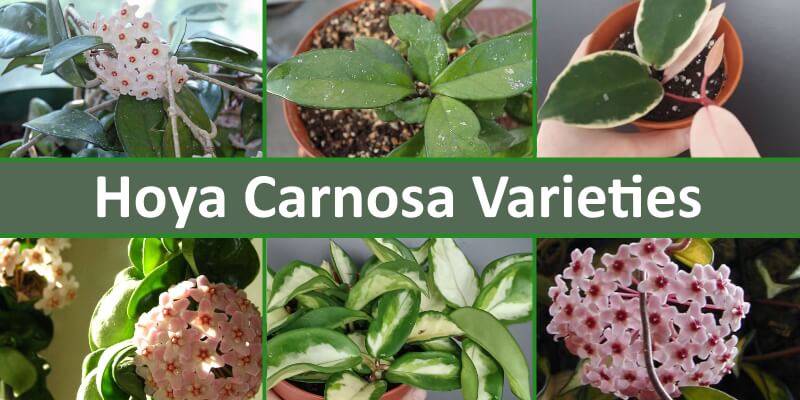
Hoya Carnosa forms include varied types of tropical hoya plants with diverse leaves and flowers. Variegated H. carnosa varieties have waxy green leaves with pale yellow and white patterns. Some compact varieties of carnosa plants have curled or crinkled leaves. H. carnosa flower varieties range from white to various pink shades
Hoya Carnosa Krimson Princess
Krimson Princess Krimson Princess is a showstopper with creamy white and blush-pink variegation nestled in the center of glossy green leaves. This hoya variety has a fuller, bushier shape than most and dazzles with clusters of deep pink, starry blooms. Give it a warm windowsill and watch those vines glow like a watercolor painting in the morning light.
Also called ‘Rubra,’ the Krimson Princess flowers are deep pink, star-shaped blooms with dark red centers.

Best for inner cream variegation with green margins
If you love creamy center variegation with the occasional blush-pink leaf, Krimson Princess is the one people end up staring at twice. It stays easy to grow, trails beautifully, and adds a brighter, more collectible feel to shelves or hanging baskets.
Krimson Princess identifying feature: Pink and creamy white variegation in the center of leaves.
Top Tips: How to propagate Hoya Krimson Princess.
Hoya Carnosa Krimson Queen
The Krimson Queen flips the script with her creamy-pink variegation that runs along the leaf margins instead of the center. The coloring deepens with more light, adding playful flashes of pastel to every trailing vine. While her blooms are similar to the Princess, her look is more regal, with elongated leaves and a slightly wilder sprawl.
is a variety of Hoya with waxy green, lanceolate leaves and variegated margins. The leaf edges can be creamy-white and pink depending on the light conditions. It has flowering umbels, a slightly lighter pink shade than the H. carnosa Crimson Princess.

Best for bright trailing shelves
Love the cream-edged leaves and pink blush? This is one of the easiest trailing hoyas to grow indoors, especially in bright filtered light. It’s easy to propgate and grow indoors.
Krimson Queen identifying feature: Variegation of creamy-white and pink colors on the leaf margins.
Tricolor
The H. carnosa Tricolor is a dazzling variegated hoya variety with variegated patterns in the leaf center. Depending on the amount of bright light, the colors range from creamy white to pale yellow and pink. ‘Tricolor’ is another name for the H. carnosa Krimson Princess.
Best for new pink growth
Tricolor gives you creamy variegation, soft green centers, and some of the prettiest pink new leaves in the carnosa group. If you want a shelf plant that keeps changing as it grows, this one never feels static.
Hoya Tricolor identifying feature: Look for creamy white and pinkish patterns on the leaf center.
Splash
The ‘Splash’ is an attractive type of Hoya with unique foliage characterized by speckled leaves. The waxy, succulent leaves are dark green with silvery to white splash markings. This variety is prized for its distinctive leaves and intricate leaf patterns.

Hoya carnosa Splash identifying feature: Dark green lanceolate to oval leaves with silver speckles.
Hoya Carnosa Compacta
This twisty stunner is often called the Hindu rope plant and looks like a succulent that tied itself in knots. Compacta’s thick, curled foliage grows in dense ropes that spill beautifully over shelves or baskets. In the right conditions, she’ll surprise you with soft pink blooms that peek out like hidden gems.

Try a Hoya Carnosa Compacta
Compacta is the curly classic. Those twisted rope-like vines instantly make a shelf or hanging planter feel more collectible. It grows slowly, stays tidy, and rewards patience with thick trailing strands that look better every year.
The Hoya carnosa Compacta Variegata rope plant is similar to the compacta cultivar but has eye-catching variegated leaves.
Hoya carnosa Compacta identifying feature: Thick, curled, twisted leaves growing on rope-like vines
Hoya Carnosa Chelsea
The ‘Chelsea’ is a beautiful and unusual type of Hoya. It’s prized for its succulent, heart-shaped leaves with dimpled foliage and dents. The delightful cordate leaves grow on thin, trailing stems. The rare Hoya has vibrant pink starry flowers.

Bring Home a Hoya Chelsea
Chelsea stands out for its thick, slightly cupped leaves that give it a fuller, more sculpted look than standard carnosa. It’s easygoing, forgiving, and a great choice if you want something classic with a more polished feel.
Hoya carnosa Chelsea identifying feature: Shiny green, heart-shaped leaves with a puckered texture.
Hoya Carnosa Exotica
The Exotica hoya variety is identified by its lush, dark green, pointed leaves with unusual white variegation. However, sometimes, types show creamy yellow or pinkish patterns on the leaves. The fragrant umbels consist of pale pink to white flowers. It grows 5 feet (1.5 m) tall.
Choose a Hoya Carnosa Exotica
Exotica gives you that high-contrast variegation people notice straight away—green centers with creamy edges that brighten darker corners. It trails beautifully, stays beginner-friendly, and adds a stronger visual pop than plain green carnosa types.
Hoya carnosa Exotica identifying feature: Pointed waxy leaves with rounded bases and pure white to creamy white variegation.
H. Carnosa ‘Argentea Picta’
The type of hoya called ‘Argentea Picta’ is a striking variety with silvery variegated blue-green leaves. Compared to other H. carnosa varieties, the leaves are broadly oval without a noticeable apex. The green and silver-gray markings create an elegant and unique appearance. This hoya variety produces delicate pinkish-white flowers in clusters, adding to its charm.
Hoya carnosa Argentea Picta identifying feature: Thick, succulent, variegated, oval, dusty green leathery leaves with shades of cream and silver around the margins.
H. carnosa ‘Krinkle 8’
The ‘Krinkle 8’ is a distinctive hoya variety with lance-shaped, glossy green leaves and a distinctive puckered appearance. The leaves grow alternately on long stems, creating a bushy type of Hoya with pale pink, fragrant flowers. The green wax plant also blooms with fragrant pink flower clusters.
Pick Up a Hoya Krinkle 8
Krinkle 8 is the fun one. The deeply dimpled leaves catch light differently and give the plant extra texture without making care any harder. If you like unusual foliage but still want easy carnosa care, this one hits the sweet spot.
Hoya carnosa Krinkle 8 identifying feature: Oval to heart-shaped pointed leaves with a wrinkled pattern in the leaf center, creating a row of impressions like the number 8.
Hoya carnosa Freckles
Freckles is a unique and beautiful variety of popular wax plants with deep green leaves and speckled variegation. The leaves have silvery-gray freckles or white spots, making the foliage distinctive. The hoya leaves are more rounded than pointed. It has clusters of white starry flowers with orange centers.
Hoya carnosa Freckles identifying feature: Broad, thick, succulent leaves with a rounded apex and silvery speckles on dark green.
Hoya Carnosa Plant Care
Varieties of Hoya carnosa tropical plants are some of the easiest ones to keep, making them common house plants.
However, hoya plants have specific care requirements to ensure they flower and produce healthy, succulent, trailing vines. The essential care aspects usually involve bright light, protection from direct sunlight, and watering when the top layer of soil is dry.
Light conditions
All varieties of Hoya carnosa plants require bright light to flourish. The light intensity, duration, and quality are all crucial factors in their care. They appreciate at least six hours of bright, indirect light daily. However, they can put up with some direct sunlight in the morning.

To avoid the risk of scorching their tender leaves, shield them from direct sunlight if they are near a south-facing window.
As a rule of thumb, varieties with variegated leaves, such as the Krimson Princess and Krimson Queen, need more light than those with solid green leaves.
In very low-light conditions, variegated types of hoya carnosa can benefit from extra lighting. Here you can find the best grow lights for indoor plants to help boost plant growth and variegation.
Hoyas tolerate a grow light closer and longer than thin-leaved plants like pothos or philodendron — their thicker leaves are more forgiving — but a fixture placed too close for too long can still scorch even a hoya, so check distance before assuming more light is automatically better.
Watering and soil requirements
Watering carnosa varieties of plants requires a nice balance of keeping the soil moist but not overly soggy. Only water the healthy plant when the top one or two inches of soil is dry. Water the indoor plant with room temperature water and ensure excess water drains out to prevent soggy soil and root rot.
Hoyas are epiphytic plants like hoyas need a well-draining soil mix, mirroring their natural habitat. In these conditions, root ventilation is vital. A potting soil mix with peat moss, orchid bark, and perlite is ideal for balancing drainage and moisture retention.
Use the Right Hoya Potting Mix
Most Hoya carnosa varieties grow better in a chunky, fast-draining mix that keeps roots airy instead of soggy. A bark-based blend with perlite or coco chips helps prevent overwatering and encourages stronger trailing growth.
Soil matters more than most carnosa care guides let on. Standard potting mix holds too much water for a plant that grows as an epiphyte in the wild, and root rot shows up slowly — yellowing, stalled growth — before it’s obvious what’s wrong. Our plant-type soil guide covers what to look for and how to match a mix to what you’re actually growing.
If you notice hoya yellow leaves developing, you should think about your watering schedule or even replacing the soil to provide a better growth environment.
Do Hoya Carnosa Varieties Need Fertilizer?
Most Hoya carnosa varieties grow well without constant feeding, but fertilizer makes a visible difference once active growth starts. If vines feel slow, leaves stay small, or blooming never happens, feeding is often the missing step.
During spring and summer, use a balanced liquid houseplant fertilizer every 4–6 weeks at half strength. That supports longer vines, thicker leaves, and stronger new growth without pushing soft, weak stems.
The biggest mistake is feeding during low-light winter months when the plant isn’t actively growing. That usually leads to salt buildup in the potting mix instead of useful growth.
If your carnosa is already in bright indirect light and the roots look healthy, fertilizer is usually the easiest upgrade for faster trailing growth and better flowering.
Best hoya fertilizer for thicker vines and blooms
If your carnosa looks healthy but growth feels slow, a balanced liquid fertilizer is usually the missing piece. Used during spring and summer, it helps support fuller vines, stronger leaves, and better flowering potential.
Check Hoya Fertilizer on Amazon