


As an Amazon Associate I earn from qualifying purchases at no extra cost to you.
Hoya fitchii is a compact climbing hoya from the Philippines, grown for its light green leaves traced with darker veins and its round clusters of peach-toned, star-shaped flowers. It’s one of the easier hoyas to keep alive. It’s also one that often refuses to bloom for longer than people expect.
The care itself isn’t complicated, but the margins matter. Too little light and the veining fades and the vines stretch. Too much water in a dense mix and the roots go before the leaves show it. Most fitchii problems trace back to one of those two, not to anything exotic.
Below is the full setup: light, water, soil, humidity and feeding, then how to tell fitchii apart from look-alikes and what actually triggers flowering. The blooming section is the one most guides get wrong.
In this guide:
From its striking appearance to its low-maintenance care requirements, discover why this type of hoya plant is the ideal choice for your indoor houseplant garden and first-time plant owners.
Hoya Fitchii: Overview
When identifying Hoya Fitchii (wax plant), look for its distinctive lance-shaped leaves and small, star-shaped coral-orange flower clusters. Its lanceolate, dark green, veined leaves look stunning on its trailing stems, contrasting with the plant’s flowers. This beautiful plant is a great choice if you love unique and eye-catching foliage.
Fun fact: Hoya fitchii is described as an epiphytic plant, meaning that the roots get moisture and nutrients from the air, water, and organic debris rather than the soil.
Hoya Fitchii Care Metrics at a Glance
Hoya fitchii needs bright indirect light, a chunky mix of bark, perlite and coir, and water only once the top 1–2 inches of mix are dry. Keep it at 65–85°F with humidity around 50–70%. Feed at quarter strength every 3–4 weeks in spring and summer, and never cut off old flower spurs.
Use this quick care table to check whether your Hoya fitchii setup is staying within the safest growing range.
| Care Category | Recommended Range / Details | Notes |
|---|---|---|
| Light | 10,000–20,000 lux (bright indirect) | Near east or south-facing window with a sheer curtain |
| Temperature | 65–85°F (18–29°C) | Avoid cold drafts and temperatures below 60°F |
| Humidity | 50–70% | Use a humidifier during dry months |
| Watering | When the top 1–2 inches are dry | Usually every 7-14 days in summer, less in winter |
| Soil Mix | 40% orchid bark, 30% perlite, 30% coco coir | Fast-draining and airy is essential |
| Fertilizer | ¼ strength every 3–4 weeks | Pause feeding in winter |
| Pot Size | 4–6” with drainage | Repot every 1–2 years once rootbound |
| Propagation | Node cutting in water or moss | Use 1 node with at least 2 leaves |
| Growth Rate | Moderate (8–12” per season) | Trailing and vining habit |
| Blooming Triggers | 12+ hours daylight, humidity, mature plant | Never remove peduncles |
Your Hoya fitchii is trying to tell you something.
What is Hoya Fitchii?
Hoya fitchii is a member of the Hoya genus, and botanists say it’s native to the Philippines. Its botanical name honors Charles Marden Fitch, the person who discovered this gorgeous plant. This rare and unusual type of hoya is known for its beautiful waxy leaves, delicate flowers, and relatively easy care requirements.
How to Identify Hoya Fitchii
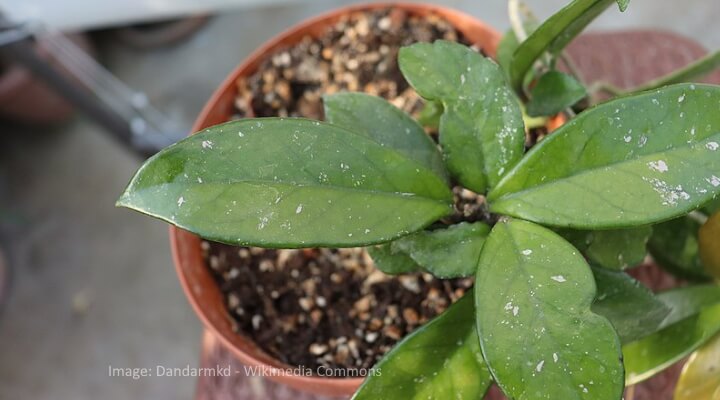
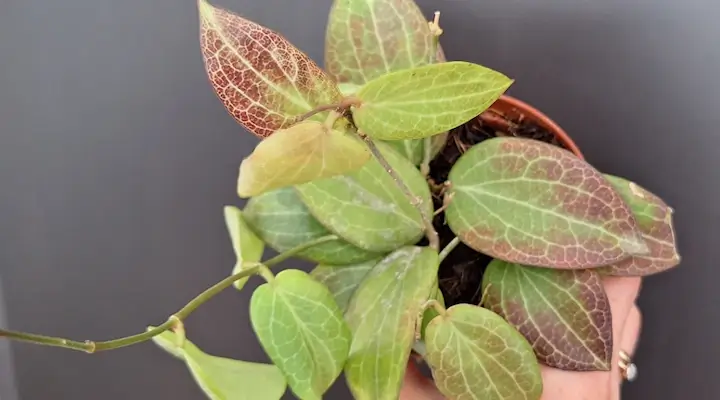
Hoya fitchii has oval to elliptical, slightly succulent leaves in light to mid green, marked with a network of darker green veins that sharpens in brighter light. It flowers in rounded umbels of small, star-shaped, peach-toned blooms. The vines are thin and twining, and it stays more compact than most climbing hoyas.
Hoya fitchii leaves
The leaves of Hoya fitchii are glossy and succulent, with a deep green coloration. They are typically elliptical or lanceolate in shape, with smooth edges. One of the most striking aspects of Hoya fitchii leaves is its prominent veining patterns, which add to the plant’s overall visual appeal.
Hoya fitchii flowers
The flowers of Hoya fitchii are small and star-shaped, featuring intricate patterns and often boasting pink, white, or cream hues.

Just remember never to cut off the flower spurs because this type of hoya flowers on old spurs, rather than producing new ones each time.
Hoya fitchii stems
Hoya fitchii stems are typically slender and vine-like, allowing the plant to cascade gracefully from hanging baskets or trail elegantly along trellises. The stems may also develop aerial roots, aiding the plant’s ability to climb and attach to various surfaces.
Hoya Fitchii Plant Care Advice
Proper care is essential for maintaining the health and vitality of your Hoya fitchii plant. Here are some essential care tips:
Light Requirements
Give Hoya fitchii bright indirect light: an east window, or a south or west window behind a sheer curtain. Around 10,000–20,000 lux keeps the leaf veining sharp and makes flowering possible. In low light, it survives but stretches, the veins fade, and it rarely blooms.
An east or west-facing window is ideal for providing the appropriate amount of light without risking sun damage. If natural light is insufficient, supplemental artificial lighting, such as grow lights or T-5 lights, can be beneficial, especially during the darker months.
If your hoya fitchii is getting leggy or experiencing slow growth, these grow lights for hoya plants could provide the best solution.
How Often to Water Hoya Fitchii
Water Hoya fitchii when the top 1–2 inches of mix are dry, then soak it until water runs out of the drainage holes. In summer, that’s usually every 7–14 days; in winter, less. Slightly wrinkled or soft leaves mean it’s thirsty. Yellowing lower leaves in a wet mix mean it’s staying too wet.
Hoya plants appreciate slightly more frequent watering during the growing season, typically spring and summer. In late fall and winter, reduce watering frequency as the plant’s growth goes dormant. However, don’t water on a strict watering schedule, but always let the dryness of the soil mix dictate when to water it.
Best Soil for Hoya Fitchii
Hoya fitchii needs a fast-draining, airy mix, not straight potting soil. A reliable blend is roughly 40% orchid bark, 30% perlite, and 30% coco coir. It holds a little moisture around the roots while letting air in, which is what an epiphyte’s roots are built for. Dense soil is the most common cause of root rot.
This guide to the best soil mixes for hoya plants has an easy-to-follow DIY recipe and reviews of pre-made potting mixes that work perfectly for all types of hoya plants.
Repotting should be done sparingly, as Hoya fitchii plants prefer to be slightly root-bound.
Humidity levels
Hoya fitchii grows well in 50–70% humidity but tolerates normal household levels once it’s established. Dry winter air from heating is where problems start: new leaves may stick in their sheath or come out crinkled. A humidifier nearby is more effective than misting, which raises humidity for only a few minutes.
This comprehensive hoya plant care guide covers everything you need to keep your hoya collection thriving indoors.
Hoya Fitchii Flowers
Hoya fitchii flowers in rounded clusters of small, star-shaped, waxy blooms, usually in peach to orange tones with a darker center. The exact color varies between clones: some lean yellow, others pinkish. Each cluster usually lasts about a week, and the plant reflowers from the same spur, so old peduncles should never be cut off.
Each cluster (an umbel) grows from a short, woody spur called a peduncle. The buds sit on thin stalks that radiate out from the spur, so an open cluster looks like a small ball of stars. The waxy, slightly glossy finish is where the “wax plant” name comes from.
Why flower color varies (orange, yellow, pink)
Hoya fitchii flower color varies because plants sold under that name come from different wild collections and cuttings. Some clones open orange, some closer to yellow, and some carry a pink blush. Light also plays a part: flowers that open in brighter conditions tend to come out deeper in color.
That’s why two plants sold as “Hoya fitchii” can flower quite differently, and why sellers list names like “fitchii orange” or “fitchii yellow”. Neither is a separate species. They’re clones of the same plant that happen to vary.
A label reading “Hoya aff. fitchii” is a different matter. “Aff.” is short for affinis, meaning the plant resembles fitchii but hasn’t been confirmed as the species. Expect some differences in the leaves or flowers.
How Long Do Hoya Fitchii Flowers Last?
Hoya fitchii flowers usually last about a week per cluster. The buds take a few weeks to develop from a spur, open over a day or two, and then drop together. A mature plant can carry several clusters at different stages, so the flowering period as a whole runs much longer than any single cluster.
Open flowers drip a small amount of sticky nectar. Keep the plant off wood furniture or put a saucer underneath while it’s in bloom.
When the flowers drop, leave the spur where it is. Hoya fitchii reflowers from the same peduncles, often more than once a season once the plant is established. Cutting a spur off removes a future flowering point, and the plant has to grow a new one before it can bloom there again.
Why Your Hoya Fitchii Isn’t Blooming
Hoya fitchii usually won’t bloom until the vines are mature, often 2 years or more from a cutting. It needs strong indirect light (12+ hours in the growing season), and its old flower spurs (peduncles) must stay on, because it reflowers from the same spurs. Moving it often or cutting the spurs off resets the clock.
How to Propagate Hoya Fitchii in Soil
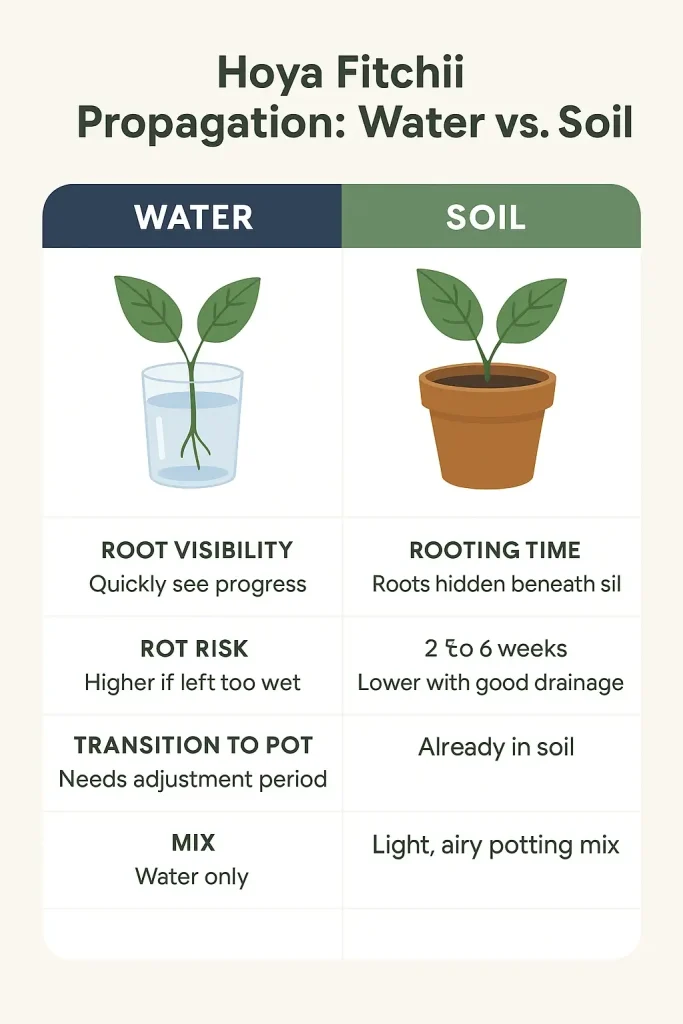
Propagate Hoya fitchii from stem cuttings with at least one node and two leaves. Root them in water, damp sphagnum moss or a chunky soil mix, kept warm and humid in bright indirect light. Roots usually form in 3–4 weeks. Water rooting is easier to watch; moss or soil gives an easier transition to the pot.
Soil propagation gets overlooked, but honestly? It’s the method that feels closest to how hoyas grow in the wild. Less fuss, less transition shock. Here’s how I do it:
- Snip a healthy cutting with at least one node and a couple of leaves. No blooms—they sap energy.
- Let the cutting callous over for 24–48 hours. It helps prevent rot once it’s in soil. Don’t rush it.
- Mix up your soil: I use equal parts coco coir, perlite, and worm castings—then throw in some orchid bark for airflow. You want something chunky and fast-draining.
- Plant the cutting about an inch deep into your soil mix. Just enough to anchor it without burying the leaves.
- Place it in a clear container or cover it with a plastic bag to trap humidity. Instant mini greenhouse.
- Keep it warm and bright, but out of direct sun. Think filtered light, like near a north or east-facing window.
- Water just enough to keep the soil slightly damp. I usually mist around the base instead of full watering.
- Check for roots in 3–4 weeks. Give the cutting a tiny tug—if it resists, congrats! Roots are happening.
Hoya Fitchii Pest Control
Even hardy hoyas like fitchii can run into pest trouble. The usual suspects? Mealybugs hiding in leaf creases, aphids clustering near new growth, fungus gnats from soggy soil, and the occasional spider mite outbreak. Left unchecked, they weaken the plant and spoil those prized leaves.
| What You See | Most Likely Issue | Best Next Step |
|---|---|---|
| Tiny black bugs around the soil | Fungus gnats or springtails | Learn how to remove them fast |
| White fuzz on stems or leaf joints | Mealybugs | Use the pest ID guide |
| Recurring bugs after watering | Contaminated or overly wet soil | Sterilize the soil naturally |
If the infestation keeps returning, my tested guide to the best Neem Oil for Houseplants shows which formulas actually work. They are safe, organic, and work against a broad range of pests.
A light spray every 7–10 days can break the pest cycle without harming your hoya’s delicate foliage.
Common Hoya Fitchii Problems
The most common Hoya fitchii problems are root rot from wet, dense mix, leggy growth and faded veins from low light, and cold damage below 60°F. Mealybugs and aphids are the usual pests; they cluster on new growth and in leaf joints. Most of these problems show in the leaves before anywhere else.
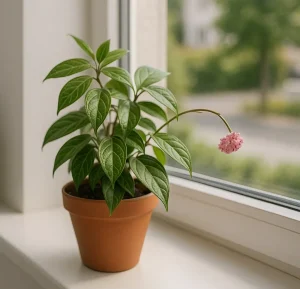
Here are some ways to resolve common issues with growing indoor hoya plants.
- Overwatering: Excessive moisture can lead to root rot and other fungal diseases. To prevent waterlogged conditions, allow the soil to dry out between waterings.
- Pests: Hoya fitchii may attract pests such as aphids, mealybugs, fungus gnats, and spider mites. Regular inspection and treatment with insecticidal soap or neem oil can help control infestations.
- Insufficient light: Inadequate light can result in leggy growth and poor flowering. Adjust the plant’s location to provide bright indirect light or supplement with artificial lighting as needed.
- Temperature extremes: Hoya fitchii prefers warm temperatures and can be sensitive to cold drafts. Avoid placing the plant near heaters, air conditioners, or drafty windows, as sudden temperature fluctuations can stress the plant.
Hoya Fitchii: FAQs
Is Hoya Fitchii easy to care for?
Yes—this compact wax plant is low maintenance and perfect for indoor growers. It thrives in bright, indirect light and needs watering every 10–12 days. Give it chunky, well-draining soil, some humidity, and space to vine. It’s one of the easiest hoyas I’ve ever kept alive and blooming.
Is Hoya Fitchii toxic to pets?
Hoyas are listed as non-toxic to cats and dogs by the ASPCA. Chewing the leaves can still cause mild stomach upset, and the milky sap can irritate. If your pet eats a lot of it, call your vet. Researchers at NParks note the milky sap can cause irritation or stomach upset if swallowed.
How fast does Hoya Fitchii grow?
It grows moderately fast—about 8–12 inches of vining stems per growing season if you give it warm temps, bright indirect light, and a balanced fertilizer. Mine wakes up fast in spring, sending out new tendrils weekly. Cooler, darker months? Growth slows, but those veins stay gorgeous year-round.
Can Hoya Fitchii grow in low light?
Technically yes, but don’t expect much. In low light, Hoya Fitchii grows slower, leaves lose color, and flowering rarely happens. Mine got leggy in a dark corner until I moved it to a brighter spot. Now it’s thriving again. This hoya really craves bright, indirect light to look its best.
When should I repot Hoya Fitchii?
Only repot when it’s fully root-bound or water drains too fast. Mine stayed happy in the same pot for almost two years. Go up just one pot size and use chunky soil with drainage holes. Spring is best—it gives your plant time to adjust before blooming season kicks in.
What’s the best fertilizer for Hoya Fitchii?
Use a gentle, balanced liquid fertilizer (like 10-10-10) at ¼ strength every 3–4 weeks in spring and summer. I’ve had great results with organic seaweed blends too. Skip feeding in winter—hoyas rest then. Fertilizer boosts healthy leaves, root growth, and yes—eventually more flowering!
How long does it take Hoya Fitchii cuttings to root?
In ideal conditions, Hoya Fitchii cuttings root in about 3–4 weeks. Water roots usually show faster, but soil roots establish more smoothly. I’ve had success with both—just make sure humidity stays up, and keep the node buried. New leaf growth usually follows about a month after rooting.
Can I put Hoya Fitchii outside in summer?
Yes—Hoya Fitchii loves summer warmth but only if kept out of direct sunlight. I move mine to a covered patio once temps stay above 65°F. Just watch for pests and wind damage. Bring it back in before nights dip below 60°F to avoid shock.
Should I mist Hoya Fitchii?
Light misting is fine—but not required daily. I use a humidifier instead since misting doesn’t do much long-term. In dry months, especially with heating, occasional misting can help new leaves unfurl. Just avoid wetting the soil too much—Fitchii hates soggy roots more than dry air.
