



As an Amazon Associate I earn from qualifying purchases at no extra cost to you.
Ever wondered why you might need to sterilize soil? You’d think there wouldn’t be an issue with bringing home a bag of potting mix from Home Depot or digging up some soil from the garden. But many plant parents share their shock at opening that bag of potting soil and seeing something move.
Quick Guide: How to Sterilize Soil Naturally
- Why Bugs Appear in Potting Soil
- Should You Sterilize Your Soil?
- Method 1 – Gentle Heat Treatment (Oven or Microwave)
- Method 2 – Freeze Soil to Sterilize Soil and Kill Bugs Indoors
- Method 3 – Natural Soil Treatments (Neem Oil, H₂O₂ & Cinnamon)
- Method 4 – Solarization for Outdoor Batches
- How to Reuse Sterilized Soil Safely
- Sterilize Houseplant Soil: FAQs
Tiny jumpers—fungus gnats, root aphids, or soil mites—that can turn your peaceful indoor garden into a mini horror show. One minute, your Monstera looks fine, the next, you’re waving off flying dots that seem to appear after every watering.
Worried about other bugs on your houseplants? Check out our guide to tiny black bugs on houseplants for the full rundown.
Most people panic and toss the whole bag. I’ve done it too. But here’s the thing—you can sterilize soil naturally and make it safer than ever. No harsh chemical treatments, no pricey replacements, just a clean, recycled earth base your plants can actually thrive in again.
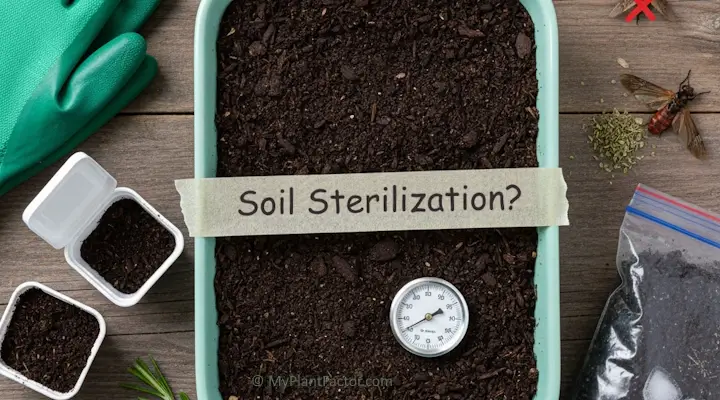
We’ll talk about heat treatments (yes, even oven sterilization or using a pressure cooker), homemade organic root drenches, and natural pest control options like Neem oil, garlic spray, and gentle H₂O₂ drenches. These kill soil-dwelling insects and their eggs while preserving beneficial microbes, soil bacteria, and nematodes—the good guys that naturally fight off plant diseases.
If that sounds like your kind of project—eco-friendly, practical, and slightly therapeutic—you’re in the right place. Let’s start cleaning that soil the natural way.
Why Bugs Appear in Potting Soil
Ever noticed that bugs seem to appear right after watering? That’s not your imagination. Fungus gnats, root aphids, and other soil-dwelling insects adore damp soil—it’s like a warm Airbnb for pests.
When potting mixes or garden soil stay moist too long, the organic matter starts breaking down, inviting insect pests and plant pathogens. Eggs already hidden in the mix hatch faster in warm, wet conditions, especially if your bag doesn’t have ventilation holes. Even premium brands like Happy Frog or Recycled Earth can carry a few unwanted guests if they’ve sat sealed too long.
I’ve seen Reddit posts where plant parents swear bugs appeared overnight—usually right after watering or fertilizing. It’s not magic; it’s damping-off conditions and still air, perfect for tiny flyers.
The fix is surprisingly simple: let the top inch of soil dry before watering again. Dry soil keeps fungus gnats and spider mites away and gives your beneficial microorganisms—like soil bacteria and nematodes—a fighting chance to balance things out naturally.
If fungus gnats or soil pests keep returning, it’s often because the soil stays wet too long. A soil moisture meter helps confirm when the root zone has actually dried
For more information on natural pest control, check out my tips on how to control fungus gnats in soil.
Should You Sterilize Your Soil?
So, do you really need to sterilize? Not always. But if you’ve spotted fungus gnats, root aphids, or that slimy film of mold creeping across damp soil, it’s time.
Think of soil sterilization as a soft reset for your indoor garden—a way to wipe out insect eggs, soil pathogens, and lingering plant diseases before they spread. It’s crucial when you’re reusing potting mixes, dealing with damping-off, or bringing garden soil indoors.
In many cases, it’s best to switch to a high-quality indoor potting soil mix that is enhanced with pine bark to improve drainage.
That said, overdoing it has a downside. Too much heat can kill your beneficial microbes, nematodes, and soil bacteria—the quiet heroes that keep plants strong and fight off garden bugs naturally. I like to say: sterilize smart, not scorched-earth.

A horticulture note from the RHS (Royal Horticultural Society) backs this up: healthy soils thrive when beneficial organisms stay alive. In short: clean the bad, keep the good.
It’s vital to identify soil pests correctly to choose the right methods to get rid of the critters for good.
Method 1 – Gentle Heat Treatment (Oven or Microwave)
The simplest trick in my pest-control book? Oven sterilization. It’s not glamorous, but it works. Spread slightly damp potting soil in a baking tray, cover with a foil cover. Plant experts from PennState Extension recommend heating the soil to about 180°F (82°C) for 30 minutes. That’s hot enough to kill fungus gnats, root aphids, and sneaky soil pathogens, but gentle enough to leave nutrients intact.
However, they also warn that “a long-lasting earthy odor can develop in the oven.”
Prefer a quicker fix? Try the microwave. Scoop soil into mason jars, leave ventilation holes for steam, and zap each jar for 90 seconds per pound. It’s surprisingly effective for tiny batches—especially for people who don’t want the kitchen smelling like damp soil.
Pro tip from r/houseplants: “I do mine outside on the patio toaster oven—no smell indoors!” Heat treatments like this are safe, reliable, and chemical-free.
Method 2 – Freeze Soil to Sterilize Soil and Kill Bugs Indoors
No oven? No problem. Slide that potting mix into zip-top bags and stick it in the freezer for two to three days. The cold bursts insect eggs, slows soil bacteria that feed pests, and wipes out fungus gnat larvae hiding deep down.
This method’s made for city plant lovers—no mess, no smell, just pest-free soil by the weekend. I once froze my Happy Frog mix after a fungus nat outbreak, and it worked better than expected.
It’s simple science: sub-zero temps rupture cell walls in soil insects. Just let the mix thaw naturally before reusing so you don’t shock roots. Freezing = silent, effective soil sterilization.
Method 3 – Natural Soil Treatments (Neem Oil, H₂O₂ & Cinnamon)
I get it, if you’d rather skip the heat, go natural. There are easier ways to get rid of bugs in potting mix than turning your oven into a kiln, and part of your indoor gardening endeavors.
Here are some of my top tips.
- Neem oil: The Swiss Army knife of plant care. Mix two teaspoons with a dash of mild soap in warm water and pour it through the soil. Neem oil works as a natural pest control by killing insect eggs, root aphids, and even deterring spider mites.
- H202 drench: Blend 1 part 3% hydrogen peroxide with 4 parts water and soak the mix. It fizzes out larvae, oxygenates roots, and keeps beneficial microorganisms alive.
- Cinnamon: Dust the top with cinnamon—it’s antifungal, smells divine, and stops damping-off in seedlings.
- Hydrogen peroxide: Just mix 1 part 3% hydrogen peroxide with 1 part water. Then pour enough in the soil to let it drain from the holes in the bottom of the pot.
Do you want to know how to make a DIY homemade bug spray? Check out my article on the benefits of neem oil to keep pests off your beloved houseplants. Or you can compare these neem oil products available online and ready to use, without the bother of making your own soil drenches.
Method 4 – Solarization for Outdoor Batches
Got outdoor space? Let the sun do the work. Solarization is old-school and brilliant. Spread your soil in clear plastic bags, seal them tightly, and leave them to bake in full sun for a month or so.
Inside, the temperature can soar past 140°F—hot enough to naturally wipe out insect pests, fungus gnats, and soil pathogens. Flip the bags every week to ensure even heat treatment.
It’s a slow, energy-free way to sterilize larger batches—no pressure cooker, no smell, just sunshine. Many gardeners mix in worm castings afterward to revive beneficial microbes lost during the heat. That’s pure, balanced recycled earth magic.
Sterilizing isn’t always worth the effort. Bagged soil that’s been sitting a year or two has usually broken down structurally — the drainage it once had is gone, sterile or not. In that case it’s often faster to start with a fresh mix matched to the plant than to bake and reuse something that was already working against you.
How to Reuse Sterilized Soil Safely
Sterilized potting soil cools is like a clean slate—no pests, no garden bugs, no pathogens, just pure potential. But here’s the thing: sterile doesn’t mean that plants grow better. Houseplant soil should be alive with nutrients and healthy bacteria.
Mix in a handful of worm castings, a scoop of compost, or a pinch of beneficial nematodes to reseed your beneficial microbes.
Store extra soil in bins or sealed bags to keep new soil insects out. Label it “Clean – Ready to Use.” (I promise you’ll thank yourself later.)
When repotting, blend the sterilized mix with fresh potting soil for structure and aeration. That balance helps roots breathe and keeps beneficial insects—the good kind—working quietly under the surface.
It’s sustainable, affordable, and gives your plants a healthy head start.
FAQs — Soil Sterilization and Bug Control
What’s the safest way to sterilize soil naturally?
Use gentle heat at 180°F (82°C) for 30 minutes or freeze sealed bags for 48–72 hours. Both kill insect eggs and soil pathogens without harsh chemicals.
Can I sterilize soil without using an oven?
Yes. Try freezing, solarization in clear bags for 4–6 weeks, or a Neem oil soil drench for larvae and eggs. These options avoid indoor odors.
Does sterilizing soil kill beneficial microbes?
High heat can. After treatment, reintroduce life with worm castings, finished compost, or a small amount of mature mix to restore beneficial microorganisms.
What temperature and time should I use to bake soil?
Heat slightly moist soil to 180°F (82°C) for 30 minutes under a foil cover. Let it cool fully before storing or potting to prevent recontamination.
Is microwaving soil safe?
Yes for small batches. Use microwave-safe containers with a vented lid, about 90 seconds per pound. Work in short bursts and allow steam to escape.
Does Neem oil sterilize soil?
No. Neem oil isn’t true sterilization, but a soil drench can disrupt larvae and eggs and deter future insect pests without harsh chemical treatments.
Will a hydrogen peroxide drench harm roots?
At 1 part 3% H₂O₂ to 4 parts water, it’s generally safe. It oxygenates the root zone and helps control fungus gnat larvae. Don’t overuse.
Can I reuse potting soil after a gnat or mite problem?
Yes. Sterilize first, then amend with worm castings or compost. Blend with fresh potting mix for structure and airflow before repotting.
How should I store sterilized potting soil?
Cool completely, then seal in clean bins or bags. Label it clearly and keep it dry. Store tools and pots clean to avoid reintroducing pests.
Why do bugs return after I sterilize soil?
Usually from overwatering, dirty containers, or new infestations. Let the top inch dry between waterings and sanitize pots before replanting.
