

As an Amazon Associate I earn from qualifying purchases at no extra cost to you.
Quick Answer
Thrips are tiny plant-feeding insects (1–2 mm) that scrape into leaf tissue and drink cell sap. On houseplants they leave silver streaks, black frass specks, and distorted new growth. They complete a full life cycle in as little as two weeks and pupate in the soil — which is why spraying leaves alone rarely works. To eliminate them: isolate the plant, rinse off adults, apply neem oil or insecticidal soap to all leaf surfaces every 5–7 days for at least three rounds, and treat the topsoil with diatomaceous earth.
If you’re seeing silver streaks, black specks, and curled new growth, you’ve got thrips—and they move faster than most people expect.
Thrips complete a full life cycle in under two weeks, which means by the time you spot the first damage, multiple generations are already active. The reason they keep coming back isn’t bad luck — it’s that most treatments only hit the leaves. Thrips pupate in the soil. Miss that stage, and you’re spraying circles.
Below: five treatments ranked by how serious the infestation is, from sticky traps for early monitoring to the concentrate option when neem oil alone isn’t cutting it. The Quick Answer above covers the basics. What follows is the full playbook.
🪴 Table of Contents
- What Are Thrips on Plants?
- Lifecycle of Thrips
- Early Signs and Visual Clues
- Thrips Damage on Indoor Plants
- Which Houseplants Are Most at Risk?
- Thrips on Monstera
- Thrips on Calathea
- Thrips on Alocasia
- Thrips on Orchids
- Thrips on Fiddle Leaf Fig
- Thrips on Peperomia
- Thrips vs Spider Mites
- How to Get Rid of Thrips Naturally
- Pet-Safe Treatment Options
- Preventing a Thrips Infestation
- Can Plants Recover from Thrips?
- FAQs About Thrips on Plants
Thrips Treatment Comparison: Which Option Do You Need?
Not every thrips infestation needs the same response. Sticky traps and neem oil handle early problems. Spinosad and concentrate formulas are for when the first approach hasn’t worked. This table covers the five main options, what each one actually does, and who should reach for it.
| Treatment | Best for | How it works | Pet-safe? | Effectiveness |
|---|---|---|---|---|
| Yellow / blue sticky traps | Catching adults early; monitoring whether treatment is working week on week | Physical adhesive — adults fly or walk in and can’t escape. Blue wavelengths attract thrips specifically; yellow catches a wider pest range. | Yes | Low as a standalone. High as a monitoring tool — falling trap counts confirm treatment is working. |
| Neem oil | Mild to moderate infestations on most houseplants | Azadirachtin disrupts feeding, moulting, and reproduction in larvae and adults. Works on contact when applied to all leaf surfaces every 5–7 days. | Yes (when dry) | Medium. Requires 3–4 full rounds. Efficacy drops sharply if the interval stretches past 7 days. |
| Insecticidal soap | Killing active larvae and adults on contact; first application when numbers are high | Fatty acid salts penetrate the outer layer of soft-bodied insects and cause rapid dehydration. No residual effect — only kills what it directly coats. | Yes (when dry) | Medium. Fast acting but misses eggs and soil pupae. Best used alongside a treatment that covers those stages. |
| Diatomaceous earth | Soil stage (pupae); prevention after clearing an infestation | Microscopic silica particles damage the waxy outer layer of pupae as they emerge from soil. Applied dry to the soil surface. | Yes | Medium for the soil stage specifically. Ineffective against adults or larvae on leaves. Supporting treatment, not a standalone. |
| Spinosad / 3-in-1 concentrate | Stubborn or multi-plant infestations; when neem oil alone hasn’t worked after three rounds | Spinosad attacks the insect nervous system with residual activity for up to 7 days. Reaches thrips in leaf folds, stem joints, and new growth that surface-only sprays miss. | Yes (when dry); avoid near flowering plants when wet — toxic to bees | High. 1–2 rounds often sufficient. Research backs the neem-then-spinosad sequence as most effective for cases that escalate. |
What Are Thrips on Plants and Why Are They So Problematic?
Thrips on plants aren’t just a nuisance—they’re full-blown houseplant pests with a very sneaky agenda. Most are what we call plant feeders, scraping into the epidermal layer with rasping-sucking mouthparts and sipping out the cell sap like a plant juice box. Charming, right?
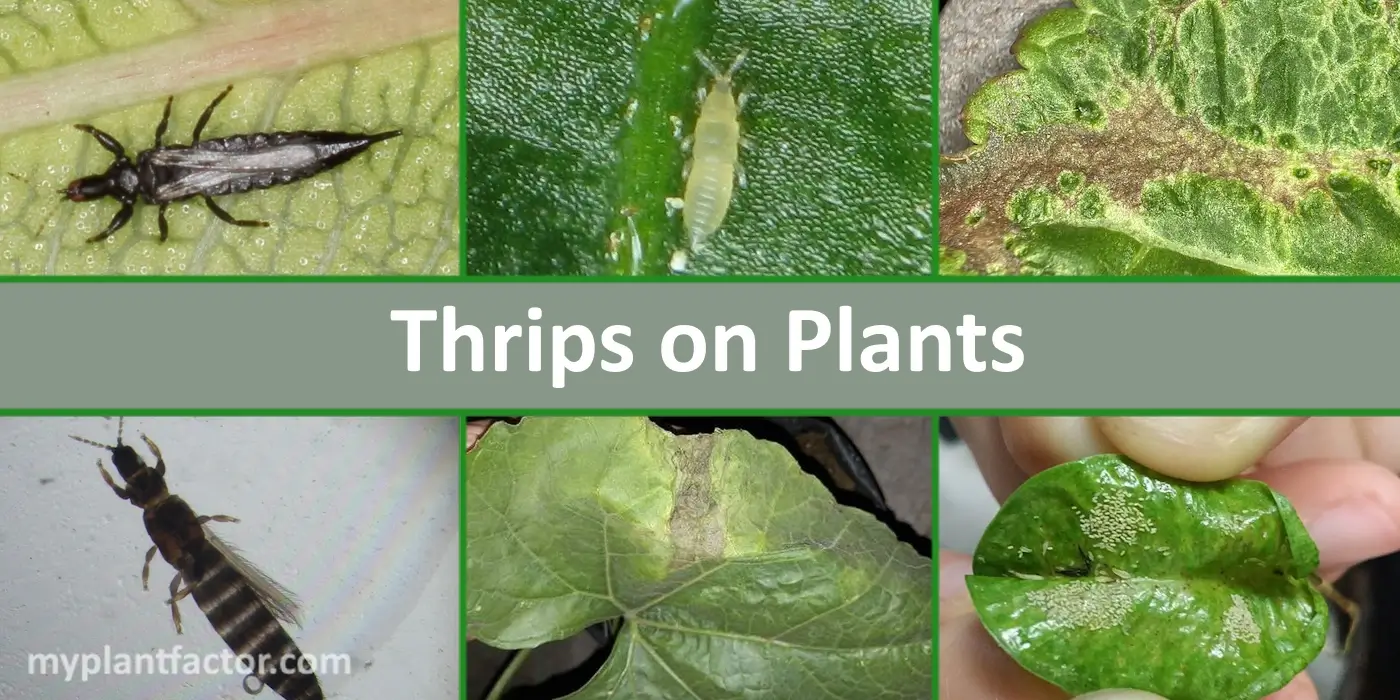
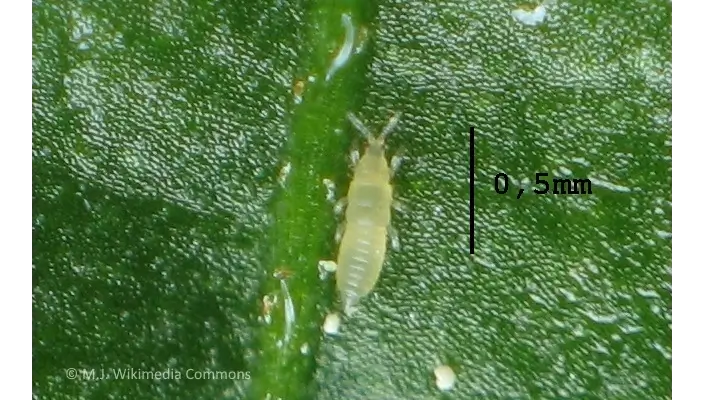
There are over 6,000 species, but the one ruining your Monstera deliciosa is likely Western Flower Thrips (Frankliniella occidentalis) or chilli thrips. These guys are tiny—about the width of a sewing needle, 1 mm long and fast.
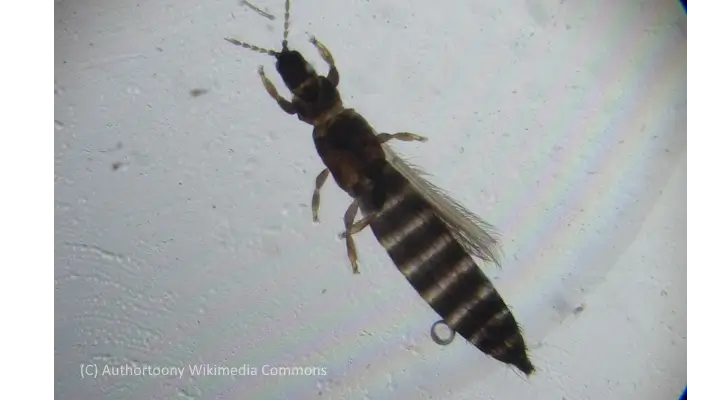
Why do they thrive indoors? They’ve no natural predators and love average room temperatures. Also, their life cycle takes as little as two weeks. That means they go from egg to adult before you even notice those first cosmetic signs: silver streaks, thrips poop, or discolored or distorted leaves.
Lifecycle of thrips
- Egg: Laid inside plant tissues, invisible to the naked eye
- Larva (Stage 1 + 2): Feeds on leaves and buds, causes most of the damage
- Prepupa: Drops into soil or leaf litter to transition
- Pupa: No feeding, just developing into adults—often missed
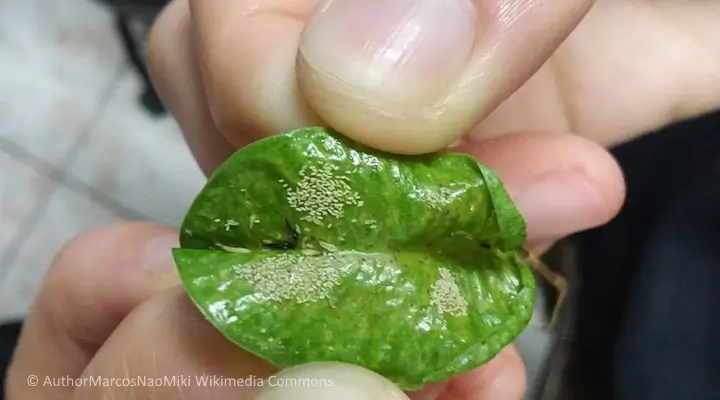
- Adult: Feeds, flies, and lays more eggs—up to 80 in a lifetime
“They pupate in the soil which is why it’s important to treat the soil too—not just spray the leaves. I learned that after thinking I got rid of them… then they came back like clockwork two weeks later.” — Plant expert on Reddit
Scientists say that each stage is tiny, fast, and often hidden. And because several generations can overlap, treating once isn’t enough. You’ve got to interrupt the cycle.
🐛 Not sure if it’s thrips, mites, or something else entirely? Get the visual clues, side-by-sides, and identification tips you need to catch pests early—and act fast.
→ Visit the Houseplant Pest ID Guide
How Do I Know if My Plants Have Thrips? Early Signs and Visual Clues
The tricky part about thrips on plants? They don’t make a dramatic entrance. No webs, no buzzing—just quiet, sneaky damage that builds up fast.
You might first notice your plant looks… off. The leaves lose their sheen. New growth comes in curled or stunted or both. Then the real signs show up:
- Silvery streaks or pale patches across the surface of leaves
- Tiny black specks (that’s thrips poop, not dirt)
- Distorted or crinkled new leaves, especially on fast growers
- Faded patches on flowers, or buds that fail to open
- Sudden leaf drop from what seemed like healthy stems
Many growers confuse thrips with aphids because both suck plant sap and leave a shiny film. The difference? Aphids are slower and cluster on stems. If that sounds more like your plant, see this aphid removal guide.
If your plant’s sticky but not silvery, thrips aren’t the culprit. Find out which pest leaves that white fluff behind in White Bugs on Houseplants: Spot, Treat, and Stop the Infestation.
Some signs are subtle, but others look almost pretty, like shimmer or speckled patterning. That’s how they fool you.
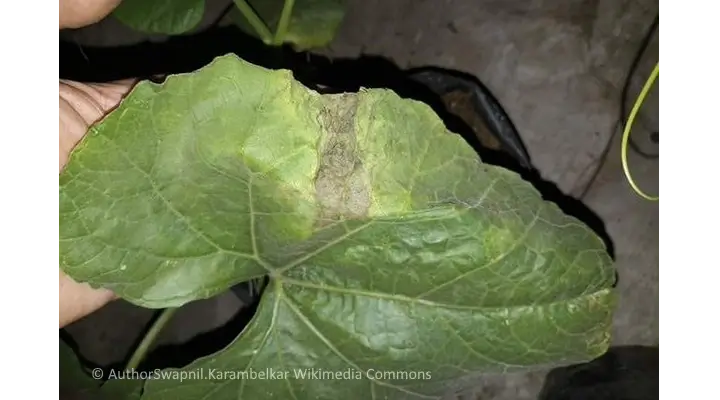
And here’s the kicker—they’re usually hiding. Leaf creases, flower buds, or down near the soil. Some even feed on fungal spores, while others scar foliage or flowers, leading to blotchy reddish-brown discoloration that ruins your plant’s vibe.
They’re hard to spot thrips on plants with the naked eye, but if you tap a leaf over white paper, you might catch one jumping. Or not. They’re that sneaky.
The damage may look cosmetic at first, but it worsens fast—especially on delicate species like Alocasia stingray or Peperomia polybotrya.
Coming up next: what real thrips damage looks like over time and how to treat it before things spiral.
Thrips leave leaves scarred, blotchy, and curled. But not all curling means thrips. See the full guide to why your plant leaves are curling for other causes and quick fixes.
Products That Actually Work on Thrips
These four cover the main options: catching thrips early, treating a mild infestation, using a stronger biological spray, and dealing with a more established problem.
| Product | Type | Best For | Rating | Link |
|---|---|---|---|---|
| PestCon — Yellow Sticky Traps | Physical trap | Monitoring populations and catching adults before they lay eggs | ★★★★☆ | Check on Amazon |
| Neem Oil — Natural Spray | Botanical spray | First-line treatment on most common houseplants | ★★★★★ | Check on Amazon |
| Arber Bio Fungicide — 3-in-1 Concentrate Spray | 3-in-1 concentrate | Stubborn or multi-plant infestations with secondary disease risk | ★★★★☆ | Check on Amazon |
| Natural Guard — Spinosad Soap | Spinosad spray | Fast contact treatment for active thrips, mites, and other soft-bodied pests | ★★★★☆ | Check on Amazon |
Which Houseplants Are Most at Risk for Thrips?
Thrips target plants with soft, actively growing tissue — tropicals, thin-leaved species, and anything pushing new growth regularly. Some houseplants get hit harder, show damage differently, and need faster action than others. Here’s what to look for, plant by plant.
Thrips on Monstera
Monstera is a common thrips target. Look for black frass specks along fenestration edges and silver streaking on unfurling leaves — thrips concentrate on the softest new tissue before it’s fully open.
The damage can look like part of the leaf’s natural patterning at first, which is how infestations go unnoticed here longer than on other plants. Monstera grows slowly enough that a scarred leaf will be on the plant for a long time — act as soon as you see streaking on new growth, not after the leaf has fully opened.
Thrips on Calathea
Calathea is one of the most frequently reinfested houseplants. Damage starts as silver streaking along the midrib or leaf edges, but because the leaves are naturally patterned, it blends in — check the underside for frass specks, which show up more clearly.
Calatheas stress easily, so keep conditions stable during treatment: consistent humidity, no repotting, no fertilising until new growth comes in clean. The repeat-infestation problem is almost always incomplete treatment — thrips pupating in the soil completing their cycle while leaf sprays have stopped.
“My Calatheas seem to be thrip magnets. I wipe them down and the next week they’re back like it’s a reunion.” — u/houseplantgrind
Thrips on Alocasia
Alocasia drops leaves faster than almost any other tropical when stressed, and a thrips infestation qualifies as stress. By the time visible damage appears, the plant may already be in defensive mode.
Damage shows as pale or bronze etching near leaf veins, or new leaves that emerge slightly distorted. If an Alocasia drops a leaf and remaining leaves look dull or streaked, treat immediately — the window between early signs and crisis mode is shorter here than on most plants.
Thrips on Orchids
Thrips damage on orchids appears on flowers before leaves. Look for pitting, discolouration, or blooms that fail to open properly — if flowers look worse than previous cycles for no obvious reason, check for thrips.
On leaves, damage is subtle: fine silvering or faint stippling on the upper surface. Thrips can persist in the crown between bloom cycles and reappear the following season, so if it’s been a recurring problem, treat preventatively before buds form next time.
Thrips on Fiddle Leaf Fig
Thrips on Fiddle Leaf Figs show as pale patches or fine etching across the upper leaf surface — sometimes with a slightly bleached appearance. Because the leaves are thick and stiff, you won’t see curling or distortion; damage here is cosmetic but permanent, and FLFs already shed leaves at the slightest provocation.
Check new growth at the top of the stem first — that’s the primary feeding site. A leaf showing thrips damage before it’s fully open means the infestation is active and spreading.
Thrips on Peperomia
Peperomia shows thrips damage as subtle silvery speckling, often dismissed as a watering or light issue. On textured varieties like P. caperata, thrips hide in leaf ridges and are nearly impossible to spot without the white paper test.
If a Peperomia is producing smaller-than-normal new leaves and looking generally dull, check for thrips before assuming it’s a care problem. The good news: Peperomias are resilient and recover well without the leaf drama of Alocasia or Calathea.
Thrips can be a headache, but not every tiny insect is dangerous. See how to tell harmless soil dwellers from biting bugs in Are Tiny Black Bugs Dangerous to Pets or Humans?
🌿 My Trick for Inspecting Problem Plants
Grab a lint roller or masking tape and gently press it against leaf undersides. If you see specks moving—or sticking—you might have thrips. It’s an easy win to check plants before pulling out the spray bottles.
Thrips Damage on Indoor Plants—What It Looks Like and What It Means
Thrip damage is only visible when you’re dealing with a large infestation.
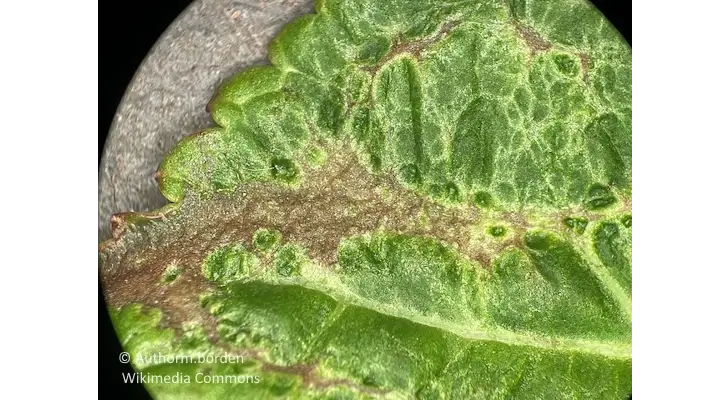
Once they’ve pierced the plant tissue with their rasping-sucking mouthparts, you’ll start to see the fallout. First, it’s silver or bronze streaks that looks like shimmering film. In reality? It’s light bouncing off the damaged plant leaf.
Next, expect leaf discoloration that looks like reddish-brown blotches, often near leaf edges or along midribs. That’s older damage, where tissue has collapsed. In flowering plants like orchids or African violets, blooms may look pitted or malformed before they even open.
On thick leaves (Monstera siltepecana, Fiddle Leaf Fig), the damage might look more like random etching or patchy bleaching. On thinner-leaved plants (Calathea, Alocasia stingray), it often leads to permanent twisting or complete leaf drop.
And here’s what most people miss when dealing with thrips on plants: if the silvering is spreading, you’ve got an active infestation. If it’s stable but the plant’s growing normally, the thrips may be gone—but the scars will stay.
🌿 Visual Timeline: What Thrips Damage Looks Like Over Time
| Stage | What You See | What It Means | Action Needed |
|---|---|---|---|
| Early | Silvery streaks or pale lines | Fresh feeding spots—thrips are active | Isolate + treat fast |
| Developing | Black dots + slight leaf curl | Poop = larvae feeding + tissue trauma | Start weekly treatments |
| Worsening | Reddish-brown blotches + stunting | Cells have collapsed, sap lost | Prune damaged parts |
| Severe | Twisted growth, dry or dropped leaves | Infestation unchecked—stress signs | Repeat treatments + recovery care |
| Post-treatment | Frozen silver scars, stable leaves | Thrips likely gone—cosmetic only | Monitor + boost new leaves |
Are Thrips Harmful to Humans or Pets?
Physically, no. Researchers say that, while thrips have piercing mouthparts and bite into plant tissue, they won’t bite, sting, or hurt your pets. But emotionally? Absolutely brutal. Watching your favorite plant get shredded leaf by leaf feels like slow heartbreak. They’re harmless to us, but ruthless to your foliage.
Thrips or Spider Mites on Plants? How to Tell the Difference
Confused if it’s thrips or spider mites? You’re not alone. Both are tiny, both mess up your leaves—and both need fast treatment. But they leave different clues. Here’s a side-by-side cheat sheet to help you spot the difference before things get worse.
🕷️ If you’re seeing webs, it’s already serious. Don’t panic—get the full scoop on spider mites, from signs and damage to natural, effective treatments that actually work.
→ Read How to Get Rid of Spider Mites on Indoor Plants
How to Get Rid of Thrips on Houseplants Naturally
To get rid of thrips on houseplants: isolate the plant, rinse off adults, spray all leaf surfaces with neem oil or insecticidal soap every 5–7 days for at least three rounds, and treat the topsoil. Most infestations fail to clear because the soil stage is ignored — thrips that restart the cycle weren’t on the leaves to begin with.
Here’s the full sequence, and what each step actually achieves.
Step-by-Step Natural Thrips Treatment
- Isolate the plant. Thrips spread fast. Move the infested plant away from others immediately.
- Rinse with water. Use a gentle spray (garden hose or shower) to knock off adults and larvae. Focus under leaves and in creases.
- Wipe the leaves. Use a microfiber cloth to remove lingering bugs and poop. It’s oddly satisfying.
- Apply Neem Oil or Insecticidal Soap. Spray all surfaces—top and bottom—until dripping. Reapply every 4–7 days for at least 3 cycles. Neem interrupts their life cycle, not just kills on contact.
- Treat the soil. Remember: they pupate in the soil. Use diatomaceous earth as a physical barrier, or drench with a neem solution.
- Set sticky traps. Use blue sticky traps to monitor adult movement. Some folks swear by blue sticky traps for flower thrips. For me, I use whatever is at hand.
- Vacuum leaf litter and debris. Clean up anything that could harbor eggs or natural enemies like fungal spores.
Are Blue or Yellow Sticky Traps Better for Thrips?
Blue sticky traps catch more thrips than yellow ones. Thrips are strongly attracted to blue wavelengths, which is why blue traps are the better choice specifically for thrips monitoring and capture — yellow traps cast a wider net and work well for fungus gnats, whitefly, and other pests, but they’re not optimised for thrips.
Place blue traps near affected plants just above soil level, where adult thrips move between the plant base and new growth. During active treatment, check them every few days — a falling catch count week on week is the clearest sign your treatment is working.
If you’re dealing with both thrips and fungus gnats at the same time (common, since damp soil attracts gnats while stressed plants attract thrips), run both colours. Blue near the plant canopy, yellow near the soil surface.
Which Treatment Do You Actually Need?
Match the response to the infestation — not the other way around.
- Mild (a few adults, some silvering on one plant): Sticky traps to monitor + neem oil every 5–7 days for three rounds. Treat the topsoil with diatomaceous earth.
- Moderate (multiple leaves affected, spreading to new growth, visible larvae): Neem oil for knock-down + diatomaceous earth on all affected soil surfaces. Check adjacent plants and treat anything showing early signs at the same time — not after.
- Severe or recurring (three-plus rounds of neem haven’t worked, multiple plants, infestation keeps restarting): Switch to spinosad or a 3-in-1 concentrate. Drench the soil — not just the surface. Complete the full course before switching products.
The most common mistake is using a mild treatment on a moderate infestation and wondering why it keeps coming back.
“Spray, wipe, repeat. I thought they were gone after one round—then bam, week two they were back. I now always make sure I treat infected plants for a week or two after they’ve gone” —u/planttherapysavedme on Reddit
Can Predatory Insects Kill Thrips?
Yes — predatory mites and bugs can reduce thrips populations without any chemical spray. The two most effective options are Amblyseius californicus (a predatory mite) and Anthocoris nemoralis (minute pirate bugs), both of which actively hunt thrips at larval and adult stages.
That said, biological control is a different kind of solution to every other option on this list. It’s slower, more expensive, and works best when conditions are right — which indoors, they often aren’t. Here’s the honest version.
Amblyseius californicus (predatory mite) These are the most practical option for indoor use. They come in slow-release sachets that you hang on the plant, where they hatch and disperse over several weeks. They feed on thrips larvae and adults, work across the lifecycle, and don’t harm the plant, pets, or people.
They work best at temperatures between 10–33°C and moderate humidity — conditions most indoor plant setups can meet. Where they struggle: in very dry rooms, near heat sources, or on isolated plants where there’s nowhere for a population to establish. For a single infected plant, they’re probably overkill. For a shelf of four or five plants with a recurring problem, they’re worth considering.
Believe it or not, predatory mites are easy to buy online to start getting rid of thrips today.
Anthocoris / Minute Pirate Bugs More aggressive hunters than the predatory mite — they’ll take thrips at every lifecycle stage including eggs. But they’re harder to source for home use, more expensive per application, and less forgiving of indoor conditions. I’d point most houseplant owners toward Amblyseius first.
When biological control makes sense:
- You’ve had repeat thrips infestations on the same plants across multiple seasons
- You have a large plant collection and want ongoing suppression rather than reactive treatment
- You prefer to avoid all chemical sprays, including neem oil
- You have a greenhouse or conservatory setup where a predator population can actually establish
When it probably doesn’t:
- You have one or two affected plants and want a quick fix
- You’re mid-infestation and need knock-down now (predators take weeks to work)
- Your home is very dry or very warm — predatory mites won’t survive well
One important note: don’t apply spinosad or pyrethrin if you’re using predatory insects. Both will kill the beneficial mites along with the thrips. If you’ve recently sprayed, wait at least two weeks before introducing biocontrol agents.
With consistency and a few household tools, you can shut down a thrips invasion naturally and keep your plants thriving.
Neem Oil, Spinosad, or Pyrethrin — Which One Do You Actually Need?
Neem oil handles most mild-to-moderate thrips cases when applied correctly. Spinosad is the upgrade for when neem alone hasn’t worked after three rounds. Pyrethrin is the last resort for severe infestations — effective, but not safe around cats when wet.
Here’s what each option actually does differently, and the decision points that tell you when to move up.
| Treatment | How it works | Speed | Rounds needed | Pet-safe when dry? | Watch out for |
|---|---|---|---|---|---|
| Neem oil | Disrupts feeding and reproduction. Works on contact with larvae and adults. | Slow | 3–4 rounds, every 5–7 days | Yes | Drops below 50% efficacy in low humidity or if applied less than every 5 days. |
| Insecticidal soap | Smothers insects on contact. No residual effect. | Fast | 3+ rounds, every 5–7 days | Yes | Only kills what it directly coats. It misses eggs and soil pupae entirely. |
| Spinosad | Attacks the nervous system of larvae and adults. Some residual effect up to 7 days. Moves slightly into leaf tissue. | Medium | 1–2 rounds | Yes, when dry | Toxic to bees and beneficial insects when wet. Don’t apply near flowering plants. |
| Pyrethrin / pyrethroid | Fast-acting contact kill. Some pyrethroids, such as deltamethrin, persist in plant tissue. | Very fast | 1–2 rounds | No | Toxic to cats when wet. Don’t use around cats or pollinators. Reserve for severe cases. |
Which one for your situation?
First infestation, mild damage, one plant: Start with neem oil. Commit to three full rounds, one week apart. Treat the topsoil too. If you stop after one spray, they’ll be back.
You’ve done neem oil twice and it’s not working: Switch to spinosad. Research shows the combination of neem followed by spinosad clears infestations faster than either product alone. Spinosad reaches thrips in protected spots — leaf folds, new growth — that surface-only sprays miss.
Multiple plants affected, spreading fast: Spinosad first for knock-down, then neem oil to suppress and disrupt regrowth. Keep plants isolated. Blue sticky traps help you track whether numbers are falling.
Severe infestation, nothing else has worked, no cats in the home: A pyrethroid-based product (look for deltamethrin on the label) is the strongest option. It gets absorbed by the plant and kills thrips as they feed — not just on contact. One or two applications a fortnight apart usually closes the case. Not the first tool I’d reach for, but it’s there when you need it.
✨ Curious how Neem Oil actually works—and how to make your own DIY bug spray? Learn how to spray smarter, treat safely, and finally get results without harming your plant (or your pets).
→ Read the full Neem Oil guide
A note on mixing treatments
Don’t rotate randomly. Thrips can build resistance, particularly to pyrethroids, if you cycle products without actually clearing an infestation first. Finish a full treatment course before switching. The combination that research backs most strongly: neem oil plus spinosad in sequence, not simultaneously. Start with one, complete it, then layer in the other if needed.
Pet-Safe Ways to Treat Thrips on Indoor Plants
The good news is natural thrip control methods don’t harm pets. For example, Neem Oil, insecticidal soap, or a homemade castile soap spray—all safe for pets when dry. Avoid systemic insecticides. Stick with physical methods like leaf wiping and yellow sticky traps. Always treat away from food bowls, and let plants dry fully before reintroducing pets.
My recommended pet-friendly thrip products you can buy on Amazon
Boromine — Sticky Traps — Best for Monitoring and Early Capture
Blue sticky traps won’t clear a thrips infestation on their own. But they do two useful jobs. They catch adults before eggs are laid, and they show whether your treatment is working.
If you’re catching fewer each week, you’re making progress. Very satisfying. Slightly grim, but useful.
The dual-sided design doubles the catch surface. Place traps near affected plants, just above soil level, because thrips often move around the base and new growth.
Best for: Plants with repeat infestations, or anyone who wants to monitor before applying product.
- Non-toxic, with no chemical spray involved
- Catches fungus gnats too, which often show up in damp soil
- Makes population trends visible during treatment
Possible downside: Sticky traps won’t eliminate an active infestation unless you also use a spray treatment.
Neem Oil — Natural Spray — Best First-Line Treatment
For most houseplant thrips cases, a botanical spray is the sensible starting point. It’s less disruptive than a stronger systemic product and works well when applied properly.
Coverage matters more than enthusiasm here. Thrips hide in leaf folds, stem joints, and around fresh growth. If you only spray the top of the leaves, you’re mostly decorating them.
Best for: Mild to moderate infestations, or indoor growers who want to avoid synthetic chemicals.
- Works on contact against nymphs and adults
- Suitable for most common houseplants when used as directed
- Can be used preventively every two to three weeks during warmer months
Possible downside: It usually needs two to three applications, spaced about a week apart, to break the egg cycle.
Do not spray under direct sun or grow lights. Leaf burn is rude like that.
Powerful Bug Insecticide — 3-in-1 Concentrate] — Best for Serious Infestations
When thrips spread across several plants, or you’re also seeing fungal spotting, a 3-in-1 concentrate makes more sense. Thrips damage can create tiny entry points for disease.
This is the stronger option. I wouldn’t start here for one mildly affected plant. But if you’ve treated for two weeks with no improvement, this is the logical next step.
Best for: Heavy or multi-plant infestations, especially where secondary damage has already started.
- Covers thrips, fungal issues, and other common houseplant pests
- Concentrate format makes a larger amount of working solution
- Targets larvae and adults when applied correctly
Possible downside: Follow the dilution ratio carefully. Concentrates are not the place for creative measuring.
Use in a well-ventilated space. Keep it away from pollinators if you also use products near outdoor plants.
If you’re dealing specifically with thrips, blue traps are the better monitoring tool.
Yellow traps catch a wider range of pests, which makes them useful for general monitoring. But thrips are drawn to blue — so if you want to know specifically whether your treatment is cutting thrips numbers, a blue trap gives you a cleaner signal.
Buy yellow sticky traps online.
Best used alongside your spray treatment, not instead of it. Sticky traps won’t clear an infestation — but they’ll tell you whether you’re winning.
Why Do Thrips Keep Coming Back?
Thrips return after treatment because most people stop before the soil stage is finished. Adult thrips and larvae die from sprays, but pupae buried in the topsoil survive, complete their development, and restart the cycle — usually within two weeks of the last treatment.
Here are the five specific causes, in order of how common they are, with what each one tells you to do differently in your next round.
That’s the most common cause. But it’s not the only one. Here are the five reasons thrips reappear, and what each one tells you to do differently
1. You treated the leaves but not the soil
Thrips spend their prepupal and pupal stages in the top layer of potting soil. Spraying leaves — even perfectly, even repeatedly — doesn’t reach them there. Two weeks after your last spray, a new wave of adults emerges from the soil, climbs back up the plant, and the whole thing starts again.
The fix is straightforward: treat the topsoil alongside the leaves. Diatomaceous earth applied to the soil surface creates a physical barrier that damages pupae as they emerge. A neem soil drench reaches slightly deeper. Do both if the infestation has been running for more than a few weeks.
Treating the soil stage stops the current infestation, but it doesn’t fix soil that’s been compacting or staying wet for weeks — that’s often what let thrips settle in the first place. Once treatment is done, it’s worth repotting into a mix suited to that specific plant instead of just topping up the same soil.
2. You stopped treatment too early
One round of neem oil isn’t a treatment plan. Two rounds might not be either. Thrips eggs are laid inside plant tissue and are protected from surface sprays — they hatch after you’ve stopped, larvae feed, drop to soil, pupate, and emerge as adults to repeat the cycle.
Three full rounds minimum, spaced 5–7 days apart. After that, monitor with sticky traps for another two weeks before declaring it over. If the trap count is still climbing on week three, you haven’t finished yet.
3. A new plant or cut flowers reintroduced them
Thrips are tiny and fast-moving. A single bunch of supermarket flowers sitting next to your collection for a few days can reintroduce them after you’ve cleared an infestation. So can a new plant that wasn’t quarantined.
If your thrips situation resolved and then came back from nowhere — with no visible spread from an existing plant — this is the most likely explanation. Quarantine new plants for two weeks minimum, away from the rest of your collection. Check cut flowers before bringing them near your plants.
4. You only used one treatment type
Thrips can build resistance to pyrethroids in particular when exposure is repeated without ever fully clearing the infestation. If you’ve been using the same spray for several rounds with diminishing results, resistance may be developing.
Rotate treatment types across rounds rather than cycling the same product repeatedly. Neem oil followed by spinosad is the best-evidenced sequence for breaking a resistant cycle — they work through different mechanisms, which reduces the chance of any single thrips generation surviving both.
5. Nearby plants were never treated
Thrips spread between plants that are close together, particularly when leaves touch or airflow pushes them across shelves. Treating one plant while leaving neighbouring plants unchecked means you’re fighting with the door open.
If one plant has thrips, inspect everything within a metre of it. Treat anything showing early signs at the same time as the main infestation, not after. Isolation only works if the plant genuinely can’t exchange pests with its neighbours.
How to Prevent a Thrips Infestation on Houseplants
Thrips love warm, dry spaces with fresh new growth—and most indoor setups are basically paradise. But prevention is doable with a few low-effort habits that’ll save you the heartbreak (and leaf scars) later.
- Quarantine new plants for at least two weeks
- Inspect weekly—look under leaves and in new growth
- Wipe leaves regularly with a microfiber cloth
- Avoid overcrowding, which limits airflow and creates hiding spots
- Increase humidity, especially for tropicals
- Use yellow sticky traps near windows and plant shelves
- Change topsoil if you’ve had a past infestation
- Clean tools and pots before reuse—no lazy repotting
- Rotate plants occasionally so pests don’t get too cozy
- Treat preventatively with diluted neem or insecticidal soap every few weeks
Can a Plant Recover from Thrips? Here’s What to Expect
Thankfully, most houseplants can recover from thrips. But it’s a slow comeback, not an overnight fix.
After treatment, expect damaged leaves to stay damaged. Don’t worry—this doesn’t mean the thrips are still there. Focus on new growth. If it comes in clean and healthy, you’re on the right track.
Trim back the worst-affected leaves to help your plant redirect energy. Avoid fertilizing too soon—it needs time to heal, not push new foliage.
Some plants (Alocasia, Calathea) may drop leaves or sulk post-treatment. Totally normal. Just keep the environment stable: good light, gentle humidity, and no repotting.
“Mine looked awful for two weeks, then boom—new leaf. It was so worth the wait.” —u/potboundagain on Reddit
Recovery takes a few weeks to a few months, depending on severity. Be patient. Thrips may be persistent, but with consistent care, your plant can bounce back—and often stronger than before.
What We Recommend for Thrips
If you’re dealing with thrips, these three products cover the range from monitoring to mild treatment to more persistent cases.
Start with sticky traps to see what you’re working with. If the numbers look significant, move to the botanical spray. Use two to three applications, one week apart. If there’s no improvement after three weeks, the concentrate is the stronger next step.
| Product | Best For | Link |
|---|---|---|
| Pest Con — Yellow Sticky Traps | Monitoring and early adult capture | Check price → |
| Neem Oil — Natural Spray] | First-line treatment for mild to moderate infestations | Check price → |
| Bio Insecticide — 3-in-1 Concentrate] | Stubborn or multi-plant infestations | Check price → |
Frequently Asked Questions
Which chemical kills thrips most effectively?
Spinosad is the most effective widely available treatment for thrips. It attacks the insect nervous system, has residual activity for up to seven days, and reaches thrips in protected spots — leaf folds, stem joints, new growth — that contact sprays miss.
For severe cases where nothing else has worked, a pyrethroid (look for deltamethrin on the label) is absorbed by the plant and kills thrips as they feed. Avoid pyrethroids in any home with cats — they’re toxic when wet. Neem oil remains the right first step for mild infestations; the neem-then-spinosad sequence is what the research backs for cases that escalate.
How do you know if a plant has thrips?
The earliest signs are usually on the leaves, not the insects themselves. Look for silver or bronze streaks, tiny black specks, and new growth that comes in curled or misshapen.
To confirm it, tap a suspect leaf over white paper. If tiny specks move or jump, that’s your answer. Thrips are sneaky little things. You usually read the damage before you spot the pest.
What do thrips look like on plants?
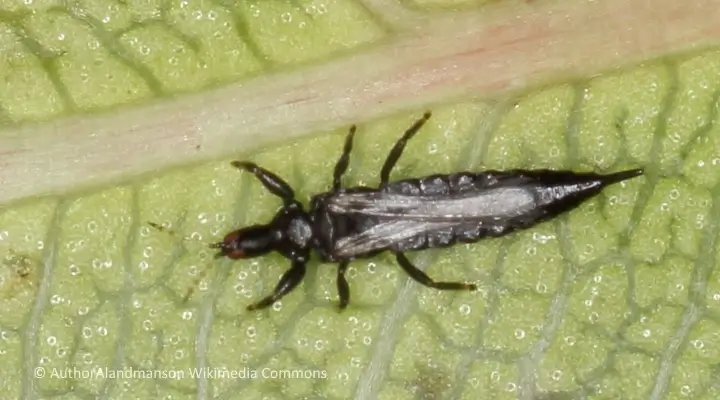
Adult thrips are slender insects, usually about 1–2 mm long. Nymphs are often pale yellow, while adults can look dark brown or black. Up close, they look like tiny slivers of moving grain.
Most plant owners never see them clearly. What they notice first is silver streaking, black dots, and distorted leaves. The insect is tiny. The evidence is much louder.
What are the black dots on my plant leaves? Are they from thrips?
Black dots on plant leaves are often thrips frass, especially if you also see silvery streaks, pale patches, or distorted growth. Frass is insect waste. Lovely topic, I know.
The dots may wipe off easily, which makes them look like dirt. If they keep coming back and the leaf surface looks scratched or shimmery, treat for thrips instead of waiting.
What causes thrips?
Thrips usually arrive on new plants, cut flowers, or through open windows and doors during warmer months. They’re drawn to soft, actively growing tissue, which is why fresh leaves often show damage first.
Indoors, they spread quickly because there are no natural predators keeping them in check. One unquarantined nursery plant can quietly introduce thrips to a whole shelf. Annoying, but very common.
How do you get rid of thrips on plants?
Isolate the plant first, then rinse the leaves with water to knock off adults. Spray the tops and undersides of leaves with neem oil or insecticidal soap, repeating every 5–7 days for at least three rounds.
Treat the topsoil too. Thrips pupate in the soil, so spraying leaves alone rarely breaks the cycle. Diatomaceous earth on the soil surface can help while you work through the treatment rounds.
How long does it take to get rid of thrips on houseplants?
Expect three to six weeks of consistent treatment. The minimum is three full spray rounds spaced 5–7 days apart — roughly three weeks — plus two more weeks of monitoring with sticky traps to confirm the infestation is gone.
The timeline extends if you’re also treating the soil stage, if multiple plants are affected, or if you’ve had to switch products. Declining trap counts week on week are the clearest confirmation you’re winning. Damaged leaves won’t recover — clean new growth is what you’re watching for.
Will neem oil kill thrips eggs?
No — neem oil does not reliably kill thrips eggs. Eggs are laid inside plant tissue, which physically protects them from surface sprays.
Neem works by disrupting larvae after they hatch, which is why three rounds minimum, spaced 5–7 days apart, are required. You’re catching each new hatching wave before it matures — not eliminating the population in one application. Stop early and eggs that survived restart the cycle.
Are blue or yellow sticky traps better for thrips?
Blue sticky traps are better for thrips specifically. Thrips are strongly attracted to blue wavelengths, which makes blue traps more effective at both monitoring and capturing adult thrips than yellow ones.
Yellow traps cast a wider net and are useful for fungus gnats and whitefly, but they’re not optimised for thrips. If you’re dealing with both pests at once, run blue traps near the plant canopy and yellow traps near the soil surface.
Can I use predatory insects to get rid of thrips?
Yes — predatory mites such as Amblyseius californicus actively hunt thrips larvae and adults and can reduce populations without any chemical spray. They come in slow-release sachets that hang on the plant and disperse over several weeks.
They work best in moderate humidity and temperatures between 10–33°C, which most indoor setups can meet. That said, they’re a slower solution than sprays and work better as ongoing suppression for large collections than as a quick fix for a single plant mid-infestation. Don’t apply spinosad or pyrethrin while using predatory mites — both will kill the beneficial insects alongside the thrips.
Do thrips live in soil or just on leaves?
Thrips use both leaves and soil during their life cycle. They feed and lay eggs on leaves or inside plant tissue, but the prepupal and pupal stages often drop into the soil or leaf litter.
This is the stage many people miss. If you only spray the leaves, pupae can mature in the soil and restart the infestation. Treat the topsoil alongside the foliage.
Why do I keep getting thrips on my houseplants?
Recurring thrips almost always come down to one of two things: treating the leaves while missing the soil stage, or stopping treatment before the full cycle is broken. Pupae buried in the topsoil survive surface sprays, mature, and restart the infestation — usually within two weeks of your last application.
Other causes include reintroduction from new plants or cut flowers, treating only one plant while nearby plants stay infected, and repeated use of the same product type without rotating. See the full breakdown of why thrips keep coming back — and what each cause means for your next steps.
How do I know if it’s thrips or spider mites?
Tap a damaged leaf over white paper and watch what falls. Thrips jump or move quickly and leave black frass specks alongside silver leaf streaking; spider mites crawl slowly and produce fine webbing, especially under leaves and between stems.
Webbing is the tell — if you see any, assume mites. Silver shimmer and black dots with no webbing points to thrips. If you’re unsure, see the spider mites guide for a side-by-side comparison.
Do thrips fly?
Adult thrips have fringed wings and can fly, but they’re weak fliers. Indoors, they usually walk, jump, or drift on air currents rather than buzzing around like fungus gnats.
They still spread between nearby plants, especially when leaves touch or plants sit close together. That’s why isolation matters, even if you don’t see insects flying around the room.
Can I save a plant that has thrips?
Yes, most plants can recover from thrips if the infestation is treated consistently. Damaged leaves won’t turn green again, but the plant can produce clean new growth once the pests are gone.
Prune the worst leaves, isolate the plant, and avoid fertilising during treatment. Thrips love soft new growth, so pushing fresh growth too early can work against you. Rude, but true.
- How to Identify Tiny Black Bugs on Houseplants — Not sure if it’s thrips, gnats, or something else? This guide breaks down the lookalikes.
- Natural Ways to Get Rid of Gnats in Houseplants — Soil pests like fungus gnats often show up alongside thrips—here’s how to stop them safely.
- Spider Mites on Indoor Plants: Spot, Treat, and Prevent the Damage — Confused by fine webs or speckled leaves? Here’s how to tell mites from thrips and treat both.
- Neem Oil for Houseplants: Spray Smarter, Treat Safer — Neem Oil plays a huge role in natural pest control—learn how to use it right.
- Houseplant Pest Identification: Signs, Photos, and Natural Fixes — Your go-to guide for identifying pests before they wreck your indoor jungle.
