


As an Amazon Associate I earn from qualifying purchases at no extra cost to you.
The right pot doesn’t just hold soil — it controls how fast that soil dries, how much air reaches the roots, and whether your plant quietly struggles for months before you notice. Most plant problems that look like watering problems are actually pot problems.
The best pots for indoor plants have drainage holes, suit your watering habits, and match what the plant actually needs. That last part is where most people go wrong: they pick a pot for how it looks, then wonder why the plant won’t cooperate.
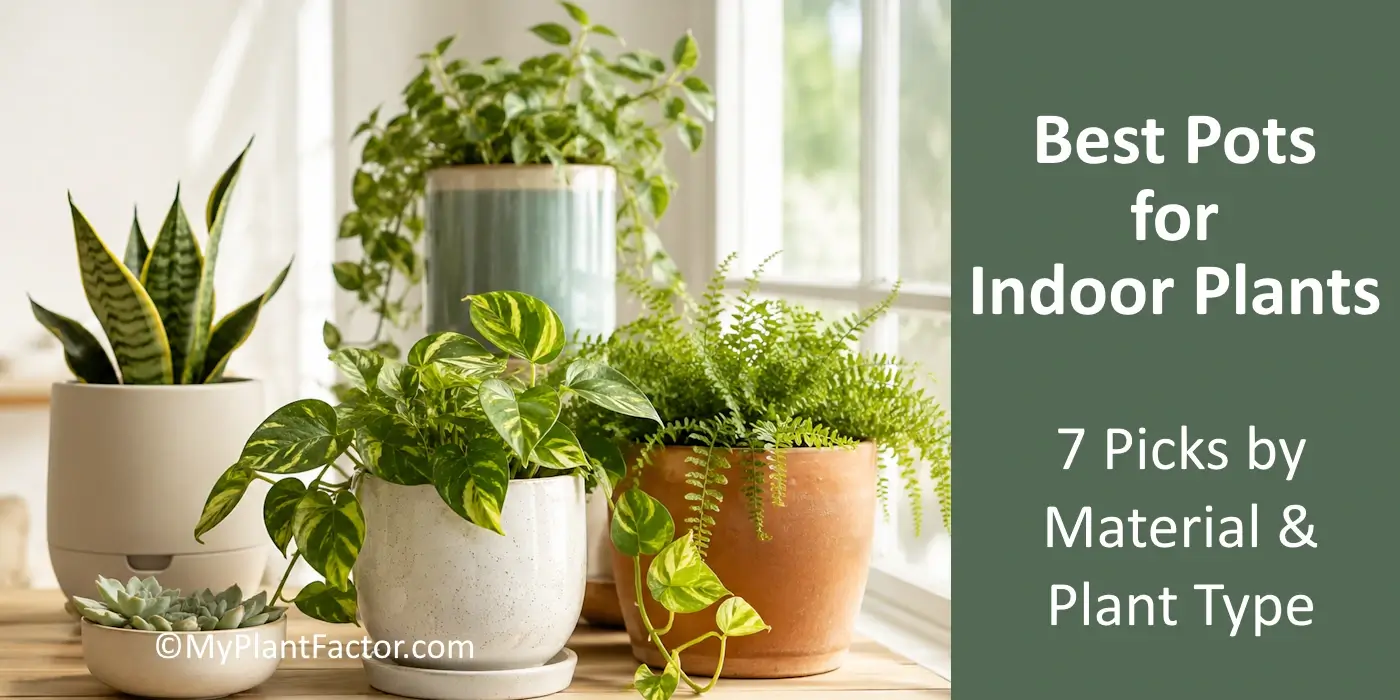
This guide covers 7 picks across terracotta, ceramic, and self-watering options, with a material breakdown and plant-matching table so you can figure out what works for your specific situation.
Quick Picks: Best Indoor Plant Pots at a Glance
| Product | Type | Best for | Why it stands out | Rating | Check price |
|---|---|---|---|---|---|
| Vensovo 4" Terracotta 6-Pack | Unglazed terracotta | Overwatering-prone growers; succulents, snake plants, hoya | Porous walls dry fast; drainage hole included; good starter set. | ★★★★★ | Check Amazon |
| Vensovo 4.5" Shallow Terracotta 6-Pack | Shallow terracotta | Succulents, cacti, and shallow-rooted plants | Low profile prevents waterlogged roots in fast-draining plants. | ★★★★★ | Check Amazon |
| D’vine Dev Terracotta + Glass Self-Watering | Porous terracotta + glass reservoir | Moisture-loving plants for people who forget to water | Water wicks through terracotta slowly, with visible water level. | ★★★★☆ | Check Amazon |
| TYMENSH Self-Watering 3-Pack (9/10/12") | Plastic with reservoir | Large tropical plants and frequent travelers | Deep reservoir supplies water for up to two weeks. | ★★★★☆ | Check Amazon |
| LE TAUCI Ceramic Set of 3 | Glazed ceramic | Humidity-loving plants in multiple sizes | Drainage hole and mesh pad included, which solves the usual ceramic problem. | ★★★★★ | Check Amazon |
| Kazeila 10" Matte Ceramic | Large glazed ceramic | Display pots for larger houseplants; use as cachepot | Fully glazed interior and exterior; saucer included; clean modern finish. | ★★★★☆ | Check Amazon |
| BUYMAX 5" Ceramic Set of 4 | Glazed ceramic | Budget-conscious buyers wanting ceramic with real drainage | Set of 4 with saucers; drainage hole on each; decent build for the price. | ★★★★☆ | Check Amazon |
Why the Pot Material Actually Matters
Most people treat pot selection as a design decision. That’s fine up to a point, but material affects the growing environment in ways that genuinely change outcomes.
Terracotta walls are porous. They pull moisture through them as it evaporates, which speeds up soil drying from all sides — not just the surface. That’s useful if you water too often or have a plant that hates sitting wet. It’s a problem if you have a calathea and forget to water for a week.
Glazed ceramic seals the clay beneath it, slowing evaporation significantly. The soil stays moist longer, which suits humidity-loving tropicals and forgives some benign neglect. The risk is the opposite: water that stays too long leads to root rot, especially if the pot lacks drainage.
The thing is, houseplants that sit in soggy soil often develop problems like droopy leaves, yellowing leaves, or bugs. If you suspect that your plant has pests, this helpful guide to identifying houseplant pests will help you know what to do.
Plastic and self-watering options slow evaporation in different ways and work well for consistent moisture management.
None of these is universally “best.” The question is always: best for this plant, with this person’s watering habits.
Best Pots for Indoor Plants — Reviewed

Vensovo 4″ Terracotta Pots (6-Pack) — Best Overall
The most useful pot for most indoor plant situations is a straightforward 4-inch terracotta with a drainage hole and a saucer. This set does that reliably and in reasonable quantity.
The Vensovo 4-inch pots are fired at high temperature, which makes them denser and more crack-resistant than cheaper imports. The walls are genuinely porous — water evaporates through them, which gives the soil a more even dry-down than plastic. Each pot comes with a matching saucer.
Best For Growers who tend to overwater or struggle to let soil dry between sessions; also ideal for snake plants, hoya, pothos, peperomia, and herbs that prefer drier conditions between waterings.
What Works Well
- Drainage hole and saucer included in every pot
- High-fired clay holds up without cracking during normal use
- Porous walls actively help prevent waterlogged roots
- Pack of 6 makes them practical for a full windowsill setup or propagation project
Possible Downsides
- Terracotta dries out fast in heated indoor spaces — you’ll need to check moisture more often in winter
- 4 inches limits you to smaller plants; you’ll need a different option for anything with a root ball over 3.5 inches
Why It Works for Indoor Plants Terracotta is the most forgiving container material for people who haven’t yet found their watering rhythm. The porous walls buy you extra time if you’re about to overwater — and that margin matters more than most beginners expect. I’ve seen more plants survive in cheap terracotta than in expensive ceramic without drainage, just because of the airflow factor.
Best overall indoor plant pot
A simple terracotta set with drainage, best for growers who overwater or keep plants that prefer drying between waterings.
Vensovo 4.5″ Shallow Terracotta Pots (6-Pack) — Best for Succulents and Cacti
Succulents and cacti have shallow root systems and absolutely no tolerance for sitting water. The low profile of these 4.5-inch shallow pots keeps the soil depth proportional to the root system, which reduces the amount of wet soil the roots have to sit through between waterings.
This is the detail that standard pots get wrong for succulents: too much soil depth means too much water retention, even in terracotta. A shallow pot solves that structurally.
Best For Succulents, cacti, and any rosette-forming plant that would drown in a standard-depth container; also good for pilea and shallow-rooted peperomia.
What Works Well
- Shallow depth matches succulent root structure — less unused soil means faster dry-down
- Drainage hole at the base with matching saucer
- Same high-fired clay as the standard Vensovo pots
- Pack of 6 makes it easy to style a cohesive succulent arrangement
Possible Downsides
- Too shallow for most tropical houseplants — don’t use these for anything with deeper roots
- Saucers are small; heavy watering needs to be watched
Why It Works for Indoor Plants The most common cause of succulent death indoors isn’t underwatering — it’s a pot with too much soil depth holding moisture too long. A shallow terracotta container fixes both the drainage and the retention problem at once.
Best for succulents and cacti
The shallow shape helps stop excess soil from staying wet around roots that prefer a fast dry-down.

D’vine Dev Terracotta + Glass Self-Watering Planter (Set of 2, 6″) — Best Self-Watering for Stylish Spaces
This is a different approach to self-watering than the standard reservoir-with-wick design. The terracotta pot sits partially submerged in a glass cylinder filled with water. Because terracotta is porous, water wicks through the pot walls and into the soil gradually — the plant draws moisture as it needs it.
It’s a genuinely elegant mechanism. The glass lets you see the water level without digging into soil, and the terracotta ensures the moisture delivery stays slow enough that roots aren’t sitting in a swamp.
Best For Moisture-loving plants — calathea, ferns, spider plants, and peace lilies — for people who travel regularly or find daily watering checks difficult to maintain.
What Works Well
- Passive wicking through terracotta is gentler than most wick systems
- Transparent glass cylinder shows water level at a glance
- Attractive enough to leave on a kitchen counter or desk
- Set of 2 provides reasonable value at the price
Possible Downsides
- Not suitable for succulents, cacti, or snake plants — the consistent moisture would cause root rot
- 6-inch size limits you to smaller plants; not appropriate for a large monstera or fiddle-leaf fig
- The glass cup can tip if knocked — it’s a visual feature, not a utility container
Why It Works for Indoor Plants Most self-watering designs try to do too much. This one works because it’s simple: water moves through porous terracotta at a rate the plant controls. It’s slower and more reliable than a wick that wicks whether the plant wants it to or not.
Best stylish self-watering pick
Useful for calathea, ferns, spider plants, and peace lilies when you want steady moisture without a bulky reservoir look.
TYMENSH Self-Watering 3-Pack (9″, 10″, 12″) — Best for Large Plants and Travelers
Larger houseplants — monsteras, bird of paradise, rubber trees, large pothos — need a bigger water supply when you’re not home. The standard terracotta or ceramic options simply don’t scale up well for self-watering. This 3-pack fills that gap with a deep reservoir that the company rates at up to two weeks of water supply.
The pots themselves are plastic with a clean matte finish. They won’t look like terracotta, but they’re functional and sized appropriately for anything that’s outgrown a small planter.
Best For Frequent travelers or remote workers managing large tropical houseplants that wilt quickly if left unwatered for more than a few days.
What Works Well
- Deep reservoir holds enough water for up to two weeks without refilling
- Three graduated sizes mean you can pot large, medium, and small plants in a matching set
- Drainage saucer included with each pot
- Reservoir-to-soil separation prevents root rot from sitting water
Possible Downsides
- Plastic material feels less premium than terracotta or ceramic
- Not appropriate for succulents or any plant that needs to dry thoroughly between waterings
- At 12 inches, the largest pot is substantial — make sure you have the floor space
Why It Works for Indoor Plants Most self-watering failures happen because the reservoir is too small for the plant’s water needs, and it empties in two or three days. A two-week buffer genuinely changes the math for plant owners who travel.
This guide to self-watering pots also discusses the pros and cons of using these types of pots for indoor plant care.
Best for large plants and travel gaps
A practical option for large tropical plants that wilt fast when you are away for more than a few days.
LE TAUCI Ceramic Plant Pots — Set of 3 (4.3″, 5.3″, 6.8″) — Best Ceramic Set with Drainage
The most common ceramic pot problem is simple: no drainage hole. LE TAUCI solves it by including a drainage hole, a mesh pad to stop soil from escaping through it, and a matching saucer in every pot. That’s the full setup, and it’s the reason this set stands out.
The three sizes let you match the pot to your plant rather than the other way around, and the clean white finish is neutral enough to work in most rooms.
Best For Pothos, philodendrons, spider plants, and peace lilies — plants that prefer consistent but well-drained moisture and look good in a ceramic pot on a shelf or windowsill.
What Works Well
- Drainage hole and mesh pad included — no workarounds needed
- Set of 3 covers small, medium, and medium-large plant sizes
- Saucer included with each pot
- Understated design that works with most decor
Possible Downsides
- Glazed ceramic retains moisture longer than terracotta — overwatering is still possible if you’re not checking the soil
- The largest pot at 6.8 inches is still mid-size; won’t work for a large monstera or rubber tree
Why It Works for Indoor Plants Ceramic is genuinely the right material for moisture-loving tropical plants. The problem is most ceramic pots skip drainage. This set doesn’t, which makes it the straightforward choice for plants that hate drying out but also can’t tolerate standing water.
Best ceramic set with drainage
A cleaner choice for pothos, peace lilies, and other tropical plants that like steady moisture but still need drainage.
Kazeila 10″ Matte Ceramic Cylinder Pot — Best Display Pot
This is the pot you use when aesthetics matter as much as function. The Kazeila 10-inch matte cylinder is fully glazed on the interior and exterior, includes a drainage hole with a matching saucer, and comes in a clean matte white or matte black that works as a standalone display piece.
Use it as your primary pot for a large-ish tropical plant, or nest a plastic nursery pot inside it if you want to swap plants without disturbing the roots.
Best For Plants in prominent display positions — a large pothos trailing off a shelf, a statement snake plant in an entryway, or any plant where the pot is part of the visual design of a room.
What Works Well
- Fully glazed interior means it won’t absorb moisture and crack over time
- Drainage hole and saucer included — the usual ceramic pitfall avoided
- Matte finish photographs well and works in most design styles
- Available in multiple sizes if you want a matching set
Possible Downsides
- Price point is higher than functional terracotta — you’re paying for the finish
- Heavy when filled with soil; not easy to move once planted up
- 10 inches is the displayed size — check the current Amazon listing for exact depth before buying for deep-rooted plants
Why It Works for Indoor Plants Most premium-looking pots sacrifice drainage for aesthetics. This one doesn’t. The full glaze plus the included saucer means you can use it directly without a liner, which simplifies care considerably.
Best display pot
Best for larger plants that sit in visible spots where the pot needs to look intentional, not like an afterthought.
BUYMAX 5″ Ceramic Pots — Set of 4 — Best Budget Ceramic
If you want the look of ceramic without spending much, this set of four 5-inch pots with drainage holes and matching saucers is the most functional option at the lower price point. The finish is decent. The drainage hole is there. The saucers work. It’s not exciting, but it does the job.
Best For Beginner plant owners setting up a windowsill arrangement on a budget, or anyone who wants matching pots for a collection of smaller tropicals without a high per-pot spend.
What Works Well
- Drainage hole and saucer on each pot — the baseline requirement, met
- Set of 4 gives you coverage across multiple plants
- Compact 5-inch size works well for most beginner houseplants
- Available in several muted colors
Possible Downsides
- Glaze quality and finish are noticeably lower than the LE TAUCI or Kazeila options
- 5-inch size means you’ll repot out of these relatively quickly as plants grow
- Not suitable as display pots — better suited as functional inner pots
Why It Works for Indoor Plants Budget ceramic with drainage is still better than no drainage. For new plant owners building a collection, having matching drainage pots at low cost is more useful than one expensive statement pot.
Best budget ceramic pick
Good for new plant owners who want matching ceramic pots with real drainage, without paying statement-pot prices.
Common Mistakes When Choosing Indoor Plant Pots
Using a ceramic pot without drainage. This is the single most common container mistake. A beautiful ceramic pot with no drainage hole is a slow-motion root rot waiting to happen. Either drill a drainage hole before using it, or treat it as a cachepot and keep your plant in a plastic nursery pot inside it.
Too much moisture in the potting mix can be a reason for fungus gnats. Apart from allowing the soil to drain out, you can discover more ways to get rid of gnats in houseplants for good.
Matching the pot to the plant’s current size. New growers often go up several inches when repotting, thinking the plant will “grow into it.” More soil than the roots can use means more wet soil sitting around the root system longer than it should. Move up one to two inches in diameter at a time.
Using terracotta for moisture-loving plants without adjusting watering. Terracotta is not universally better. A calathea in terracotta will dry out faster than it should and show brown leaf edges within weeks. The pot and the plant’s water needs have to match.
Putting succulents in self-watering pots. Self-watering systems maintain consistent soil moisture by design. That’s precisely what a succulent doesn’t want. Reserve self-watering containers for moisture-loving plants — tropicals, ferns, peace lilies.
Assuming drainage rocks at the bottom of a pot without holes solve the problem. They don’t. Water still accumulates at the root level; it just does so slightly lower down. The cachepot method (plastic nursery pot inside a decorative outer pot) is the correct workaround for pots without drainage.
Choosing the right type of soil for the pot type and plant type is just as important as a pot with drainage holes. This guide to the best soil for indoor plants will help you choose what’s best for your setup.
Buying Guide: What to Look for in an Indoor Plant Pot
Drainage Holes — Non-Negotiable
Every plant pot for an indoor houseplant needs at least one drainage hole. Without it, excess water has nowhere to go, and root rot becomes a question of when, not if. Even for plants that like moisture, drainage is what keeps water moving through the soil rather than pooling.
If you fall in love with a pot that has no drainage hole, use it as a decorative outer pot. Keep the plant in a plastic nursery pot with drainage inside, remove it to water over a sink, let it drain fully, and set it back in. That’s the cachepot method, and it’s a legitimate long-term solution.
Material — Match It to Your Watering Habits
This is the variable most guides overlook. The right material for your plant also depends on how you water.
| Material | Moisture retention | Best match |
|---|---|---|
| Unglazed terracotta | Low. Dries fast from all sides. | Overwatering-prone growers, succulents, cacti, snake plants, and hoyas. |
| Glazed ceramic | Medium-high. Retains moisture well. | Moisture-loving tropicals, including calathea, ferns, pothos, and peace lily. |
| Plastic | High. Soil dries more slowly. | Consistent-moisture plants and basic self-watering setups. |
| Self-watering | Consistent. Passive moisture delivery. | Travelers, forgetful waterers, calathea owners, and fern owners. |
If you tend to water too often, terracotta provides a buffer. If you tend to forget, glazed ceramic or a self-watering pot extends the window before your plant shows signs of stress.
Pot Size — How to Size Up Correctly
When repotting, move up one to two inches in diameter from the current pot. Going larger than that means excess soil sits around the root system holding water the plant can’t use — a common setup for root rot even with good drainage.
If a plant is root-bound (roots circling the bottom or pushing out of drainage holes), it’s time to move up. If the plant looks small in its current pot but the soil is staying consistently wet, hold off on repotting for now.
Saucers — Useful but Not Passive
Most pots come with a matching saucer. Use them, but empty them within an hour of watering. Water that sits in a saucer gets wicked back up into the soil, which undoes the drainage benefit. This matters most in humid rooms or during winter when soil dries slowly.
Which Pot for Which Plant?
| Plant | Best pot material | Why it works |
|---|---|---|
| Pothos | Plastic or glazed ceramic | Tolerates consistent moisture and forgives the occasional missed watering. |
| Monstera | Terracotta or plastic with drainage | Needs to partially dry between waterings. Terracotta helps if you tend to overwater. |
| Snake plant | Terracotta | Root rot risk is high. Fast-drying terracotta is the safest container. |
| Calathea | Glazed ceramic or self-watering | Hates drying out and benefits from steady moisture. Terracotta dries too fast. |
| Succulents and cacti | Shallow terracotta | Porous and shallow means faster dry-down, which suits their root structure. |
| Peace lily | Plastic or glazed ceramic | Prefers evenly moist soil and wilts visibly when dry. |
| Orchid (Phalaenopsis) | Clear plastic or terracotta | Roots need some light and airflow. Avoid deep opaque pots. |
| Boston fern | Glazed ceramic or self-watering | High moisture needs. It dries out quickly in terracotta. |
| Spider plant | Most materials with drainage | Tolerates most conditions. Just avoid no-drainage ceramic. |
| ZZ plant | Terracotta | Very drought-tolerant and needs to dry fully between waterings. |
| Hoya | Terracotta | Prefers drying out between waterings. Breathable walls help prevent root rot. |
Pots for Indoor Plants: FAQs
Do indoor plants really need drainage holes?
Yes. Indoor plants need drainage holes because excess water has to leave the pot. Without drainage, water collects around the roots and raises the risk of root rot. If a decorative pot has no hole, use it as a cachepot with a draining nursery pot inside.
Can I use the same pot for every houseplant?
Not ideally. Different houseplants need different moisture levels, and pot material changes how fast soil dries. A terracotta pot may work beautifully for a snake plant, but it can dry out a calathea too quickly. For beginners, glazed ceramic with drainage is usually the safest middle ground.
What is the difference between terracotta and glazed ceramic pots?
Terracotta is porous, so it lets moisture evaporate through the pot walls. That helps soil dry faster. Glazed ceramic is sealed, so it holds moisture longer. Terracotta suits dry-loving plants, while glazed ceramic works better for moisture-loving tropical plants.
Are self-watering pots good for indoor plants?
Self-watering pots are useful for the right plants. They work best for moisture-loving houseplants like calathea, ferns, spider plants, and peace lilies. They are not a good fit for succulents, cacti, snake plants, or plants that need the soil to dry out fully.
What size pot should I use when repotting indoor plants?
Move up one to two inches wider than the current pot. A much larger pot holds extra soil, and that soil can stay wet longer than the roots can use it. That is one of those boring little mistakes that quietly causes root rot. Annoying, but common.
What is the cachepot method?
The cachepot method means placing a plant in a plain nursery pot with drainage, then setting that inside a decorative outer pot. You remove the inner pot to water, let it drain fully, then place it back. It is the cleanest way to use pretty pots without drainage holes.
How often should I replace an indoor plant pot?
You only need to replace an indoor plant pot when it cracks, becomes brittle, or the plant outgrows it. Terracotta may develop white mineral marks over time, but that is normal. Scrub it off if it bothers you. The plant does not care about the crusty aesthetic.
